Who is Bael?
Bael (also spelled Baal or Ba’al in various grimoires) is described as a powerful demon in Western occult traditions, particularly in the Ars Goetia section of the 17th-century grimoire The Lesser Key of Solomon. He is ranked as the first king of Hell, commanding 66 legions of spirits. Bael appears in multiple forms: as a cat, toad, man, or a combination thereof, often with three heads. He is said to grant invisibility, wisdom, and dominion over serpents, but summoning him is portrayed as risky, potentially leading to madness or possession if mishandled. These rituals stem from medieval and Renaissance demonology, blending Jewish, Christian, and pagan elements, and are not empirically verified—treat them as historical/esoteric lore.
Warning: Occult practices like demon summoning are symbolic or psychological in modern interpretations (e.g., chaos magic), but historically tied to spiritual dangers. Proceed at your own risk; many sources emphasize protection and intent. If this is for curiosity or fiction, consider ethical alternatives like meditation or creative writing.
Historical Context and Sources
The primary method comes from the Lesser Key of Solomon, with variations in texts like Johann Weyer’s Pseudomonarchia Daemonum (1577). Modern adaptations appear in works by Aleister Crowley or Anton LaVey, but I’ll stick to the classical Goetia ritual. No “guaranteed” success exists—these are ritual frameworks for invocation.
Preparation for Summoning
Before any ritual, traditional grimoires stress purification and safeguards:
Timing and Location:
Perform during a waxing moon (for manifestation) or on a Tuesday (Mars’ day, linked to Bael’s martial energy).
Choose a secluded, clean space: a circle drawn on the ground in chalk or salt, at least 9 feet in diameter. Face east (direction of invocation).
Tools and Materials (Sigils and Implements):
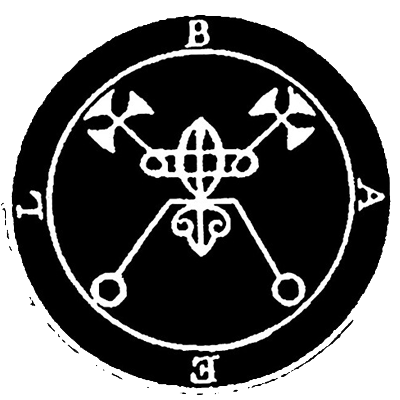
Bael’s Sigil: Draw this on virgin parchment using red ink or blood (symbolic; use red marker today). The sigil resembles a crowned toad with serpentine lines—search for “Bael Goetia sigil” for visuals.
text
[Imagine here: A central circle with a toad-like head, horns, and interlocking curves; exact design from Goetia plates.]
Black-handled knife (athame) for tracing boundaries.
Incense: Frankincense and myrrh (for purification); dragon’s blood for compulsion.
Candles: Three black ones for Bael’s heads, lit counterclockwise.
Protective circle: Inscribe with names of power like “Adonai,” “Elohim,” and the “Triangle of Art” outside it—a small triangle where the demon manifests.
Offerings: Wine, tobacco, or a serpent image (Bael’s affinity); avoid blood or life force.
Mental and Physical Prep:
Fast for 24 hours; bathe in saltwater.
Meditate on your intent (e.g., “Grant me invisibility in [specific situation]”).
Wear white robes; anoint with olive oil mixed with hyssop.
Step-by-Step Summoning Ritual
This is the Goetic method, adapted for clarity. It takes 1-2 hours. Speak firmly, without fear—Bael reportedly respects confidence.
Cast the Circle:
Stand outside the circle. Trace it clockwise with the athame, reciting:
“I conjure thee, O Circle of Art, that thou be a stronghold and fortress to me, and to shut out all spirits, so that none shall be able to enter within except those whom I shall desire to enter.”
Invoke the Divine Names:
Enter the circle. Light incense and candles. Recite the Preliminary Invocation (from Lesser Key):
“O Lord God, Who hast created all things, and hast power over all spirits, I beseech Thee to send unto me Bael, the King, who shall appear before this circle in a fair and comely shape, without harm to me or any creature.”
Conjuration of Bael:
Hold the sigil aloft. Chant the specific call three times, increasing volume:
“Bael, Bael, Bael! I do invocate and conjure thee, O thou mighty and powerful Prince Bael! By the power of the Most High, and by the name of the Living God, appear thou here before this circle in thy true form! Come peaceably, visibly, and without deformity or terror. I command thee by the seal of thy obedience, and by the most great and powerful names of God: Adonai, El, Elohim, Elohe, Ehyeh Asher Ehyeh, Zabaoth, Elion, Iah, Tetragrammaton. Obey my commands, and fulfill my desires!”
If no appearance (visualization or sensation), burn the sigil in the triangle and repeat with added threats:
“By the torment thou shalt suffer if thou comest not, I adjure thee! Appear now!”
Manifestation and Dialogue:
Bael may appear as smoke, a voice, or a vision in the triangle. Greet: “Welcome, Prince Bael. I thank thee for appearing.”
State your request clearly, e.g., “Teach me the art of invisibility.”
Negotiate: Offer respect or a pact (written on parchment, signed in symbolic blood). He may demand a token (e.g., a secret oath).
License to Depart:
End firmly: “I thank thee, Bael, for thy presence and wisdom. Depart in peace, and harm none on thy way. By the power of the Most High, go now!”
Extinguish candles clockwise. Erase the circle counterclockwise.
Banishing:
Recite the Lesser Banishing Ritual of the Pentagram (from Golden Dawn tradition) to clear residues:
Face east, trace pentagram: “Before me Raphael.”
Continue for south (Michael), west (Gabriel), north (Uriel).
“For about me flames the pentagram, and in the column stands the six-rayed star. Amen.”
Variations and Modern Takes
Crowley’s Method (The Book of the Goetia, 1904): Emphasizes evocation via the Bornless Ritual—replace divine names with Thelemic ones like “IAO” for a more psychedelic vibe.
LaVeyan Satanism (Satanic Bible, 1969): Treats it as psychodrama; no real demon, just role-play for catharsis. Use the sigil in meditation, no circle needed.
Safety Tips from Occultists: Always have a “safety word” (e.g., “Depart!”) If overwhelmed, smash a mirror or spill salt to “break” the ritual.
Potential Outcomes and Cautions
Success is subjective—expect psychological insights, synchronicities, or nothing. Historical accounts (e.g., in The Magus by Francis Barrett, 1801) warn of backlash: obsession, misfortune, or “demonic contracts” binding the soul.