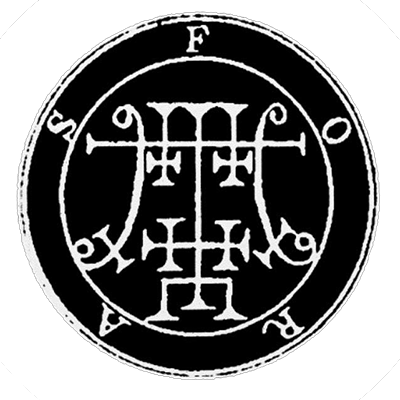
Who is Foras?
Foras (also spelled Forcas or Forcas) is a demon described in the Ars Goetia, the first section of the 17th-century grimoire The Lesser Key of Solomon. He ranks as the 31st spirit in the hierarchy of 72 demons and is depicted as a strong man riding a pale horse, carrying a serpent in his hand, with wings like a griffin. According to the text, Foras governs 29 legions of spirits and possesses abilities such as:
Teaching the virtues of all herbs and precious stones.
Making one invisible, wise, and eloquent.
Revealing the location of lost treasures and the thoughts of enemies.
Transforming men into other shapes and granting long life.
These descriptions stem from medieval occult traditions and should be approached as historical or fictional lore, not literal fact.
Historical Method of Summoning Foras
Summoning rituals in grimoires like the Ars Goetia are elaborate ceremonial magic practices rooted in Renaissance-era esotericism. They emphasize preparation, protection, and precise incantations to command spirits without harm. Important disclaimer: These are archaic, unverified procedures from folklore. Attempting them carries no guaranteed results and may pose psychological risks. They are presented here for educational purposes only, based on the original texts. Do not perform rituals involving fire, blades, or altered states without professional guidance.
The core steps, drawn from The Lesser Key of Solomon and related sources like the Pseudomonarchia Daemonum by Johann Weyer, are as follows:
1. Preparation and Purity
Timing: Perform during the hour of Mercury (Wednesday, preferably at dawn or dusk). Align with a waxing moon for manifestation.
Fasting and Abstinence: Fast for 9 days prior, avoiding meat, alcohol, and sexual activity. Bathe in consecrated water (salt and herbs like hyssop) daily.
Tools Needed:
A magic circle drawn with chalk or flour on the ground (9 feet in diameter, inscribed with the names of God like “Adonai” and angelic seals).
A triangle of art outside the circle for the spirit to appear.
Black-handled knife (athame), virgin parchment, ink made from soot and myrrh.
Incense: Frankincense and myrrh.
Robes: White linen, with a pentacle embroidered on the chest.
The grimoire itself, open to Foras’s sigil (seal).
2. Drawing the Sigil and Consecration
Inscribe Foras’s sigil on virgin parchment using the consecrated ink. The sigil resembles a complex glyph with intersecting lines and curves (often depicted as a central eye-like shape flanked by hooks).
Hold the sigil over incense smoke while reciting a consecration: “I conjure thee, O Circle of Art, by the virtue of the Highest, that thou be a fortress unto me against all spirits, that they may not enter therein.”
3. Entering the Circle and Invocation
Stand barefoot in the circle at the appointed hour. Light candles at the four quarters (white for air, red for fire, etc.).
Recite the Preliminary Invocation (from the Bornless Ritual or similar): “Thee I invoke, the Bornless One. Thee, that didst create the Earth and the Heavens… Hear me, and make all Spirits subject unto me.”
Then, the specific call to Foras (adapted from the Goetia): “I do invocate and conjure thee, O Spirit Foras, and being with power armed from the Supreme Majesty, I do strongly command thee, by Beralanensis, Baldachiensis, Paumachia, and Apologiae Sedes…” (Continue with the full 19-line conjuration, commanding obedience under threat of divine torment.)
Burn the sigil in the triangle while chanting his name 3 times: “Foras, Foras, Foras, appear visible and friendly!”
4. Manifestation and Command
Foras is said to appear in a form like a strong man on a horse. If hostile, reinforce with the License to Depart: “O thou Spirit Foras, because thou hast diligently answered unto my demands, I do license thee to depart unto thy proper place…”
State your request clearly (e.g., “Reveal the virtues of the emerald stone”). Offer a token gift, like wine poured on the ground.
Journal any visions, sounds, or sensations—traditional accounts describe a chill wind or metallic scent.
5. Closing and Banishment
Thank the spirit and banish with the Lesser Banishing Ritual of the Pentagram: Trace pentagrams in the air while vibrating “YHVH” (Yod-Heh-Vav-Heh).
Dismantle the circle counterclockwise, thanking guardian angels.
Destroy all materials (burn parchment remnants) to seal the working.
Variations and Modern Interpretations
In Chaos Magic: Practitioners like those in Peter Carroll’s Liber Null simplify by visualizing the sigil during meditation, charging it with personal energy instead of full ritual.
Thelemic Approach: Aleister Crowy’s Magick in Theory and Practice adapts Goetic calls with Enochian elements, emphasizing will over fear.
Skeptical View: Modern occult scholars (e.g., in Owen Davies’ Grimoires) see these as psychological archetypes for self-exploration, not literal summoning.