
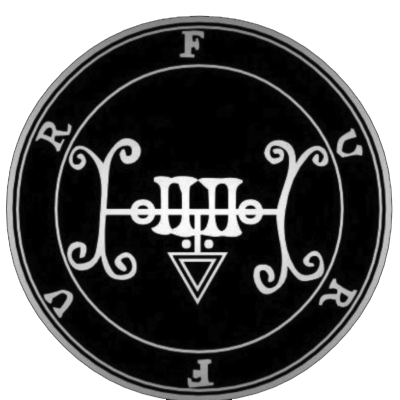
In the world of demonology, few names evoke as much intrigue as Furfur, the 34th spirit of the Ars Goetia in The Lesser Key of Solomon. Classified as a Great Earl of Hell, Furfur commands 26 legions of spirits and appears as a hart (male deer) with a fiery tail, speaking in a hoarse voice that echoes across storm and flame.
When constrained by a conjurer’s seal, Furfur transforms into a human form, speaking truthfully and revealing the secrets of storms, thunder, lightning, and divination. He is associated with the planet Venus, the element of Air, and the mysteries of passion, weather, and occult knowledge.
Origins and Historical Background
Furfur’s earliest recorded appearance is in the Ars Goetia, the first book of the 17th-century grimoire The Lesser Key of Solomon. This influential work cataloged 72 infernal spirits said to have served King Solomon.
In the infernal hierarchy, Furfur’s title of Great Earl indicates both nobility and command, situating him among the spirits capable of influencing natural forces and human emotion alike.
His appearance as a flaming hart suggests purity corrupted by fire — a potent symbol of transformation, desire, and celestial rebellion. As with many Goetic spirits, Furfur’s dual nature embodies both illumination and deception, capable of granting wisdom or destruction depending on the summoner’s control.
Symbolism and Associations
| Attribute | Description |
|---|---|
| Rank | Great Earl of Hell |
| Legions | 26 |
| Element | Air |
| Planetary Association | Venus |
| Appearance | A fiery hart (male deer) with a hoarse voice; later a human figure |
| Domains | Thunder, lightning, storms, love, and divine secrets |
Furfur’s link to storms symbolizes sudden revelation and power. His connection to Venus ties him to the arts of love, beauty, and temptation, though distorted through infernal influence.
As a demon of Air, Furfur governs communication, thought, and transformation — forces that can enlighten or mislead depending on intent.
Characteristics and Powers of Furfur
The Ars Goetia and Pseudomonarchia Daemonum describe Furfur as a demon of dual truth and deceit, capable of answering honestly only when bound by ritual.
Powers Attributed to Furfur:
- Controls thunder and lightning, commanding storms and natural tempests.
- Reveals divine and hidden knowledge, including mystical or prophetic truths.
- Influences relationships and passion, creating or dissolving romantic bonds.
- Teaches philosophy and occult wisdom, including the nature of elemental forces.
Because Furfur’s essence is volatile, summoners in classical grimoires are warned that he may lie or mislead unless restrained by a consecrated seal or circle.
Ritual Preparation
While early texts describe complex methods of Goetic evocation, modern occultists often reinterpret these rites symbolically, viewing them as exercises in willpower and spiritual focus.
Preparation Guidelines
Fasting and Purification: Abstain from meat, alcohol, and sexual activity for at least 24 hours to sharpen concentration and intention.
Banishing and Prayer: Perform a banishing ritual (such as the Lesser Banishing Ritual of the Pentagram) and recite invocations to divine names like Adonai, Elohim, and Tetragrammaton for protection.
Meditation: Study and meditate upon Furfur’s sigil to attune to his current of energy.
Timing: Conduct the rite on a Friday, the day of Venus, during a waxing moon — times associated with creation and revelation.
Ritual Tools and Setup
- Sigil of Furfur: Drawn on virgin parchment or copper (a Venus metal), featuring intersecting lines resembling antlers or flame.
- Magic Circle: A nine-foot circle drawn with chalk or salt, containing divine names for protection.
- Triangle of Art: Placed outside the circle; the point of manifestation for the spirit.
- Incense: Sandalwood or myrrh, to invoke the Air element.
- Offerings: Frankincense, honey, or wine — traditional Venusian offerings.
- Lamen or Seal: A protective pendant inscribed with the sigil of Solomon or your guardian angel.
The Evocation of Furfur
The Goetic conjuration traditionally begins with the consecration of the ritual space and sigil, followed by invocation through divine authority.
The conjurer vibrates the name Furfur three times, commanding his appearance in a visible and peaceful form.
When the spirit manifests — whether as a gust of air, a shadow, or a fleeting image — the operator holds the sigil aloft and commands the transformation into human likeness. Once bound, Furfur is questioned regarding storms, divine secrets, or matters of love and philosophy.
The ritual concludes with a license to depart, thanking the spirit and sealing the space through banishing rites.
The Sigil of Furfur
The sigil of Furfur, found in the Ars Goetia, is a geometric emblem representing his dual nature of flame and truth. The symbol is traditionally drawn in black ink upon white parchment, or engraved on copper when used for ceremonial work.
In modern esoteric traditions, the sigil also serves as a focal point for meditation, representing the balance between chaos and order, revelation and illusion.
Interpretations and Modern Perspectives
Modern demonology views Furfur not solely as an external entity but as an archetype of revelation through conflict.
In psychological or symbolic approaches, he represents the inner storm — the turbulence that precedes enlightenment.
Through this lens, working with the archetype of Furfur can symbolize confronting one’s own contradictions: passion and restraint, truth and deception, intellect and instinct.
Furfur remains a paradoxical figure — a demon of storms who can both destroy and illuminate, a fiery hart whose nature reflects the untamed energy of transformation.
Conclusion: Furfur as the Voice of the Storm
Furfur, the Great Earl of Hell, endures as one of the most complex and elemental spirits of the Ars Goetia. His fiery nature embodies the balance between creation and destruction, deception and divine insight.
As the master of thunder, lightning, and forbidden knowledge, Furfur stands as both teacher and trickster — a reminder that wisdom is often born from chaos.
Whether regarded as a mythic figure, a psychological archetype, or a force of nature, the demon Furfur continues to fascinate scholars, occultists, and seekers of truth across generations.