
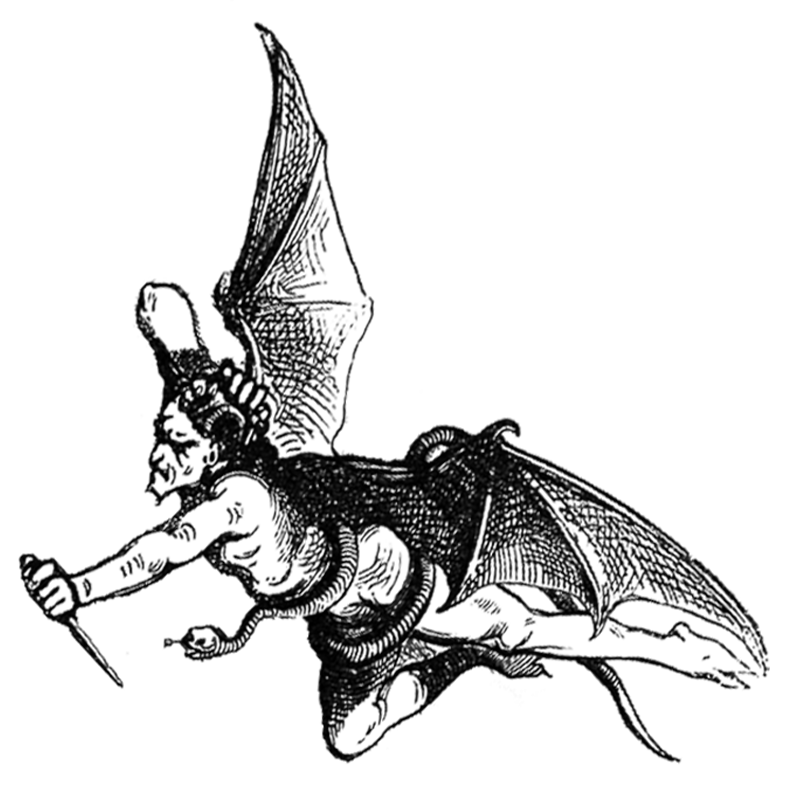
Focalor: The 41st Spirit of the Ars Goetia
Origins in Demonological Texts
In the detailed grimoires of early modern Europe, Focalor emerges as one of the most formidable spirits of the Ars Goetia.
He appears in The Lesser Key of Solomon, a 17th-century compilation describing seventy-two demons bound by King Solomon.
Also known as Forcalor or Focular, he is listed as the 41st spirit, ranked as a Great Duke of Hell commanding thirty legions.
The Ars Goetia describes Focalor as a man with griffin-like wings, symbolizing his hybrid nature.
His form blends human and bestial traits, reflecting the medieval fascination with creatures that defied natural order.
These hybrid depictions represented divine power distorted through rebellion, embodying both celestial majesty and infernal corruption.
Description and Attributes
Focalor’s primary domain is the sea and the winds.
He commands tempests, sinks ships, and brings death through drowning or maritime disasters.
Yet, the Goetia states that he obeys a summoner’s command to spare life, revealing conditional restraint.
This duality highlights the era’s belief in structured infernal obedience under divine authority.
As a Duke of Hell, Focalor’s influence extends over natural forces rather than mere human affairs.
His control of storms places him among a class of elemental spirits who govern air, water, or fire.
In occult philosophy, such powers represented the chaotic yet essential forces sustaining creation.
Role and Powers in the Infernal Hierarchy
Focalor’s ability to manipulate seas and winds aligns with the broader tradition of elemental demonology.
Grimoires often assigned spirits dominion over specific elements, forming a cosmic balance within infernal ranks.
His thirty legions signify a large, organized host—suggesting discipline and authority comparable to a general commanding an army.
Texts note that Focalor once held a celestial office before his fall.
He reportedly hopes to return to the Seventh Throne after one thousand years.
This reference implies a link to angelic rebellion and an enduring desire for redemption.
Such portrayals blur the line between punishment and aspiration, a recurring theme in Renaissance demonology.
Context within Early Modern Demonology
The depiction of Focalor in the Ars Goetia reflects the intellectual climate of the 16th and 17th centuries.
This was an age of exploration, maritime expansion, and theological tension.
Demons associated with the sea mirrored both human ambition and fear of nature’s power.
Compilers of grimoires, influenced by Christian theology and Jewish mysticism, sought to classify spirits within divine hierarchy.
The inclusion of Focalor shows how scholars attempted to impose structure upon chaos.
He represents not random evil but an ordered, knowable force within creation’s darker side.
Symbolism and Interpretation
Focalor’s dominion over water carries layered symbolism.
Water, in mystical thought, signifies both life and destruction, reflecting the dual role of divine judgment.
As master of storms, Focalor personifies the unpredictable wrath of nature—a reminder of human frailty before cosmic order.
His griffin wings evoke speed, authority, and vigilance, qualities of both angels and beasts.
The fusion of these traits emphasizes transformation—once divine, now infernal.
Such imagery parallels fallen angel archetypes found in apocryphal Christian texts.
The cryptic reference to his wish for salvation introduces theological depth.
It suggests that even infernal beings retain awareness of their celestial origins.
This concept reinforced moral lessons about pride, obedience, and redemption.
Ritual and Theological Framework
Within the Ars Goetia, Focalor appears as part of Solomonic magical practice.
Rituals associated with his name follow strict ceremonial structure.
Practitioners used sigils, divine names, and protective circles to assert spiritual control.
These elements reflected the belief that divine authority superseded demonic will.
Focalor’s sigil, composed of intersecting geometric lines, functions as his symbolic signature.
It was believed to anchor his presence within the conjurer’s command.
The ritual framework illustrates how early occultists viewed knowledge as power balanced by faith.
Historical Significance and Legacy
Focalor’s maritime associations reveal the psychological landscape of early modern Europe.
Sailors and merchants faced unpredictable oceans, where storms often seemed like divine punishment.
By personifying these forces as demonic, scholars provided a mythic explanation for natural calamity.
His inclusion among the seventy-two spirits also reflects Renaissance efforts to catalogue spiritual hierarchies.
Such systems mirrored contemporary fascination with classification in science, politics, and theology.
In later centuries, Focalor’s image influenced occult revivalists who viewed him as a symbol of controlled chaos.
Conclusion
Focalor, the 41st spirit of the Ars Goetia, unites myth, theology, and natural philosophy in one striking figure.
As a Great Duke of Hell, he commands the destructive beauty of storms and the boundless expanse of the sea.
His dual nature—obedient yet wrathful, fallen yet aspiring—captures the complexity of early demonological thought.
Through Focalor, we glimpse the Renaissance desire to comprehend and command the mysteries of creation itself.