
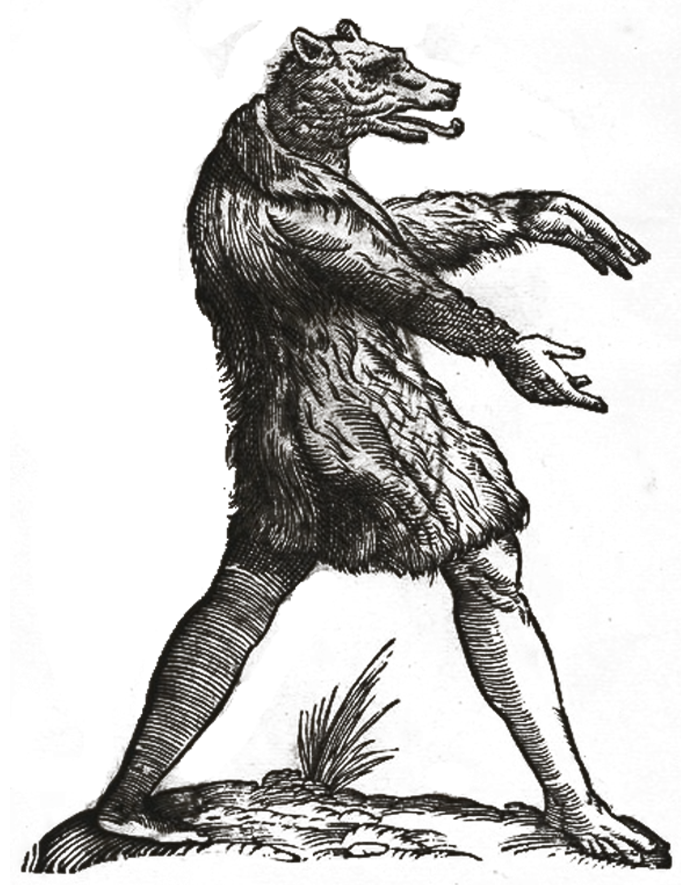
Introduction
The demon Guison is a lesser-known figure within the infernal hierarchy, yet his presence in demonological lore is deeply significant.
Associated with illusion, deception, and hidden knowledge, Guison represents the intellectual side of demonic influence rather than brute malice.
His legend endures across centuries, capturing the interest of scholars, occult historians, and enthusiasts of Western esoteric traditions.
This article explores Guison’s origins, characteristics, and influence across history, examining his evolution from medieval manuscripts to modern interpretations.
Through this analysis, Guison emerges not merely as a spirit of deceit but as a symbol of the fragile boundary between truth and illusion.
Origins of Guison
Guison appears in medieval grimoires and early demonological manuscripts, though his origins likely extend far earlier.
His name varies across sources—sometimes rendered as Gusoin, Guisoan, or Guisson—reflecting linguistic differences between Latin, French, and Middle English texts.
These variations suggest an evolving myth shaped by translation and regional folklore.
Some historians link Guison to older pagan archetypes of transformation, where shape-shifting gods embodied both wisdom and deceit.
This connection points to a spirit not purely malevolent but reflective of human duality and intellectual temptation.
By the Renaissance, grimoires such as the Pseudomonarchia Daemonum classified Guison as a minor yet cunning spirit associated with manipulation and perception.
Role in Demonology
In demonological tradition, Guison is known for his mastery over emotion, perception, and persuasion.
He influences how mortals interpret reality, often leading them toward subtle forms of corruption rather than overt destruction.
According to ceremonial texts, practitioners once believed that invoking Guison could reveal hidden motives or concealed knowledge.
However, such rituals were deemed perilous.
Guison was said to demand partial control over the summoner’s thoughts, symbolizing the moral risk of seeking forbidden insight.
His influence also extends beyond individuals—he is credited with sowing discord and distrust among groups, corrupting harmony from within.
This portrayal marks him as a psychological demon, thriving on instability, paranoia, and the erosion of trust.
Symbolism and Attributes
Guison’s symbols revolve around reflection and transformation.
The mirror, one of his most enduring emblems, represents illusion and self-deception.
The serpent, another frequent motif, symbolizes cunning wisdom and the cyclical nature of deceit.
Descriptions of his form vary across manuscripts.
Some depict him as a shadowy humanoid with shifting features, while others portray a composite creature with multiple faces, representing the instability of truth.
These depictions reinforce his association with change, perception, and the fragility of human understanding.
In esoteric symbolism, Guison embodies the battle between reason and temptation—the mind’s struggle to discern reality from illusion.
Cultural and Literary Influence
Though rarely featured in mainstream texts, Guison’s archetype persists across literature, mythology, and modern storytelling.
Writers and artists have drawn upon his image to craft tricksters, deceivers, and corrupt advisors—characters who manipulate through intellect and charm.
In modern fantasy and horror, his essence reappears in entities that thrive on deception and psychological control.
These reinterpretations reflect humanity’s enduring fascination with manipulation, ambition, and moral ambiguity.
Guison thus transcends his medieval origins to embody the timeless fear of truth distorted by desire.
Spiritual and Symbolic Interpretations
Beyond occult traditions, Guison can be read as a symbol of self-deception.
He represents the danger of pursuing knowledge without moral clarity and the ease with which truth can be reshaped by ego.
In this sense, Guison’s myth serves as a moral allegory—a warning that wisdom without restraint leads to corruption.
Spiritually, he personifies the intellect’s shadow, reminding seekers that enlightenment and deceit often share the same path.
Conclusion
Guison remains a compelling figure in the study of demonology and myth.
He embodies the delicate interplay between truth, illusion, and ambition, standing as a mirror to human frailty.
Through centuries of interpretation, his image has evolved from a spirit of deceit to a profound symbol of psychological and spiritual conflict.
Whether viewed as a literal entity or allegorical force, Guison continues to remind us that the pursuit of hidden knowledge can both illuminate and consume.