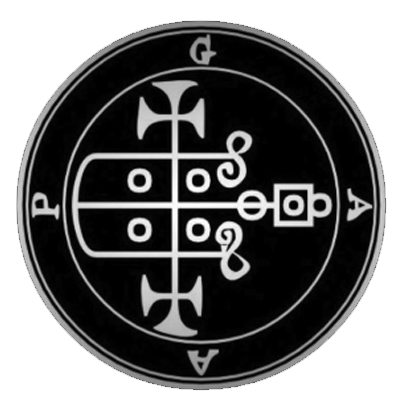
Gaap (also known as Tap or Goap) is a demon described in medieval grimoires, particularly the Lesser Key of Solomon (Lemegeton Clavicula Salomonis), compiled in the 17th century. He ranks as the President and Prince of Hell, commanding 66 legions of spirits. According to the text, Gaap specializes in:
Teaching philosophy and liberal sciences.
Inciting love or hatred between people.
Revealing past, present, and future events.
Transporting people instantly across great distances.
Making men insensible or ignorant.
Appearing as a guide to the four cardinal kings (Oriens, Paimon, Ariton, and Amaymon).
He is said to appear as a man with bat wings, riding a goathorse or airboat, sometimes accompanied by trumpets. Gaap is neutral in alignment but requires careful handling, as he can be deceptive.
Important Disclaimer: This information is drawn from historical occult literature and is presented for educational or fictional purposes only. Summoning rituals are not scientifically verifiable, and attempting them can be psychologically harmful, legally risky (e.g., if involving fire or substances), or dangerous. Modern interpretations view these as symbolic or psychological exercises, not literal magic. Proceed at your own risk, and consider consulting mental health professionals if exploring esoteric practices.
Historical Method to Summon Gaap
The primary source is the Ars Goetia section of the Lesser Key of Solomon. The ritual follows a structured evocation process common to Solomonic magic, emphasizing preparation, protection, and command. Below is a summarized, step-by-step adaptation based on the original text (translations vary slightly across editions like those by S.L. MacGregor Mathers or Joseph Peterson). This is not a verbatim script but a faithful outline.
1. Preparation (Purification and Timing)
Timing: Perform on a Sunday or Wednesday during the hour of Mercury (planetary hour calculator needed; typically dawn or dusk). Avoid full moons or eclipses for stability.
Fasting and Abstinence: Fast for 9 days prior, abstaining from meat, sex, and worldly distractions. Bathe in holy water (saltwater or blessed herbs) daily.
Mental State: Meditate on Gaap’s sigil (seal) to attune your intent. Focus on a clear, specific request (e.g., knowledge of philosophy, not vague wishes).
2. Tools and Circle Setup
Essential Items:
A consecrated magic circle: Draw a 9-foot diameter circle with chalk or flour, inscribed with the names of God (e.g., Tetragrammaton, Adonai) and angelic seals from the grimoire.
Triangle of Art: Outside the circle, draw a triangle for the spirit to manifest, with Hebrew letters (e.g., Michael, Gabriel) at corners.
Incense: Frankincense and myrrh.
Robes: White linen robe; black cap or hood.
Weapons of Art: Sword or dagger (symbolic, for tracing pentagrams); wand of almond wood.
Gaap’s Sigil: Engrave on virgin parchment or metal (a complex design resembling a crowned figure with wings—reference images from occult texts).
Location: Isolated room or outdoor space at night, free from interruptions. Face east.
3. The Ritual Invocation
Enter the Circle: Step in clockwise, invoking protective archangels (e.g., “Michael, Gabriel, Raphael, Uriel, protect me from all harm”).
Preliminary Conjuration: Light incense. Recite a general call to spirits, such as the “First Conjuration” from the Goetia:
“I do invocate and conjure thee, O Spirit [Gaap], and being with power armed from the Supreme Majesty, I do strongly command thee… by the most powerful princes, genii, Liachidæ, and ministers of the Tartarean Abode…”
(Full text available in public domain editions; adapt for brevity.)
Specific Call to Gaap: Hold his sigil aloft and chant his enn (a modern demonic chant, if using post-grimoire traditions): “Linan tasa Jedan tasa Gaap” (repeated 3–11 times).
Constraint if Needed: If he delays, use the “Curse of Chains” or second/third conjurations, threatening infernal punishments (e.g., “By the power of the Black Scorpion, I bind thee!”).
Appearance: Expect visual/auditory phenomena (hallucinations in modern terms). Command him into the triangle: “Gaap, I command thee to appear visible and affable, without deformity or terror.”
4. Communication and Binding
Questioning: Once manifest, state your request clearly. Use a scrying tool (black mirror or crystal) if needed for clearer vision.
License to Depart: After fulfillment, dismiss politely: “Gaap, I thank thee for thy service. Depart in peace to thy abodes, harming none.” Burn his sigil to seal.
Banishing: Recite the Lesser Banishing Ritual of the Pentagram (from Golden Dawn traditions) to close.
5. Post-Ritual
Destroy tools if single-use. Journal experiences. Avoid alcohol or stimulants for 24 hours.
Signs of Success/Failure: Warmth, visions, or synchronicities indicate contact; unease or nothing suggests retry or error.
Variations and Modern Adaptations
Crowleyan Approach: Aleister Crowley in The Book of Thoth suggests psychological integration via tarot (e.g., invoking via the Devil card).
Chaos Magic: Treat as a thoughtform—visualize sigil during meditation, no circle needed.