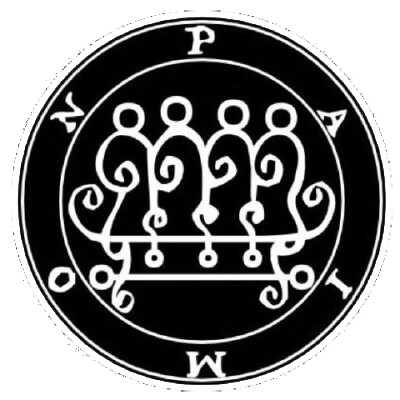
Who is Paimon?
Paimon is a demon described in the Ars Goetia, the first section of the 17th-century grimoire The Lesser Key of Solomon. He’s portrayed as a king of Hell who commands 200 legions of spirits, appears as a man with a woman’s face riding a dromedary, and is known for teaching arts, sciences, and secrets, as well as providing a familiar spirit. In modern occultism, he’s also popularized in fiction like the game Genshin Impact, but traditional summoning draws from grimoires. Note: These rituals are historical/esoteric practices with no scientific basis; they’re for informational purposes only. Attempting them carries psychological, cultural, or personal risks—proceed at your own discretion.
Preparation for Summoning
Traditional Goetic evocation requires meticulous setup to “compel” the spirit safely. Key steps from the Lesser Key include:
Purification and Fasting: Abstain from food, sex, and impure thoughts for 3–9 days. Bathe in consecrated water (salt + herbs like hyssop). This “purifies” the summoner.
Protective Circle: Draw a nine-foot circle on the ground using chalk, flour, or blood (symbolic, not literal). Inside, inscribe the names of God (e.g., Tetragrammaton, Adonai) and angelic seals from the grimoire. Stand within it to avoid harm. Outside, place a triangle of art for the spirit to manifest.
Tools Needed:
Black-handled knife (athame) for tracing pentagrams.
Incense: Frankincense and myrrh.
Virgin parchment with Paimon’s sigil (seal) drawn in ink mixed with your blood or saffron.
A brass vessel or lamp for offerings.
The grimoire itself, open to Paimon’s entry.
Timing: Perform during the hour of Paimon (planetary hour of Mercury, Wednesday dawn/dusk). Lunar phase: Waxing moon for obedience.
The Summoning Ritual
This is a condensed version based on the Lesser Key of Solomon and related texts like the Pseudomonarchia Daemonum. Recite in a commanding tone; use Latin if possible for authenticity.
Preliminary Invocation: Enter the circle at the appointed time. Light incense. Trace the circle with your athame, invoking: “I conjure thee, O Circle of Art, by the power of the Most High, that thou shalt protect me from all harm.”
Call the Spirit: Hold Paimon’s sigil. Chant the conjuration three times, escalating intensity: “Paimon, King of the East, I conjure thee by the power of the Almighty, by the names El, Adonai, Tetragrammaton, and by the seal which I hold, appear before me in the triangle, visible and affable, without deformity or terror. Come peaceably, and answer truly my questions. I command thee by the virtue of these holy names!” (Full Latin version in grimoires: “Ego te invoco, Paimon…”)
Manifestation: Expect visual/auditory signs (shadows, voices, temperature drops). If he appears (often crowned, with trumpets sounding), greet him: “Welcome, King Paimon, most noble and powerful.” Offer gifts like art supplies or books to honor his domains.
Binding and License to Depart: Once summoned, state your request clearly (e.g., “Teach me the secrets of [skill]”). Bind him: “By the power of this circle, thou shalt not harm me nor depart without fulfilling my will.” After, dismiss: “I license thee to depart, Paimon, to thy place, peaceably and without noise.” Extinguish incense counterclockwise.
Paimon’s Sigil
For the seal, draw this traditional symbol (described textually; visualize or sketch it):
text
/\
/ \
/____\
| |
| [] |
\__/
(Actual sigil: A crowned figure with a lion’s face, camel, and curved horns—search grimoires for precise diagram.)
Warnings and Variations
Risks: Grimoires warn of madness or attack if protections fail. Modern practitioners (e.g., in chaos magic) adapt with visualization only, skipping tools.
Ethical Note: Treat as psychological archetype work, not literal. If seeking knowledge, books like The Goetia by Aleister Crowley provide full texts.