
duality, and mystery.
He stands as both a King of Hell and a symbol of forbidden knowledge, merging intellect with animalistic power.
This article examines Balam’s origins, appearance, powers, and meaning, tracing his evolution from ancient mythic archetypes to a complex figure in modern occult traditions.
Origins in Demonology
Balam—also spelled Balaam or Balan—appears as the 51st spirit in the Ars Goetia, one of Western occultism’s most influential grimoires.
Within its hierarchy, he commands 40 legions of spirits and holds dominion over knowledge, foresight, and cunning.
The name likely derives from Balaam, the enigmatic prophet in the Book of Numbers, who was gifted in divination yet morally conflicted.
While the biblical Balaam is not demonic, his ambiguous role and association with prophecy may have inspired Balam’s later infernal identity.
Some scholars trace his name to pre-Christian or Mesopotamian roots, suggesting that Balam may have evolved from ancient deities or spirits of wisdom and fertility.
Like many Goetic figures, his persona blends elements from Near Eastern myth, Hebrew folklore, and Christian demonology, forming a composite entity that bridges multiple traditions.
In Renaissance magic, where the Lesser Key of Solomon was widely studied, Balam’s inclusion reflected the period’s fascination with hidden knowledge—a force feared and desired in equal measure.
Characteristics and Appearance
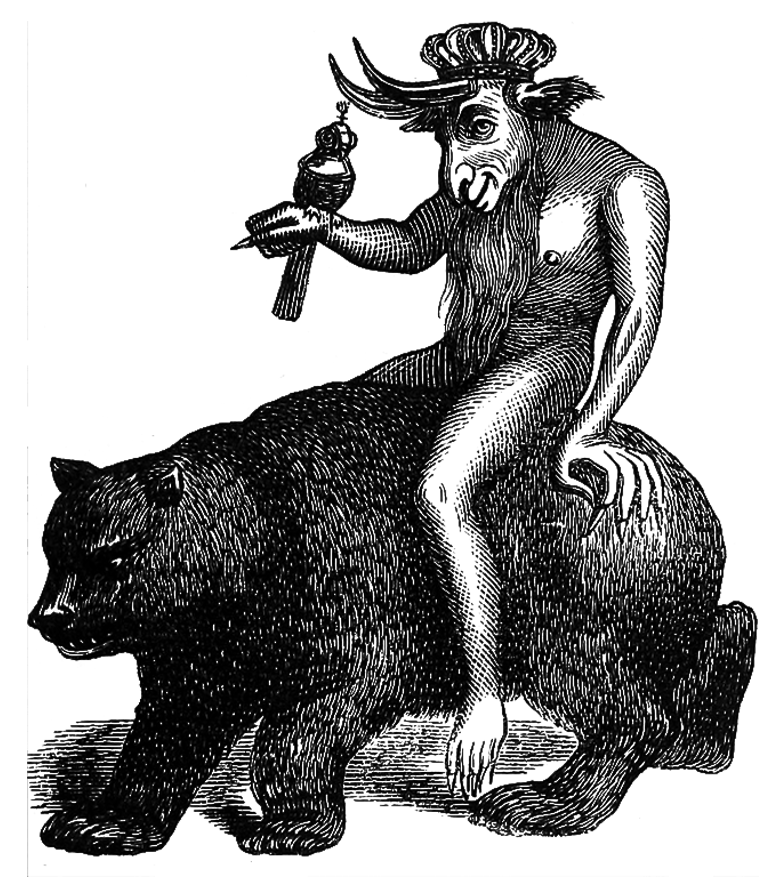
Balam’s depiction in the Ars Goetia is among the most vivid in demonology.
He appears with three heads—those of a man, a bull, and a ram—each symbolizing distinct powers:
- The man’s head represents intellect and speech.
- The bull’s head signifies physical strength and determination.
- The ram’s head embodies leadership and sacrificial will.
He has a serpent’s tail, flaming eyes, and rides upon a bear, a creature symbolizing ferocity and grounded power.
A hawk often accompanies him, representing vision and spiritual perception.
Together, these traits form a composite image of dominance, foresight, and hybrid divinity.
His voice, described as hoarse and commanding, carries both wisdom and menace.
This auditory symbolism implies that Balam’s teachings are powerful but potentially dangerous—truth spoken through a veil of fire.
The combination of human and animal forms reflects an ancient motif found in Egyptian and Mesopotamian art, where gods and demons embodied the union of mind and instinct.
Powers and Abilities
Balam is renowned as a demon of knowledge, foresight, and subtlety.
According to the Ars Goetia, he reveals truths of the past, present, and future, guiding those who seek divine or forbidden wisdom.
His powers also include:
- Granting wit and eloquence, allowing the summoner to think and speak with precision.
- Bestowing invisibility, enabling concealment or freedom from recognition.
- Imparting strategy and insight, vital for those who lead or negotiate.
These abilities connect Balam to the archetype of the trickster-sage, a figure who offers enlightenment that can liberate or corrupt.
His gift of invisibility may symbolize mastery over perception itself—the ability to see without being seen or to conceal one’s motives.
Because Balam’s powers hinge on intellectual prowess, many occultists interpret him as a spirit governing the mind’s hidden mechanisms—intuition, instinct, and cunning combined.
Ritual and Summoning
Traditional grimoires prescribe careful preparation before invoking Balam.
The magician must perform the ritual within a protective circle, using sigils and divine names to establish authority.
As with other Goetic spirits, invocation often involves the use of incense, consecrated tools, and precise recitation of conjurations.
Balam’s arrival is said to be accompanied by roaring sounds and a blinding light, testing the summoner’s will.
Only through unwavering control and reverence can one establish respectful communication.
Those who succeed may receive visions or intellectual revelations, though the Ars Goetia warns that such contact should never be taken lightly.
Balam’s temper is proud, and his cooperation must be earned through discipline and respect.
In modern practice, some occultists treat Balam as a psychological archetype, invoking his image through meditation rather than literal evocation.
This symbolic approach frames the summoning as an internal dialogue with the subconscious pursuit of truth.
Symbolism and Interpretation
Balam’s three heads embody divine multiplicity—a fusion of intellect, strength, and will.
This trinity mirrors philosophical themes found in ancient mysticism, representing the unity of thought, action, and spirit.
The bear he rides symbolizes control over primal instincts, while the hawk signifies transcendence and higher sight.
Together, these elements depict Balam as the balance between instinct and intellect, a key motif in esoteric philosophy.
The fiery eyes and serpent tail reinforce his role as a guardian of secret wisdom.
Fire illuminates but burns; serpents transform but also deceive—thus, Balam’s teachings offer enlightenment only to those who can withstand their intensity.
Esoterically, he represents the dangerous pursuit of forbidden knowledge—the same force that inspired the myth of Prometheus and the biblical story of Eden.
To summon or study Balam is to confront the timeless paradox: knowledge grants power, but power invites peril.
Cultural and Modern Significance
In the Renaissance, Balam symbolized the limitless curiosity of scholars who sought mastery over nature and spirit.
For them, he embodied the boundary between divine inspiration and infernal temptation.
In modern occultism, Balam remains a figure of intellectual empowerment.
Practitioners who engage with him often seek clarity, strategic insight, or the strength to act with precision.
His power to grant wit makes him a patron of scholars, tacticians, and negotiators, while his association with invisibility suggests mastery over influence and perception.
Psychologically, Balam resonates with the idea of shadow integration—the acceptance of one’s hidden knowledge and desires.
Contemporary practitioners interpret his energy as a force for enlightenment when tempered by wisdom, but corruption when pursued for domination.
Though less famous than Lucifer or Asmodeus, Balam’s mysterious nature has preserved his cult status within esoteric circles, ensuring his relevance among those who study the Goetia.
Conclusion
Balam, the three-headed King of Knowledge, stands as one of the most intricate figures in demonology.
He unites intellect, instinct, and prophecy, offering illumination to those who dare to seek it.
From his origins in the Ars Goetia to modern interpretations, Balam represents humanity’s eternal quest for understanding—balanced by the shadow of hubris.
Whether viewed as a literal entity or a symbolic archetype, Balam remains a guardian of wisdom and a warning of its price.
His legend endures as a reflection of humankind’s desire to master both the seen and unseen worlds.