
Introduction
Among the many names in demonology, Belial stands as one of the most enigmatic and feared.
He is a spirit of rebellion, deceit, and unbridled freedom, often linked to lawlessness and corruption.
Throughout centuries, Belial’s image has evolved—from a symbol of wickedness in the Hebrew Bible to a mighty King of Hell in the Ars Goetia.
This article explores his origins, mythology, and lasting influence on culture and occult thought.
Etymology and Biblical Roots
The name Belial originates from the Hebrew words beli (“without”) and ya’al (“value” or “worth”).
Together, they form the phrase “without worth,” describing moral corruption or wickedness.
In early biblical texts, Belial was not a personal name but a general term for depravity.
The phrase “sons of Belial” appears throughout the Old Testament.
It refers to people who rebel against divine law, as seen in 2 Samuel 22:5 and Deuteronomy 13:13.
Here, Belial represents social disorder and spiritual decay rather than a literal being.
During the Second Temple period, Belial gained individuality as a distinct demonic entity.
In the Dead Sea Scrolls, especially the War Scroll, Belial is portrayed as the commander of darkness.
He leads evil forces in an eternal war against the “Sons of Light.”
This transition marks Belial’s emergence as a personified adversary, not just a concept of sin.
In early Jewish mysticism, he embodies the principle of chaos and temptation.
His name becomes synonymous with rebellion against divine structure.
Belial in Demonology
Belial’s prominence grew during the medieval and Renaissance periods through Christian demonology.
He appears as a mighty king of Hell in several grimoires, commanding eighty legions of spirits.
In the Ars Goetia, part of The Lesser Key of Solomon, Belial is described as noble and persuasive.
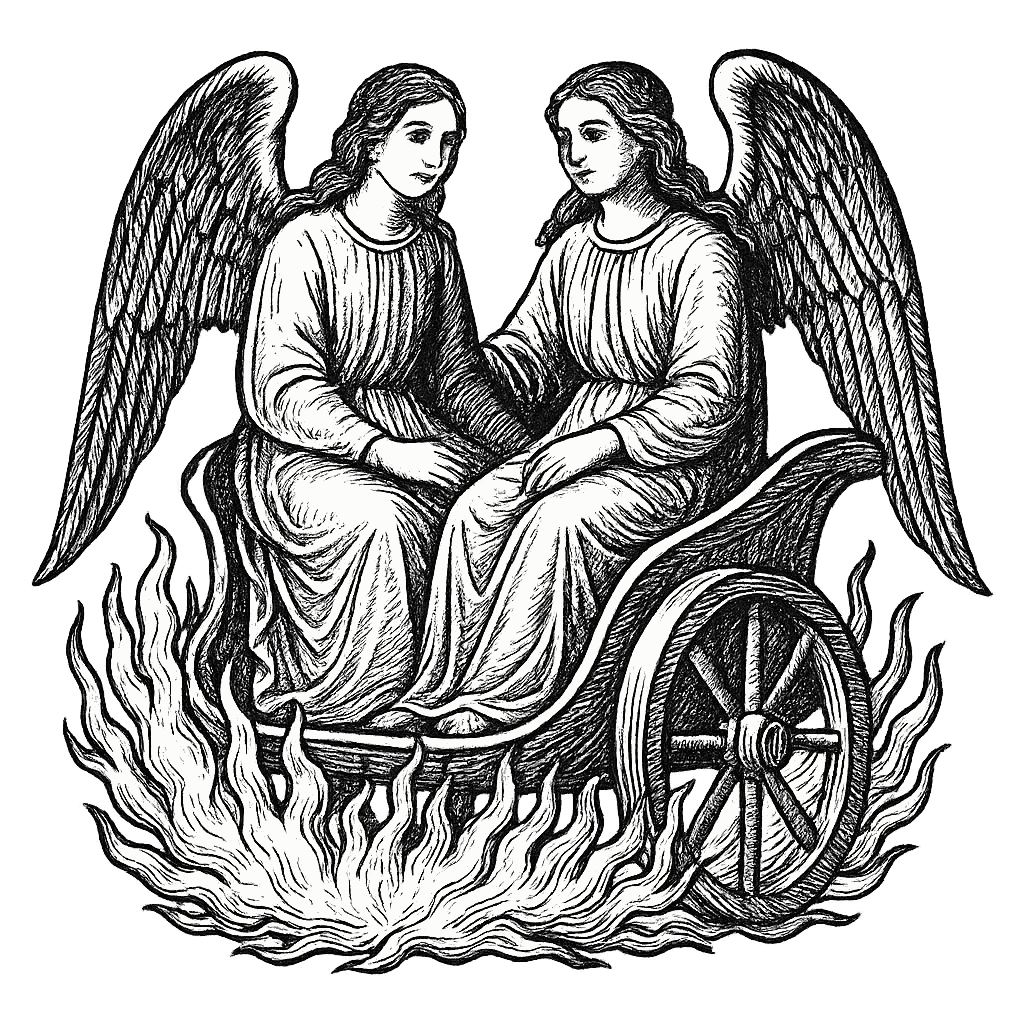
He manifests as a beautiful angel, riding a chariot of fire, surrounded by radiant light.
Despite his beauty, his nature is deeply deceptive.
He tempts mortals with power, titles, and material success—but always demands sacrifice in return.
He represents the danger of ambition unrestrained by morality.
Other demonologists, such as Johann Weyer and Collin de Plancy, list him among Hell’s highest princes.
They describe him as proud, manipulative, and defiant, aligning him closely with Satan and Lucifer.
While Lucifer symbolizes pride and enlightenment, Belial embodies lawlessness and corruption.
In ritual magic, Belial is invoked for influence, authority, and control.
Practitioners describe him as a spirit who tests strength and will before granting favor.
He rewards discipline but punishes arrogance and lack of respect.
Symbolism and Meaning
Belial’s character reflects deep theological and psychological symbolism.
Biblically, he represents the absence of moral order, the rejection of divine law.
His name became a metaphor for worthlessness, rebellion, and pride without purpose.
In Christian thought, Belial embodies moral decay, the state of being “without a yoke.”
He tempts humanity through pride, self-deception, and the illusion of freedom.
This association made him a figure of warning in sermons and exorcisms during the Middle Ages.
Esoteric traditions reinterpret Belial as a symbol of independence rather than pure evil.
In occult philosophy, he represents personal sovereignty—the power to define one’s own path.
This duality mirrors the human condition: the struggle between discipline and desire.
Jungian psychology frames Belial as an archetype of the shadow self.
He personifies repressed impulses that must be confronted for spiritual growth.
To overcome Belial symbolically is to master one’s inner chaos.
Belial in Literature and Culture
Belial’s image extended beyond theology into literature and art.
In John Milton’s Paradise Lost (1667), Belial appears among the fallen angels debating in Hell.
Milton portrays him as eloquent, cunning, and indulgent, preferring manipulation over open rebellion.
He embodies seductive rhetoric—the power of lies cloaked in reason.
Later writers continued this theme.
Belial appears in Christopher Marlowe’s Doctor Faustus and various occult grimoires.
Artists depicted him as a figure of beauty masking corruption, emphasizing his deceptive charm.
In modern culture, Belial persists as a complex archetype.
He appears in films, music, and literature as a symbol of anarchy, ego, and temptation.
His name evokes rebellion against authority, often reinterpreted through existential or philosophical lenses.
Contemporary occultists view Belial as a teacher of self-reliance and mastery.
In this modern interpretation, he is less a demon of evil and more a force of liberation through trial.
Interpretations in Modern Occultism
Modern occultists, particularly within the Left-Hand Path, reframe Belial as a spirit of autonomy and personal will.
He is invoked not to destroy order, but to transcend limitation.
His energy aligns with transformation, empowerment, and sovereignty of the self.
Some traditions associate him with the Earth element, symbolizing stability, endurance, and hidden power.
Others link him to Saturn, representing discipline through resistance and confrontation.
In ritual practice, Belial tests integrity before cooperation—he aids only those with firm resolve.
This shift from demon to archetype reflects evolving spiritual philosophies.
Belial’s story continues to explore the tension between divine obedience and personal freedom.
Conclusion
Belial remains one of the most captivating and complex figures in demonology.
From his early roots as a Hebrew term for “worthlessness” to his exalted place in Hell’s hierarchy, he symbolizes rebellion itself.
He embodies the duality of human nature—noble in ambition yet prone to corruption.
Whether seen as a fallen angel, a demonic king, or an inner archetype, Belial endures as a timeless lesson.
He warns against the dangers of unrestrained ego while inviting seekers to master their will.
In theology, literature, and occult practice, Belial continues to represent both peril and potential.