
Introduction
Among the many names in Western demonology, few inspire as much fascination as King Paimon.
Described in grimoires such as the Ars Goetia—part of The Lesser Key of Solomon—Paimon stands as a monarch of immense wisdom and authority.
Commanding vast legions and revered for his knowledge of hidden truths, he remains one of the most studied and misunderstood figures in occult lore.
This article explores Paimon’s origins, attributes, symbolism, and the evolving interpretations that continue to shape his legacy.
Origins in Demonology
Paimon’s earliest recorded appearance is found in the Ars Goetia, compiled in the 17th century.
Listed as the ninth spirit among the 72 demons bound by King Solomon, he is ranked as a Great King of Hell.
The text positions him under the rule of Lucifer, though possessing dominion over 200 legions of spirits, both angelic and infernal.
The Ars Goetia itself draws from a deep lineage of magical and theological sources.
Its framework reflects medieval interpretations of older Middle Eastern traditions, likely blending Jewish mysticism, Christian theology, and pre-Islamic spiritual archetypes.
Scholars propose that the name Paimon may have Persian or Arabic origins—possibly linked to divine messengers or ancient Zoroastrian spirits of wisdom.
This syncretic foundation highlights how King Paimon bridges cultural boundaries, evolving from divine intermediary to infernal monarch.
His transformation into a demon mirrors the broader process of demonization common in early Judeo-Christian cosmology.
Description and Attributes
The Ars Goetia offers one of the most detailed depictions of any Goetic spirit.
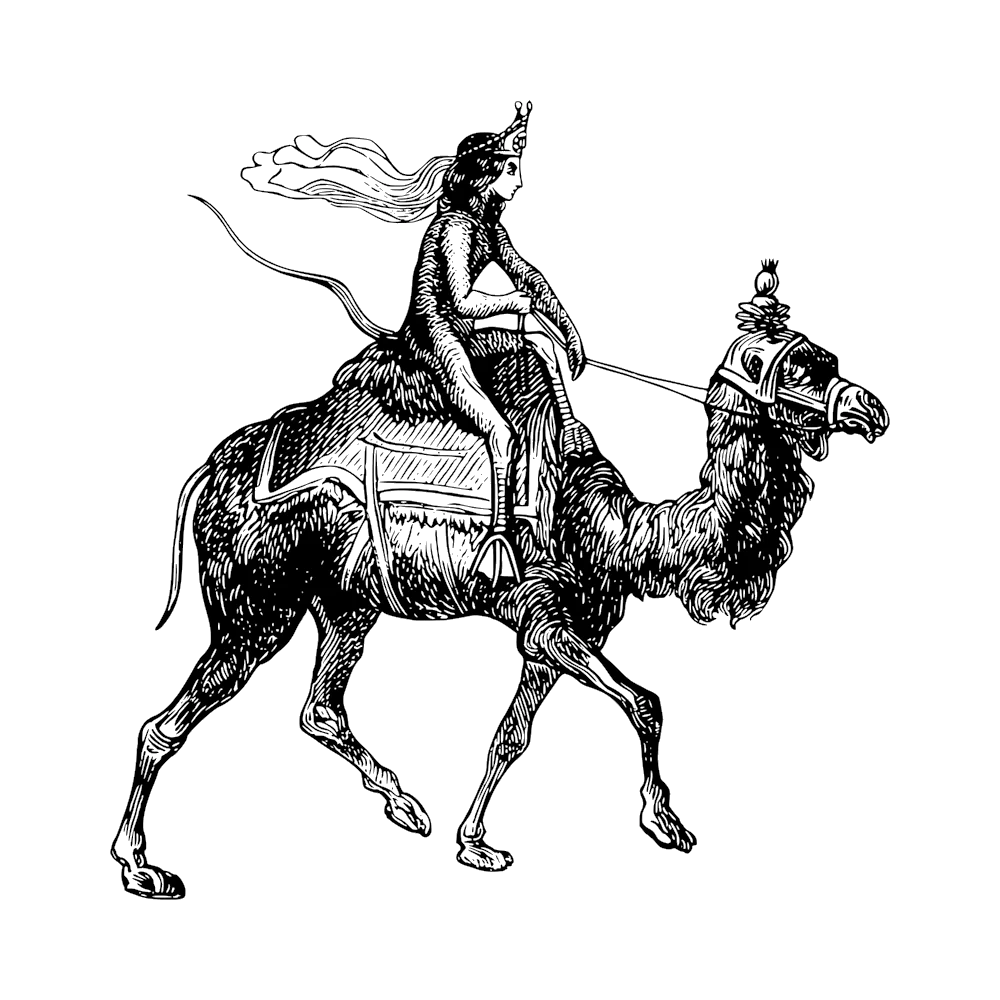
Paimon appears as a regal man with a soft, androgynous face, crowned with gold and riding a dromedary camel.
His arrival is preceded by a grand procession of musicians, playing trumpets, cymbals, and drums—a spectacle befitting his royal stature.
His voice is described as loud, echoing, and commanding, yet articulate and deliberate.
When summoned, he speaks with both authority and intellect, revealing profound truths to those deemed worthy.
Paimon commands 200 legions of spirits, including angelic orders once loyal to Heaven.
This dual command underscores his nature as both teacher and tempter, embodying the delicate boundary between divine insight and forbidden knowledge.
In demonological hierarchies, Paimon is regarded as a master of:
- Philosophy and hidden sciences
- Alchemy and astrology
- Mystical arts and divine secrets
- Influence and persuasion over others
His crown symbolizes divine intellect corrupted by ambition, while his camel represents endurance and his dominion over distant realms of understanding.
Role in Ritual and Occult Practice
In Solomonic magic, summoning Paimon requires precision and respect.
Ritual texts insist on strict adherence to protective circles, sigils, and verbal invocations.
Offerings of tribute—often gold, incense, or symbolic gifts of knowledge—are said to please him.
The magician must address him with humility and clarity of intent.
If treated with reverence, Paimon responds favorably, granting insight, eloquence, and authority.
However, careless summoning risks confusion or spiritual backlash, as his power is immense and his temperament regal.
According to grimoires, Paimon teaches all sciences, reveals hidden treasures, and imparts secrets about the universe and divine realms.
He can also bestow familiars—spirits that serve the conjurer—and influence others through speech and will.
In modern ritual magic, practitioners interpret Paimon less as a literal entity and more as an archetype.
He represents the integration of intellect and intuition, guiding seekers toward mastery of their own hidden potential.
Symbolism and Interpretation
King Paimon’s imagery and personality reflect deep symbolic meaning.
His musical entourage symbolizes harmony, suggesting that true knowledge arises from balance and rhythm.
The camel embodies patience and perseverance—traits essential for those pursuing enlightenment through trial and endurance.
Paimon’s feminine features intrigue many occultists.
They suggest an integration of masculine authority with feminine wisdom, a union of opposites that mirrors alchemical transformation.
In this sense, Paimon personifies the androgynous ideal of spiritual completeness.
Theologically, his character represents intellectual pride—the desire to understand creation beyond divine limits.
This makes him both a cautionary and aspirational figure: the teacher who illuminates truth and the tempter who leads to arrogance.
Philosophically, Paimon parallels the archetype of the Promethean seeker, the one who defies limitation to bring light to humankind.
His knowledge liberates but also demands responsibility, echoing the ancient warning that enlightenment carries a price.
Paimon in Historical and Cultural Context
During the Renaissance, fascination with the Goetia grew among alchemists, scholars, and early occultists.
Paimon’s name appears in numerous grimoires, including Johann Weyer’s Pseudomonarchia Daemonum (1577) and Sébastien Michaëlis’s Admirable History (1612).
Both classify him among the highest-ranking infernal kings, respected even by other demonic rulers.
He was invoked by scholars seeking wisdom, eloquence, or command over spirits.
Texts describe him as loyal to those who approach with purpose, yet intolerant of ignorance or disrespect.
As occult traditions evolved, Paimon’s symbolism deepened.
In Hermetic and Rosicrucian circles, he became a representation of intellectual ascent, the disciplined pursuit of gnosis through reason and intuition.
His modern cultural appearances, though often sensationalized, preserve his ancient themes of knowledge, hierarchy, and willpower.
In literature and art, he serves as a reminder that the quest for understanding can both illuminate and consume.
Modern Interpretations
In contemporary occultism, King Paimon is often viewed through a psychological and archetypal lens.
Practitioners interpret his teachings as reflections of the subconscious mind’s desire to unify logic and emotion.
Some see him as the embodiment of disciplined will, guiding initiates through personal transformation.
Others view him as a mirror for the intellect—representing the mastery of thought, persuasion, and creative control.
Paimon’s enduring presence in modern occult circles reflects humanity’s continued fascination with the forbidden.
He symbolizes the balance between curiosity and restraint, between ambition and humility.
Cultural Legacy
Beyond magic, Paimon has influenced literature, music, and philosophy.
Authors and artists portray him as both mentor and menace, reflecting his ambivalent nature.
In Western esotericism, he endures as a guardian of hidden wisdom and a test of human intellect.
Even outside occult circles, his name evokes awe and intrigue.
He stands as a symbol of the eternal struggle to comprehend the unknown—an archetype of the enlightened yet fallen mind.
Conclusion
King Paimon, the crowned ruler of intellect and mystery, occupies a singular place in demonological tradition.
From his origins in the Ars Goetia to his modern reinterpretations, he embodies the pursuit of truth through discipline and daring.
He remains both a teacher and a test—a spirit who rewards the worthy and humbles the reckless.
Whether approached as an entity, archetype, or mythic metaphor, Paimon continues to inspire fascination among occult scholars and seekers of wisdom.
His story endures as a timeless reminder that the path to knowledge demands both courage and reverence.