
Introduction
In the intricate tapestry of Western demonology, few spirits embody wisdom and mystery like Purson.
Known from The Lesser Key of Solomon, Purson appears as one of the seventy-two spirits of the Ars Goetia.
He is a powerful King of Hell, commanding twenty-two legions and revealing hidden truths to those who summon him.
Regarded as a master of divination and occult knowledge, Purson bridges the realms of divine insight and infernal command.
This article examines his origins, iconography, and enduring role in both historical and modern occult traditions.
Origins and Historical Context
Purson’s name appears in the Ars Goetia, a 17th-century grimoire derived from earlier magical texts.
The grimoire compiles descriptions of spirits that King Solomon allegedly bound through divine wisdom.
Among them, Purson stands out for his combination of royal authority and intellectual might.
His name—spelled Purson, Pursan, or Curson—has no confirmed linguistic origin.
Scholars suggest possible links to Latin, Hebrew, or Mesopotamian roots.
This ambiguity reflects the Goetia’s syncretic nature, blending Jewish, Christian, and pagan mythologies.
Purson’s inclusion in Johann Weyer’s Pseudomonarchia Daemonum (1563) reinforces his early presence in demonological lore.
He belongs to the Solomonic tradition, where demons symbolize forces of nature, intellect, or human psyche.
By the Renaissance, he was firmly established as a King of Hell presiding over twenty-two legions.
Attributes and Iconography
Purson’s description in the Ars Goetia is rich in symbolism.
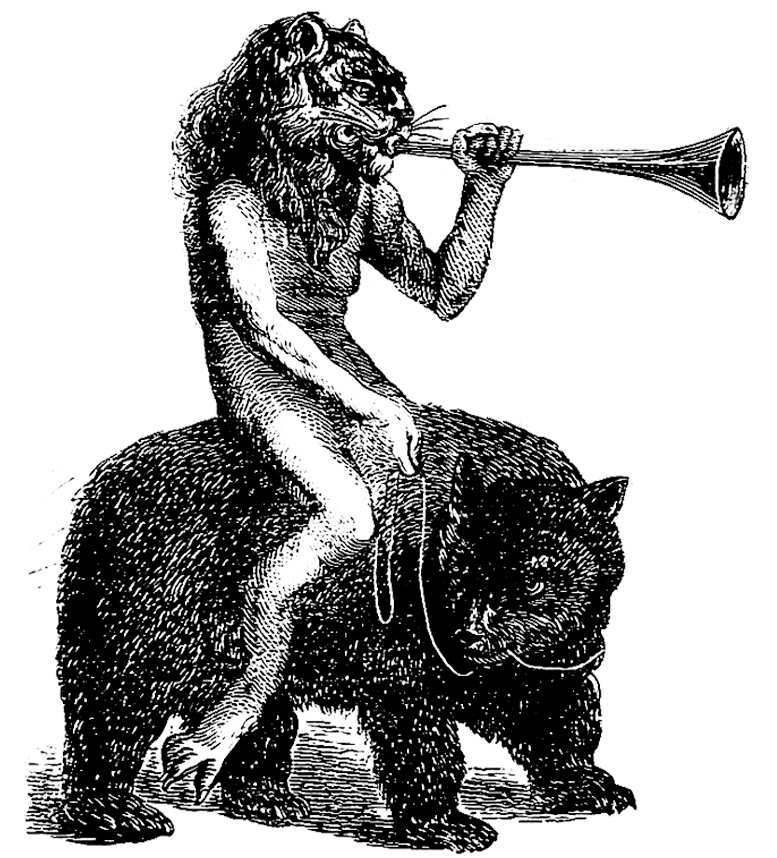
He appears as a man with the face of a lion, riding upon a mighty bear.
In his hand, he holds a viper—a creature representing cunning, transformation, and danger.
His approach is heralded by the sound of trumpets, a mark of royal authority and divine power.
The lion’s face signifies courage, sovereignty, and divine illumination.
The bear represents grounded power and endurance, anchoring his celestial knowledge to material reality.
The viper, coiled and poised, warns that enlightenment carries risk.
In occult symbolism, Purson’s composite form reveals the duality of wisdom—both noble and perilous.
Each element of his appearance encodes an aspect of mastery over spirit, matter, and will.
Powers and Abilities
Purson’s domain is knowledge, divination, and revelation.
Texts describe him as truthful yet formidable, capable of unveiling cosmic secrets.
His main powers include:
- Revelation of Hidden Things: Purson reveals past, present, and future events to the summoner.
- Divination: He answers questions with accuracy, shedding light on both human and divine mysteries.
- Treasure Discovery: He locates hidden wealth, symbolizing spiritual as well as material gain.
- Shape-Shifting: Purson can take human or aerial forms, adapting to the magician’s perception.
- Command over Spirits: As a king, he commands twenty-two legions that obey his word.
These abilities mark Purson as both scholar and sovereign—a guide between ignorance and understanding.
He grants knowledge not freely, but as a test of discipline and worthiness.
Role in Ritual and Practice
In traditional Solomonic magic, summoning Purson requires precision and reverence.
The magician must draw a consecrated circle, prepare Purson’s sigil, and recite his invocation under correct astrological conditions.
He is approached during planetary hours favorable to revelation and intellect—often under the influence of Mercury or the Sun.
His sigil, a geometric emblem of curved and intersecting lines, serves as his magical signature.
It anchors his energy and ensures safe communication between summoner and spirit.
Purson’s invocations typically seek insight, foresight, or discovery of truth.
Practitioners may request guidance on moral dilemmas, lost items, or spiritual enlightenment.
Yet Purson demands respect—his lion aspect signifies authority, not submission to human whim.
Within Goetic hierarchy, he acts as a mediator between infernal and celestial realms.
His rulership is intellectual rather than destructive, aligning him with wisdom over chaos.
Symbolism and Interpretation
Purson’s imagery conveys layered meaning.
His lion face reflects divine strength and clarity of will.
The bear symbolizes instinct harnessed through discipline, while the viper reveals danger in knowledge pursued without virtue.
Together, they portray the eternal struggle between enlightenment and hubris.
Psychologically, Purson represents the archetype of the wise shadow—a figure offering forbidden insight.
He challenges seekers to confront inner fears and limitations before truth can be grasped.
His shifting forms mirror the fluid nature of knowledge itself: mutable, elusive, and ever-evolving.
In esoteric philosophy, Purson embodies the synthesis of intellect and intuition.
He is the voice of the subconscious unveiling what reason alone cannot perceive.
For initiates, he becomes a symbol of integration—the harmony of divine revelation and mortal understanding.
Purson in Modern Occultism
In modern magic, Purson remains a revered figure among practitioners of Goetic and chaos traditions.
Many modern occultists interpret him not as a malevolent being, but as a neutral intelligence.
They view his presence as an externalized form of the human subconscious or collective wisdom.
Rituals invoking Purson often focus on meditation, scrying, or automatic writing.
His sigil serves as a meditative focal point for intuition and divination.
Practitioners report heightened awareness, symbolic dreams, or insight into complex personal situations.
In contemporary literature, Purson is sometimes reimagined as a guardian of hidden knowledge or a cosmic librarian.
His enduring appeal lies in his balance of danger and enlightenment—a reminder that knowledge carries both risk and reward.
Ethical and Philosophical Perspectives
Working with Purson demands ethical clarity and mental discipline.
Traditional texts warn that improper summoning may result in confusion or obsession.
Modern practitioners instead approach him through symbolic or psychological frameworks.
To engage with Purson responsibly, intent must be pure and purpose defined.
He reveals truth to those who seek understanding, not power for its own sake.
In this sense, Purson embodies the moral dimension of knowledge: wisdom must serve growth, not vanity.
Legacy and Cultural Influence
Across centuries, Purson has remained a figure of intellectual power and mystery.
His presence bridges medieval superstition and modern spirituality.
As the lion-faced King of Hell, he symbolizes illumination drawn from the shadow.
From grimoires to modern art, his influence persists as a metaphor for disciplined inquiry.
He challenges seekers to pursue knowledge courageously, balancing ambition with humility.
In an age of endless information, Purson’s lesson endures—truth must be earned through insight, not consumed without thought.