
Introduction
In the vast landscape of demonology, few entities embody mystery and authority like Viné.
Listed in the Ars Goetia, part of The Lesser Key of Solomon, Viné is a formidable demon tied to knowledge, transformation, and the elements.
He commands storms, reveals hidden truths, and demonstrates mastery over creation and destruction.
As a Great King and Earl of Hell, he holds dominion over 36 legions of spirits.
This article explores Viné’s origins, powers, and symbolism, uncovering his enduring role in occult traditions and modern esoteric study.
Origins in the Ars Goetia
Viné appears as the 45th spirit in the Ars Goetia, the first section of The Lesser Key of Solomon.
This 17th-century grimoire, compiled from older magical traditions, remains one of the most influential texts in Western occultism.
It presents the seventy-two demons allegedly bound by King Solomon through divine seals and invocations.
In this hierarchy, Viné’s title as Great King and Earl of Hell highlights his dual authority—both noble and martial.
He rules over thirty-six legions of spirits, commanding forces tied to knowledge, destruction, and revelation.
His position in the Goetic order signifies not only immense power but also balance between intellect and chaos.
The origin of the name “Viné” remains debated among scholars.
Some trace it to Semitic or Latin roots linked to vineus (vine or growth), suggesting a connection with fertility and cultivation.
Others view it as symbolic of vitality and transformation, themes central to alchemy and mystical evolution.
Appearance and Attributes
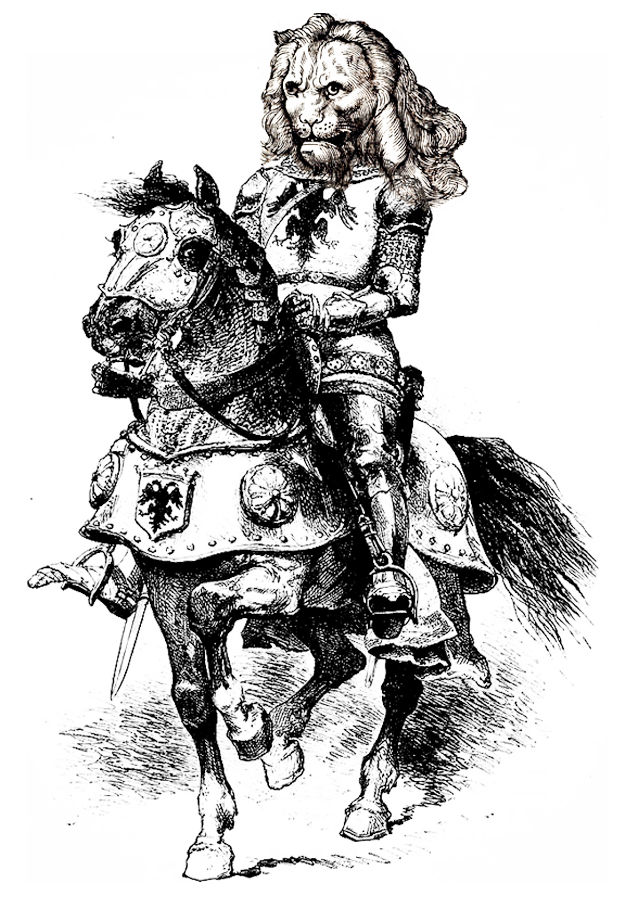
According to The Ars Goetia, Viné demon appears as a lion riding a black horse, holding a viper in his hand.
This striking imagery merges regal authority with primal energy.
The lion represents strength and sovereignty, while the viper embodies hidden knowledge and transformation.
In some accounts, he takes human form to converse directly with the summoner, blending intimidation with wisdom.
Viné’s symbolic presence connects him to both solar and chthonic forces—a ruler who bridges light and shadow.
His duality mirrors his control over storms and his role as both builder and destroyer.
Powers and Abilities
The Ars Goetia attributes several powerful abilities to Viné.
These reflect his mastery of nature, structure, and secret knowledge:
- Revelation of Hidden Truths: Viné exposes concealed knowledge and uncovers mysteries of past, present, and future.
- Discovery of Witches and Sorcerers: He reveals practitioners of forbidden arts and exposes deception.
- Elemental Control: Viné can summon storms, tempests, and lightning, symbolizing his dominion over chaos and change.
- Architectural Power: He builds towers and fortifications or destroys them at will, representing both creation and decay.
These gifts make Viné a spirit of dual transformation—he embodies the harmony between opposing forces.
His power over storms aligns him with divine wrath and renewal, much like ancient gods of thunder and change.
For occultists, Viné represents the alchemy of revelation—the act of transforming ignorance into enlightenment through destruction and reconstruction.
Symbolism and Esoteric Interpretation
Every aspect of Viné’s description carries symbolic meaning.
The lion symbolizes courage, authority, and illumination—the ability to face truth without fear.
The black horse signifies endurance and mastery of physical realms, often associated with Saturnian energy and temporal power.
The viper embodies hidden wisdom and the shedding of old forms, a potent image of spiritual evolution.
Viné’s ability to build and destroy structures mirrors the alchemical process of solve et coagula—dissolution and recombination.
He dismantles illusions to rebuild truth, guiding practitioners through cycles of chaos and renewal.
His storm-calling ability can be read metaphorically: storms purify and transform, clearing the air for revelation.
For mystics, invoking Viné symbolizes confronting internal storms to uncover hidden insight and self-mastery.
In some modern interpretations, Viné governs psychic architecture—the inner structures of thought and perception.
Through meditation on his sigil, practitioners seek to reconstruct the mind into a balanced state of clarity and strength.
Cultural and Historical Context
The Lesser Key of Solomon emerged in a Europe captivated by the occult and the scientific revolution.
Alchemy, astrology, and theology intertwined in a pursuit of divine knowledge through structured experimentation.
Viné’s attributes—storms, construction, revelation—echo this Renaissance obsession with harnessing natural forces.
His dual roles of creation and destruction parallel the work of the alchemist, who breaks down matter to refine it.
Thus, Viné’s lore may reflect humanity’s attempt to control both the physical and metaphysical elements of existence.
While Viné lacks the widespread notoriety of demons like Asmodeus or Baal, his archetype persists.
He embodies the scholar’s curiosity, the magician’s ambition, and the philosopher’s longing to understand hidden truths.
Throughout centuries, his story has been preserved in manuscripts and echoed in occult orders studying the Goetia’s complex hierarchy.
Viné in Ritual and Modern Occultism
In traditional Goetic practice, summoning Viné involves invoking his sigil within a consecrated circle.
The magician calls him to reveal truths, uncover deceit, or inspire transformation.
Protective names of power—such as Adonai or Elohim—are invoked to ensure safe communication.
Modern occultists, however, often interpret Viné symbolically rather than literally.
He represents the forces of disruption and renewal within the self, guiding personal growth and transformation.
In this view, the storm he commands is internal—cleansing old patterns to create space for wisdom.
Practitioners of chaos magic or psychological occultism may meditate on Viné’s archetype to break mental stagnation.
His lion aspect symbolizes courage, reminding seekers that truth often lies beyond comfort.
Viné’s sigil, found in most editions of the Lesser Key of Solomon, remains a focal point in ritual and meditation.
It serves as a symbolic key for unlocking insight and restoring internal order through deliberate transformation.
Symbolic Legacy and Influence
Though less known than the seven princes of Hell, Viné demon continues to influence both literature and modern esotericism.
He appears in occult art and fiction as a figure of controlled chaos—a builder who destroys to rebuild stronger foundations.
In literature and media, Viné represents the tension between creation and destruction.
Authors and mystics use his imagery to explore the nature of change and the cost of enlightenment.
His archetype resonates with Hermetic, alchemical, and even Jungian themes.
To face Viné is to confront the inner storm—the dissolution of old identity before the dawn of new understanding.
Philosophically, he embodies the idea that truth requires both deconstruction and reconstruction, a process mirrored in every spiritual path.
Conclusion
Viné, the lion-faced King and Earl of Hell, endures as one of the most compelling spirits of the Ars Goetia.
His mastery over storms, secrets, and structures symbolizes the transformative power inherent in chaos and revelation.
To study Viné is to explore the boundary between intellect and instinct, creation and destruction, wisdom and power.
Whether seen as a literal spirit, a psychological archetype, or a mythic teacher, the Viné demon remains a timeless emblem of change.
He invites seekers to face their internal storms, uncover truth, and rebuild their worlds with greater strength and understanding.