
Introduction
In the intricate world of demonology, few spirits embody transformation and intellect as profoundly as Zagan.
Listed among the seventy-two demons of the Ars Goetia, the first book of The Lesser Key of Solomon, Zagan holds a place of great reverence.
He is a King and President of Hell, presiding over thirty-three legions of infernal spirits.
Associated with alchemy, wisdom, and metamorphosis, Zagan bridges the realms of material and spiritual change.
This article explores his origins, attributes, and lasting significance in occult philosophy and modern esoteric practice.
Origins in Demonology
Zagan’s first appearance occurs in the Ars Goetia, compiled in the seventeenth century from older magical traditions.
The grimoire describes his abilities, rank, and appearance in detail, positioning him among the highest infernal authorities.
As the sixty-first spirit, he embodies mastery over transmutation and enlightenment—concepts central to Western alchemy.
The name “Zagan” likely stems from older Semitic or Mesopotamian sources.
Linguists suggest connections to words meaning “metalworker” or “refiner,” fitting his role as an alchemist-demon.
Others link his name to forgotten deities of fire or craft, reinforcing his transformative symbolism.
Zagan’s inclusion in The Lesser Key of Solomon situates him within a long lineage of spirits associated with knowledge, creation, and transformation.
This blending of Judeo-Christian demonology and pagan mysticism reflects the Renaissance pursuit of understanding the divine through hidden sciences.
Characteristics and Powers
Zagan’s descriptions portray a majestic yet formidable presence.
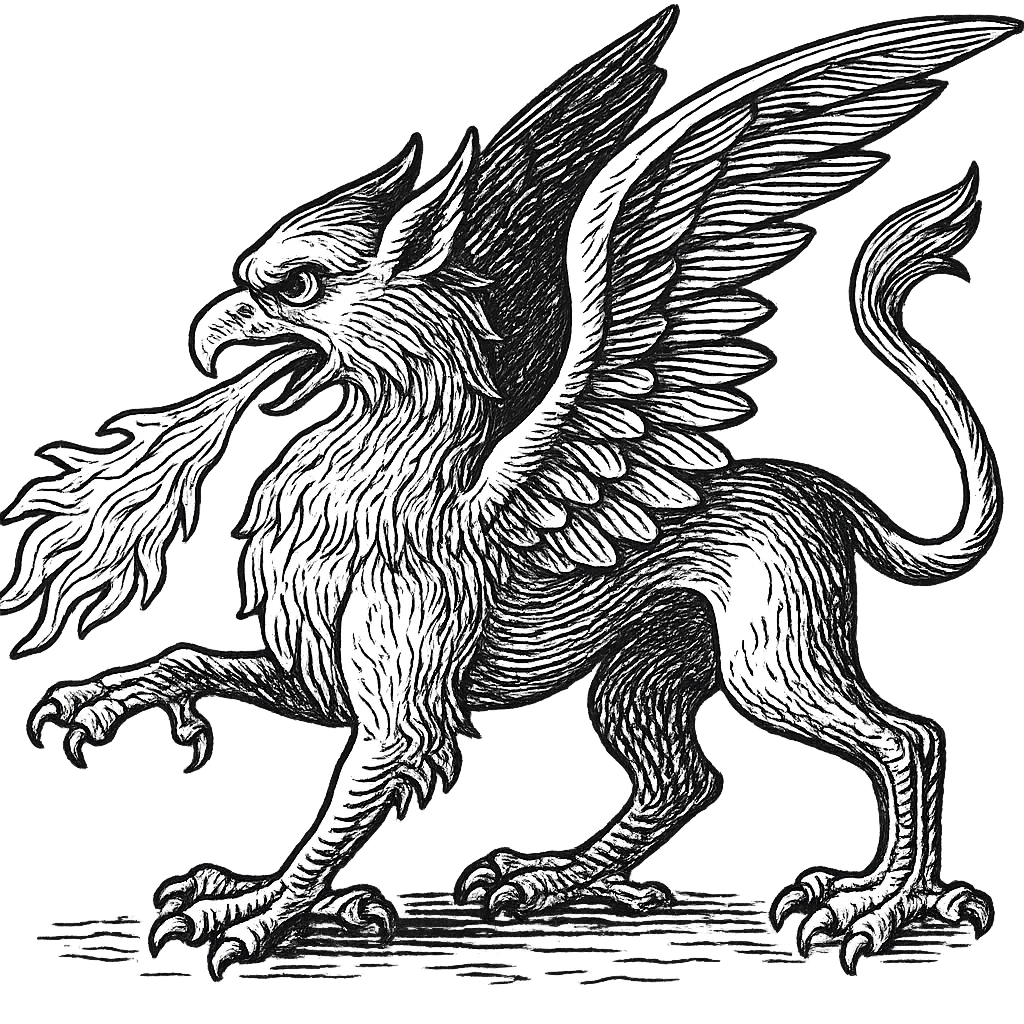
He manifests first as a griffin-winged bull, symbolizing strength, wisdom, and celestial power.
He later assumes the form of a man, signifying intellect and communication.
The Ars Goetia attributes several distinct powers to Zagan:
- Transformation of Substances: He turns water into wine, blood into oil, and metals into coins.
- Bestowal of Wisdom: Zagan grants wit, eloquence, and mental sharpness to those he favors.
- Spiritual Transmutation: He can turn fools into wise men, symbolizing moral and intellectual refinement.
These abilities embody the alchemical ideal—the union of material and spiritual transformation.
He governs both physical alchemy (the changing of substances) and inner alchemy (the evolution of consciousness).
Zagan’s dominion over thirty-three legions underscores his immense authority within Hell’s hierarchy.
He commands spirits that aid in transmutation, revelation, and the pursuit of balance between matter and mind.
Symbolism and Interpretation
The imagery of Zagan’s griffin-winged bull form carries profound esoteric meaning.
The bull represents earthly strength and fertility, while the wings symbolize aspiration toward higher realms.
Together, they mirror the Hermetic principle “As above, so below,” uniting physical and divine energies.
In alchemical symbolism, Zagan embodies the philosopher’s goal—to transform base metals into gold and ignorance into wisdom.
His ability to make fools wise parallels the inner purification sought by adepts of the Great Work.
Esoteric scholars interpret his transformations—water into wine, blood into oil—as metaphors for spiritual awakening.
They signify elevation from instinct to intellect, from emotion to understanding.
Zagan’s dual form—beast and man—reflects the human struggle between primal nature and enlightened reason.
His teachings urge integration rather than suppression, guiding practitioners toward balance and insight.
Role in Ritual and Ceremonial Magic
In Goetic ritual, Zagan is invoked for wisdom, eloquence, and transformation of fortune.
His sigil, drawn within a consecrated circle, serves as a channel for communication and focus.
Practitioners call upon him during hours of Mercury or Jupiter—planets tied to intellect and prosperity.
Because of his transformative nature, Zagan is often approached by those seeking personal development and creative mastery.
His influence extends to art, science, and innovation, where inspiration and practicality converge.
Occult records describe Zagan as dignified and direct, favoring respect and clarity in ritual intent.
He teaches that mastery of the self is the true path to alchemical success.
Thus, he embodies both external transformation and internal enlightenment.
Historical and Alchemical Context
Zagan’s mythos aligns closely with the Renaissance revival of alchemy and Hermeticism.
During this era, scholars like Paracelsus and Agrippa pursued spiritual transmutation as fervently as physical experimentation.
Zagan personifies this union of science and mysticism—the belief that changing matter mirrors the transformation of the soul.
The Ars Goetia itself arose from an age when theology, natural philosophy, and the occult intertwined.
Practitioners sought divine wisdom through the disciplined study of hidden forces.
Zagan’s powers of transmutation reflect the ultimate alchemical quest: turning ignorance into illumination.
Some occult historians associate Zagan with Baphomet, another symbol of duality and alchemical balance.
Both embody the reconciliation of opposites, the fusion of human intellect with divine mystery.
Cultural and Literary Influence
Zagan’s legend extends beyond grimoires into literature, art, and popular culture.
He appears in works of occult fiction, modern magic systems, and fantasy games that draw from demonological lore.
Writers portray him as an intelligent, cunning figure capable of reshaping reality through intellect and will.
In modern occultism, Zagan is invoked as a mentor of transformation, guiding practitioners toward creative and spiritual evolution.
Artists view him as a symbol of mastery, embodying the struggle to refine one’s craft and purpose.
His alchemical themes resonate deeply in an era seeking meaning through self-transformation and innovation.
Philosophical Significance
Beyond demonology, Zagan represents a universal archetype of change.
He bridges myth, psychology, and metaphysics as a symbol of renewal and balance.
To philosophers and esotericists, his transformations mirror the human pursuit of wisdom through experience.
In Jungian analysis, Zagan aligns with the process of individuation—the integration of the unconscious into a unified self.
His lessons remind seekers that enlightenment arises from confronting duality and reconciling opposites.
Thus, Zagan transcends the label of “demon.”
He becomes a symbolic teacher, revealing that all transformation begins within.
Conclusion
Zagan, the griffin-winged King and President of Hell, stands as a powerful symbol of transformation and intellect.
His alchemical gifts—changing water into wine and ignorance into wisdom—embody the eternal human quest for perfection.
In the Ars Goetia, he is both a master of matter and a mentor of mind.
From ancient mysticism to modern psychology, Zagan’s story endures as a guide to the art of becoming.
Whether seen as a spirit, symbol, or archetype, the Zagan demon represents the power to evolve, refine, and transcend.