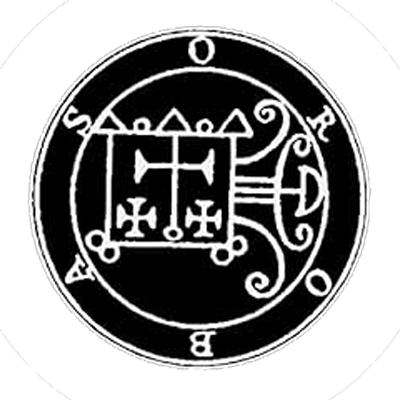
Orobas is one of the 72 demons listed in the Ars Goetia, a text attributed to King Solomon, who was said to have bound these spirits to serve his will. The Ars Goetia draws heavily from earlier grimoires and medieval demonological traditions, blending Judeo-Christian cosmology with pre-Christian mythological elements. Orobas, like many demons in the text, is described with a rank, appearance, and specific abilities, reflecting the structured hierarchies of both heavenly and infernal realms in medieval thought.
The name “Orobas” does not have a clear etymological origin, but it may derive from ancient linguistic roots or be a corruption of older terms. Some scholars suggest connections to words meaning “oath” or “promise” in ancient languages, aligning with Orobas’s reputation for truthfulness—a rare trait among demons. The demon’s depiction in the Ars Goetia places him within a Christian framework, where demons are fallen angels or malevolent spirits subordinate to divine authority, yet capable of interacting with humans through ritualistic summoning.
Description and Attributes
According to the Ars Goetia, Orobas is a Great Prince of Hell, commanding 20 legions of spirits. He is typically depicted as a horse, though he can transform into a human form at the summoner’s request. This equine imagery may symbolize strength, speed, or nobility, reflecting his high rank. Unlike many demons associated with deception, Orobas is noted for his honesty, particularly in answering questions about the past, present, and future. The text states that he provides “true answers of things past, present, and to come,” as well as insights into divine and secret matters, including the creation of the world.
Orobas’s powers extend beyond divination. He is said to grant dignities and prelacies (high-ranking positions), reconcile friends and foes, and protect summoners from being tempted by other spirits. His truthfulness and protective nature make him a relatively approachable figure in demonology, though summoners are still cautioned to approach with respect and proper ritual safeguards, as with any infernal entity.
Role in Ritual Magic
In the context of the Ars Goetia, summoning Orobas requires adherence to precise rituals, including the use of sigils, incantations, and protective circles. His sigil—a unique symbol associated with his identity—is a critical component for invoking his presence. Practitioners of ceremonial magic would draw this sigil, often in chalk or on consecrated parchment, while reciting specific conjurations to call Orobas forth. The demon’s willingness to provide truthful answers and assistance made him a desirable entity for those seeking knowledge or influence, though the moral and spiritual risks of such practices were heavily debated in religious and philosophical circles.
Orobas’s role as a truth-teller sets him apart from other demons, who are often portrayed as deceitful or malevolent. This characteristic may reflect a broader philosophical tension in demonology: the idea that even fallen beings retain traces of their divine origins, capable of serving human needs when properly commanded. However, medieval and Renaissance texts consistently warn that any interaction with demons, including Orobas, carries inherent dangers, as their ultimate allegiance lies with the infernal hierarchy.
Symbolism and Interpretation
Orobas’s equine form and truthfulness invite symbolic interpretation. Horses in mythology often represent power, freedom, or the ability to traverse boundaries, which aligns with Orobas’s ability to navigate temporal and divine knowledge. His honesty, meanwhile, contrasts with the stereotypical demonic archetype, suggesting a complex moral landscape where not all infernal beings are wholly malevolent. Some modern occultists interpret Orobas as a guide to hidden truths, a mediator between the material and spiritual worlds, or a symbol of disciplined power when harnessed correctly.
In psychological or allegorical readings, Orobas may represent the human capacity to seek truth amid chaos or to reconcile conflicting aspects of the self. His role in granting dignities and resolving disputes could symbolize the pursuit of social harmony or personal authority, themes that resonate in both historical and contemporary contexts.
Orobas in Modern Occultism
In modern esoteric traditions, Orobas remains a figure of interest among practitioners of ceremonial magic, demonology enthusiasts, and those exploring the Ars Goetia as a historical or spiritual text. His depiction in popular culture, while less prominent than demons like Baphomet or Asmodeus, occasionally appears in fantasy literature, role-playing games, and occult-themed media, where he is often portrayed as a noble yet enigmatic entity.
Contemporary occultists may approach Orobas with a blend of reverence and caution, viewing him as a source of wisdom rather than a malevolent force. Some integrate his sigil or attributes into meditative or ritual practices, seeking insight or clarity on personal matters. However, the ethical implications of engaging with demonic entities remain a point of contention, with some practitioners emphasizing respect for spiritual boundaries and others rejecting demonology altogether.
Conclusion
Orobas, the horse-demon and Great Prince of Hell, occupies a unique place in the pantheon of the Ars Goetia. His truthfulness, protective nature, and multifaceted abilities make him a compelling figure for study, whether as a historical artifact of medieval demonology or a symbol of deeper esoteric truths. While his equine form and infernal rank evoke the fantastical, his role as a revealer of knowledge speaks to universal human desires for understanding and influence. As with all figures in demonology, Orobas invites both fascination and caution, embodying the delicate balance between power and peril in the pursuit of the unknown.