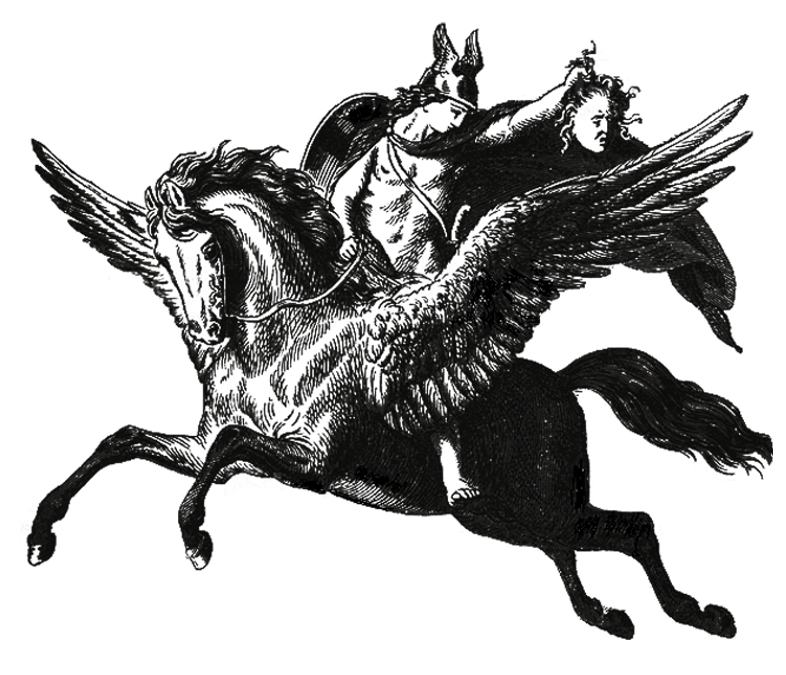
Seere, also spelled as Sear or Seir, is one of the demons documented in the Ars Goetia, a text attributed to King Solomon, who, according to legend, bound 72 demons to his service. The Ars Goetia draws heavily from earlier grimoires and medieval traditions, blending Jewish, Christian, and occult influences. Seere’s inclusion in this hierarchy reflects the fascination with spiritual hierarchies during the Renaissance, a period when demonology and angelology were studied with equal fervor.
The name “Seere” may derive from Semitic or Hebrew roots, potentially linked to terms meaning “prince” or “hairy” (a reference to demonic forms in some traditions). However, the exact etymology remains speculative, as is common with many demonic names in the Ars Goetia.
Description and Characteristics
According to the Ars Goetia, Seere is a mighty Prince of Hell, ruling over 26 legions of spirits. He is described as appearing as a beautiful man riding a winged horse, a striking image that contrasts with the more grotesque depictions of other demons. This noble and elegant appearance underscores Seere’s association with grace, speed, and benevolence—qualities that set him apart from the more malevolent entities in the demonic hierarchy.
Seere is noted for his indifferent nature, neither wholly malevolent nor benevolent. This neutrality makes him a unique figure, as many demons are explicitly aligned with destructive or chaotic forces. His disposition suggests a pragmatic entity, willing to assist those who summon him without the malicious intent often attributed to other infernal beings.
Powers and Abilities
Seere’s powers are both practical and extraordinary, making him a valuable ally for practitioners of the occult. His abilities include:
Swift Travel and Transportation: Seere is renowned for his ability to move objects or people across great distances with incredible speed. The Ars Goetia claims he can “go to any place in the twinkling of an eye,” making him a patron of rapid movement and logistics.
Discovery of Hidden Things: Seere can reveal hidden treasures, secrets, or lost items, a power that aligns with the desires of many who sought demonic aid in the pursuit of wealth or knowledge.
Time Manipulation: He is said to have the ability to manipulate the perception of time, allowing events to unfold more quickly or slowly as needed.
Obedience and Reliability: Unlike some demons who require coercion or trickery, Seere is described as obedient and willing to carry out the commands of the conjurer, provided the proper rituals are followed.
These abilities reflect Seere’s role as a facilitator, a spirit who aids in overcoming physical and temporal barriers. His powers appeal to those seeking practical solutions, whether in the form of wealth, information, or efficiency.
Summoning Seere
Summoning Seere, like other Goetic demons, requires adherence to specific rituals outlined in the Ars Goetia. These typically involve the use of a magic circle, sigils, and invocations to ensure the conjurer’s safety and the demon’s compliance. Seere’s sigil, a unique geometric design, is essential for establishing a connection with him. The conjurer must approach Seere with respect and clarity of intent, as his neutral nature does not guarantee automatic cooperation.
The rituals emphasize preparation and protection, as even a neutral demon like Seere commands immense power. Practitioners are advised to study the Ars Goetia carefully and approach such workings with caution, as errors in ritual could lead to unintended consequences.
Cultural Significance
Seere’s depiction in demonology reflects broader themes in occult traditions, particularly the human desire to transcend limitations of time, space, and knowledge. His association with speed and discovery resonates with the Renaissance-era fascination with exploration, scientific advancement, and the uncovering of hidden truths. In a modern context, Seere could be seen as a symbolic figure for those navigating the fast-paced, information-driven world of today.
Conclusion
Seere, the 70th spirit of the Ars Goetia, is a compelling figure in the study of demonology. His noble appearance, neutral disposition, and remarkable abilities make him a standout among the infernal hierarchy. Whether viewed as a literal entity or a symbolic representation of human ambition, Seere invites us to explore the boundaries of possibility and the allure of the unknown. For those delving into the occult or simply curious about the esoteric, Seere remains a fascinating subject, embodying the eternal quest for knowledge, speed, and mastery over the unseen.