
Introduction
In demonology, particularly within Western occult traditions, Sitri—also known as Sytry or Bitru—stands as one of the most alluring and enigmatic spirits.
Appearing in the Ars Goetia, a section of the 17th-century grimoire The Lesser Key of Solomon, Sitri commands power over desire, passion, and revelation.
Both feared and revered, Sitri bridges the boundaries between primal instinct and refined beauty.
This article explores his origins, appearance, powers, and symbolism, revealing how the Sitri demon embodies the eternal tension between temptation and truth.
Origins in Demonology
Sitri first appears in The Ars Goetia, a foundational text of Western demonology compiled during the 17th century.
The work catalogs 72 demons said to have been bound by King Solomon, reflecting the era’s fascination with spiritual hierarchies and forbidden knowledge.
Earlier references to Sitri appear in Johann Weyer’s Pseudomonarchia Daemonum (1577), where he is listed among the infernal princes who serve under Solomon’s command.
According to these grimoires, Sitri ranks as the 12th spirit and holds the title of Great Prince of Hell, commanding 60 legions of subordinate spirits.
His name’s origin remains uncertain.
Some scholars propose links to Semitic or Greco-Roman roots, suggesting meanings tied to fire, desire, or secrecy.
However, like many Goetic names, “Sitri” likely evolved through linguistic fusion, combining older mythic elements into a distinctly Christian demonological form.
Sitri’s prominence in these texts highlights the medieval and Renaissance interest in classifying supernatural beings and mastering emotional and spiritual forces through ritual magic.
Attributes and Appearance
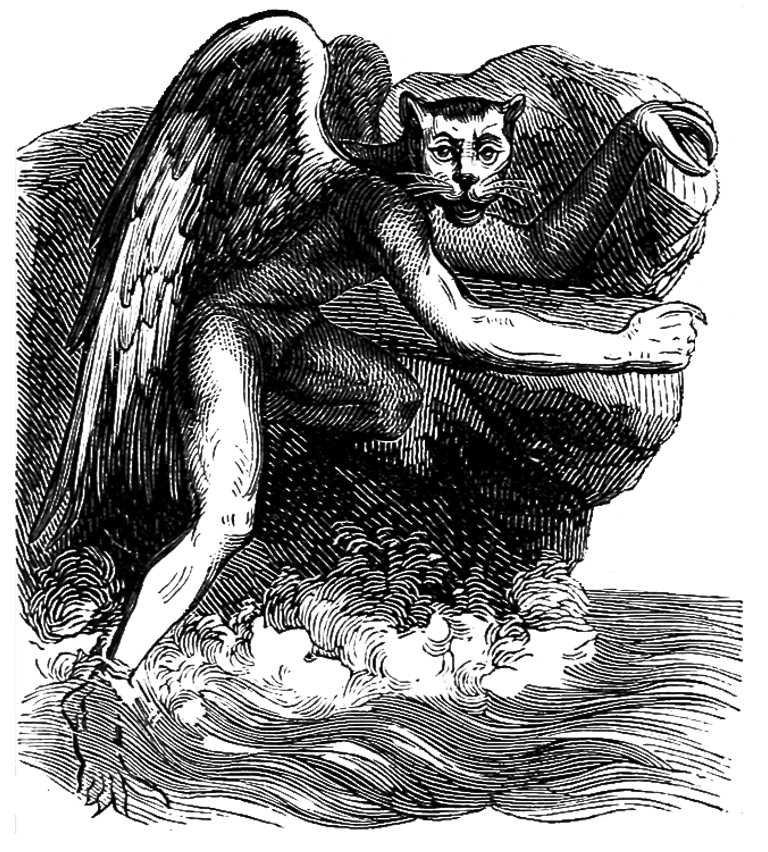
The Ars Goetia gives Sitri a dual nature that reflects his domain over passion and transformation.
He first appears as a leopard, a creature symbolizing ferocity, sensuality, and instinct.
At the magician’s request, he assumes a beautiful human form with angelic wings, merging animal energy with divine elegance.
This transformation illustrates Sitri’s mastery over polarity—wildness and refinement, chaos and charm.
His presence is said to radiate both magnetism and danger, compelling respect and fascination.
In his human guise, Sitri speaks eloquently and seductively, capable of influencing emotions and unveiling hidden truths.
This imagery aligns with his role as a spirit of allure and revelation, blurring the boundary between desire and exposure.
Powers and Abilities
The Sitri demon is renowned for his dominion over love, desire, and emotional influence.
His powers, detailed in grimoires such as the Ars Goetia and the Pseudomonarchia Daemonum, include several key abilities.
1. Kindling Passion and Desire
Sitri can ignite intense attraction between men and women, or amplify existing feelings of affection.
He is said to “inflame men with women’s love and women with men’s love,” emphasizing his control over romantic energy.
2. Revealing Hidden Truths
Sitri exposes secrets of love and intimacy, often unveiling what others conceal.
His ability to “make people appear naked” symbolizes the unmasking of truth, both literal and metaphorical.
3. Manipulating Emotions
He governs the ebb and flow of desire, able to strengthen or weaken passion at will.
Practitioners invoke Sitri to influence emotional bonds, reconcile lovers, or test the authenticity of affection.
4. Dual Manifestation
His shifting forms—the leopard and the winged man—reflect mastery over transformation.
This trait associates him with metamorphosis, charisma, and the power of self-presentation.
Together, these powers make Sitri a complex figure: both tempter and revealer, capable of illuminating or consuming the human heart.
Symbolism and Interpretation
Sitri’s symbolism intertwines the wild instinct of the leopard with the refined beauty of the angelic figure.
He personifies the duality of love—a force that can uplift or destroy, depending on how it is harnessed.
1. The Dual Nature of Desire
His transformation embodies the conflict between animal instinct and conscious control.
This duality mirrors the spiritual struggle between earthly pleasure and divine restraint.
2. The Power of Revelation
Sitri’s ability to unveil or “expose” people may represent the psychological act of stripping away pretense.
In esoteric philosophy, nakedness symbolizes truth unveiled, revealing one’s authentic nature beneath illusion.
3. The Archetype of the Shadow Self
From a psychological perspective, Sitri represents the shadow aspect of desire—the hidden cravings and emotions often suppressed by the conscious mind.
Invoking Sitri thus becomes a metaphor for confronting one’s repressed urges and integrating them into self-awareness.
4. The Alchemical Fire of Transformation
Desire, when mastered, becomes a creative force.
In this sense, Sitri embodies the alchemical fire that refines passion into spiritual insight, turning lust into illumination.
Sitri in Ritual and Magic
Summoning Sitri, according to the Ars Goetia, demands strict ritual discipline and clear intention.
Practitioners must use his sigil, a sacred geometric emblem that serves as the key to his presence.
Magicians perform invocations within protective circles, calling upon divine names to maintain authority and safety.
Sitri responds best to those who approach with respect and precision, as his seductive influence can easily overwhelm the unprepared.
In traditional magic, Sitri’s aid was sought to inspire love, test loyalty, or reveal hidden emotions.
However, his energies were considered volatile—capable of instigating obsession or emotional imbalance if misused.
In modern occultism, Sitri’s symbolism has evolved.
He is viewed not as a literal demon but as an archetypal force of creativity, passion, and authenticity.
Rituals invoking Sitri today often focus on self-discovery and empowerment, transforming desire into artistic or spiritual energy.
Cultural and Modern Influence
Sitri’s themes—desire, beauty, and exposure—remain timeless, resonating beyond the confines of medieval demonology.
He appears symbolically in art, literature, and modern occult practices as a representation of passion’s dual edge.
In contemporary esotericism, Sitri is often invoked to awaken emotional depth or enhance charisma, reflecting a more psychological interpretation.
Artists and writers explore his imagery as an allegory for temptation, honesty, and creative inspiration.
While less famous than spirits like Paimon or Asmodeus, Sitri’s archetype endures as a mirror of human desire, reminding seekers that passion can both enlighten and consume.
Conclusion
Sitri, the 12th spirit of the Ars Goetia, embodies the eternal tension between passion and restraint.
His leopard form symbolizes instinct and appetite, while his angelic visage reflects beauty, refinement, and revelation.
Through his powers of love, exposure, and transformation, the Sitri demon teaches that desire is both a danger and a teacher.
When mastered, it reveals the truth within ourselves; when ignored, it consumes us.
Sitri endures as a powerful symbol of emotional truth and spiritual metamorphosis—a force that strips away illusion and exposes the heart of what it means to desire.