
Introduction
In the intricate world of demonology, Vassago stands as one of the most intriguing and benevolent spirits.
Known from The Lesser Key of Solomon, Vassago is the third demon of the Ars Goetia—a spirit of truth, foresight, and revelation.
Unlike many of his infernal counterparts, he is regarded as good-natured and trustworthy, a rare quality in demonic lore.
Revered as a Prince of Hell, he is invoked for divination, locating lost objects, and uncovering hidden knowledge.
This article explores Vassago’s origins, abilities, and lasting significance in the study of the occult.
Origins and Historical Context
Vassago first appears in The Lesser Key of Solomon, a 17th-century grimoire rooted in medieval magical tradition.
The Ars Goetia, its first section, lists seventy-two spirits allegedly bound by King Solomon through divine command.
Vassago, the third spirit, occupies a high position within this infernal hierarchy.
The name “Vassago” has uncertain origins.
Some researchers link it to Latin or Hebrew roots meaning “to seek” or “to divine,” echoing his role as a spirit of revelation.
His title as a prince, rather than king or duke, indicates noble but not supreme authority.
This suggests a spirit of great power who nonetheless serves a higher order within Hell’s structure.
Vassago’s characterization reflects the syncretic nature of Solomonic magic.
It blends Jewish mysticism, Christian theology, and older pagan ritual, creating a complex spiritual system where demons embody cosmic forces.
Attributes and Abilities
Among Goetic spirits, Vassago is unique for his benevolent disposition.
The Ars Goetia describes him as a “good-natured spirit”, willing to speak truthfully and guide seekers without malice.
His main abilities include:
- Divination: Vassago reveals truths about past, present, and future events with clarity and precision.
- Finding Lost Objects: He locates lost items or hidden treasures, both material and symbolic.
- Truthful Communication: Unlike deceitful spirits, Vassago is said to answer questions honestly.
- Spiritual Guidance: He helps practitioners gain insight into difficult moral or personal situations.
Vassago commands twenty-six legions of spirits, reflecting his rank and influence.
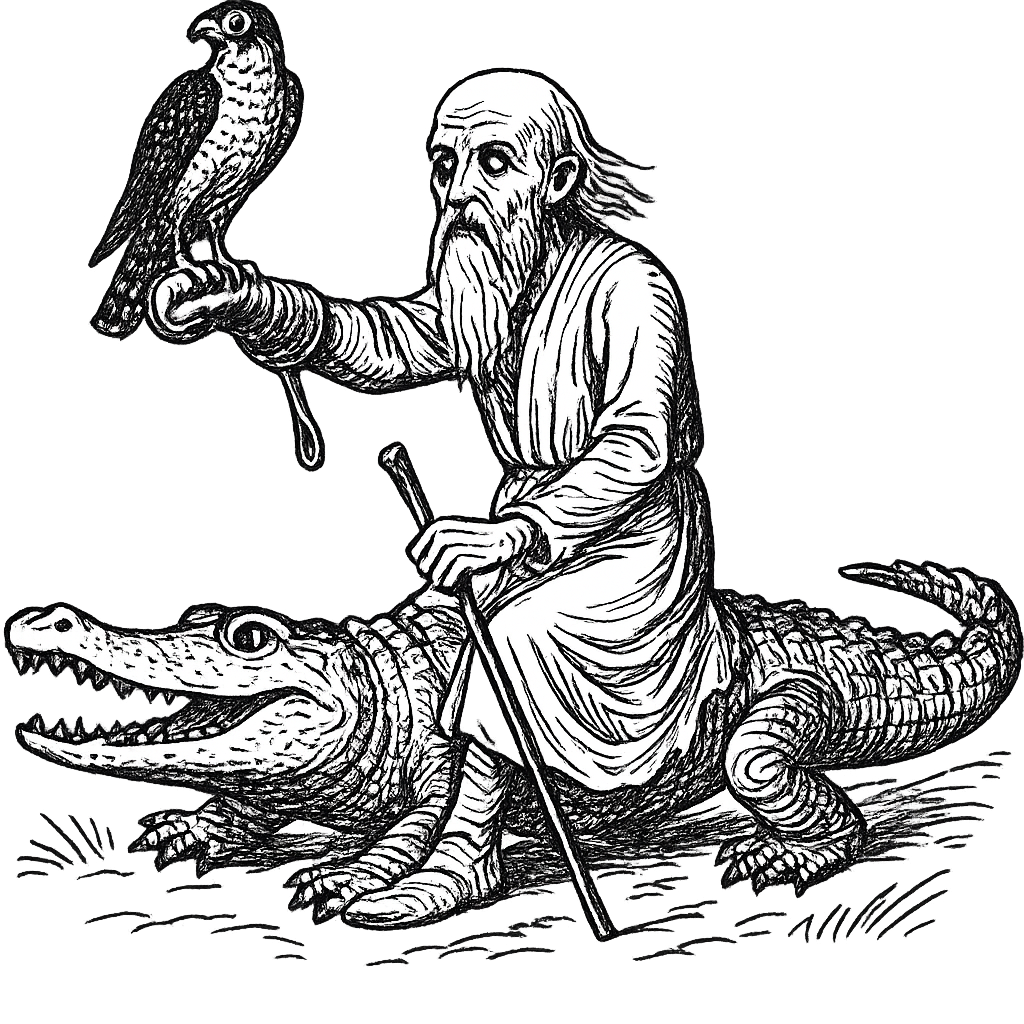
His iconography varies: some depict him as angelic and radiant, others as a hybrid of man and beast.
His sigil, a distinct geometric seal, is used to establish contact and focus spiritual energy during invocation.
Role in Ritual and Ceremonial Magic
In Solomonic and Goetic traditions, summoning Vassago requires strict adherence to ritual form.
The magician must draw his sigil, prepare a consecrated circle, and recite invocations with reverence and precision.
These steps ensure safety, as even benevolent spirits can act unpredictably when disrespected.
Because of his reputation for honesty, Vassago is often one of the first demons conjured by novices.
He is said to teach divination and prophecy, assisting magicians in the early stages of spiritual mastery.
His temperament makes him less volatile than spirits like Belial or Astaroth, but still formidable in presence.
Astrologically, some occultists associate Vassago with Mercury or Jupiter, planets linked to wisdom, clarity, and expansion.
This connection reinforces his nature as a revealer of knowledge and a bridge between intellect and intuition.
In Renaissance ceremonial practices, Vassago’s invocations were used for scrying—a form of crystal-gazing or mirror divination.
Some scholars speculate that figures like John Dee and Edward Kelley may have drawn upon similar spirits, though direct evidence is limited.
Symbolism and Interpretation
Vassago embodies illumination through inquiry—the pursuit of truth beyond illusion.
His association with light and foresight contrasts with the deceit commonly linked to infernal beings.
In symbolic terms, he represents the search for hidden wisdom, both spiritual and practical.
The angelic traits attributed to him suggest that he may once have been a celestial intelligence.
Some esoteric traditions describe him as a fallen or dual-natured entity, retaining aspects of divine wisdom.
His “good nature” is thus seen as a remnant of his original purity before rebellion or descent.
Psychologically, Vassago reflects the intuitive mind, the aspect of consciousness that perceives unseen connections.
Invoking him becomes a metaphor for seeking clarity in the midst of confusion—a disciplined opening to inner truth.
Vassago in Modern Occultism
Modern occultists continue to revere Vassago demon as a spirit of truth, prophecy, and personal insight.
Within chaos magic and neo-Goetic systems, he is viewed not as evil but as a neutral intelligence.
Practitioners use his sigil in meditative rituals, divination, or pathworking to connect with deeper intuition.
His benign reputation has made him a popular figure among spiritual seekers exploring Goetia from a psychological perspective.
He is often seen as an ally guiding practitioners toward self-awareness and discernment.
Some even interpret him as a guardian of hidden knowledge, balancing intuition with logic.
In popular culture, Vassago occasionally appears as a mystic advisor or prophetic figure.
While not as infamous as Lucifer or Beelzebub, his calm wisdom gives him a distinct role in demonological lore.
Cultural and Philosophical Significance
Vassago’s continued relevance lies in his symbolic connection to the human desire for understanding.
He challenges rigid notions of good and evil, embodying the possibility of enlightenment through curiosity.
In many ways, he personifies the esoteric scholar’s quest—to seek knowledge while maintaining humility and balance.
His legend bridges mysticism, psychology, and spiritual philosophy.
Vassago teaches that revelation requires readiness; only those who approach truth with integrity may comprehend it.
As a result, he remains one of the most respected figures in the Ars Goetia.
Conclusion
Vassago, the third spirit of the Ars Goetia, represents wisdom guided by virtue rather than vanity.
He reveals hidden truths, restores what is lost, and exemplifies discernment in an age of confusion.
As both a demon and a teacher, he bridges ancient magic with modern introspection.
Whether viewed as an external spirit or an archetype of inner perception, Vassago endures as a beacon of clarity.
His story reminds us that true knowledge demands sincerity, courage, and reverence for the mysteries that shape existence.