
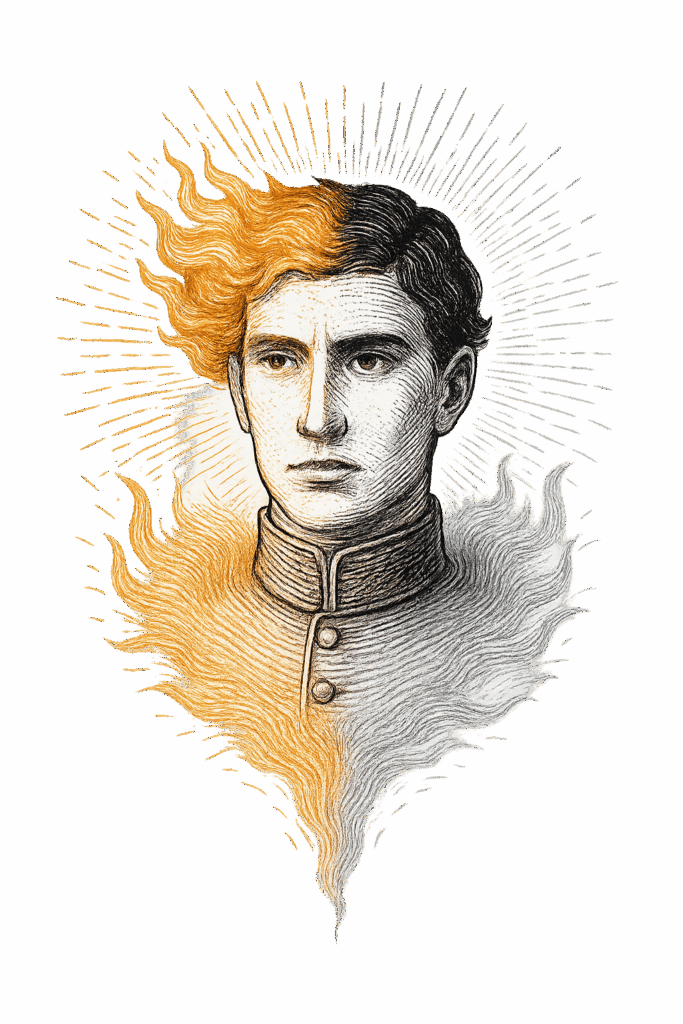
Sallos: The 19th Spirit of the Ars Goetia
Origins in the Ars Goetia
Sallos, also known as Saleos or Zaleos, stands as the 19th spirit in the Ars Goetia, the first section of the Lesser Key of Solomon.
This seventeenth-century grimoire, rooted in older Hebrew and medieval traditions, records seventy-two spirits allegedly bound by King Solomon.
Within this hierarchy, Sallos holds the rank of Great Duke of Hell, commanding thirty legions of spirits.
The Ars Goetia describes Sallos as a crowned duke riding a crocodile, regal yet fearsome in presence.
His image merges nobility and primal energy, symbolizing power balanced by sensuality.
Unlike the grotesque monsters of later folklore, Sallos embodies refined seduction and emotional potency.
His name appears earlier in Johann Weyer’s Pseudomonarchia Daemonum (1577), where he is also listed among the infernal dukes bound by Solomon.
Weyer’s version echoes the Goetia, but interprets him within a Christian framework that warned of spiritual temptation through desire.
The description of Sallos blends chivalric imagery and ancient mythic motifs.
His crocodile steed may reference Egyptian or Near Eastern symbols of fertility and strength.
Occult scholars often compare his dual nature to classical deities of love and war, such as Eros or Ares, recast in Christian demonology as a fallen angel of passion.
Attributes and Powers
Sallos governs the realm of love, attraction, and emotional harmony.
The Ars Goetia states that he “causeth the love of men and women to be true and lasting.”
This role makes him a mediator of affection and reconciliation, a rare trait among infernal spirits.
His influence extends to friendship, loyalty, and partnership, transforming conflict into understanding.
Magicians of the Solomonic tradition invoked him to mend relationships, foster peace, or restore intimacy.
However, his gifts carried risk, as love forced through infernal means could twist into obsession or jealousy.
Such warnings mirrored the moral tension of Renaissance magic—power tempered by responsibility.
Sallos’s sigil, a complex seal of looping lines, served as a key to his invocation.
In ceremonial magic, it functioned as a symbolic portal aligning the practitioner with his domain of emotional resonance.
His planetary correspondence with Venus reinforced his connection to passion, beauty, and balance.
In broader esoteric symbolism, Sallos represents the unity of opposites—masculine and feminine, desire and peace, spiritual and physical union.
Modern interpretations view him not as a corrupter, but as a teacher guiding humanity toward authentic emotional connection.
Cultural and Historical Context
Sallos’s legend arose during the Renaissance fascination with cataloguing invisible forces.
Europe’s demonologists sought to reconcile Christian theology with ancient occult knowledge.
Within this worldview, each demon governed a natural or psychological principle—Sallos governed love’s creative and destructive potential.
In an age marked by plague, war, and social turmoil, spirits of affection held symbolic weight.
They represented hope amid loss, the possibility of harmony within chaos.
Theological texts warned that his temptations could endanger the soul, yet his presence endured in ritual manuscripts and poetic allegory.
By the nineteenth century, the Dictionnaire Infernal by Collin de Plancy revived Sallos as a figure of romantic power rather than corruption.
His myth persisted as a reflection of enduring human desire—a demon who bridges spiritual longing and carnal love.
Symbolism and Interpretation
The crocodile mount of Sallos carries deep symbolic resonance.
In esoteric iconography, the crocodile embodies fertility, primal instinct, and submerged wisdom.
By riding such a creature, Sallos demonstrates mastery over instinct and emotion—passion controlled rather than suppressed.
His crown signifies authority, while his serene demeanor reflects discipline amid intensity.
Together, they form a composite image of refined eros: the force that creates, destroys, and transforms.
In this sense, Sallos is neither wholly malevolent nor benign, but a catalyst for evolution through emotion.
Some modern occultists associate him with psychological integration, interpreting his myth as a metaphor for confronting desire.
His duality invites self-awareness, urging balance between reason and passion.
Sallos in Modern Thought
In contemporary esoteric study, Sallos remains a symbol of love’s paradox.
He illustrates how affection, when misused, leads to bondage, yet when honored, brings peace and union.
His figure appears in literature, art, and modern occult philosophy as a reminder that emotion itself is sacred when understood.
While modern magicians reinterpret him through psychological or archetypal frameworks, his original legend persists.
It endures as a bridge between medieval theology and timeless human yearning.
Conclusion
Sallos, the 19th spirit of the Ars Goetia, reigns as both lover and warrior, uniting opposites in perfect tension.
As a Great Duke commanding thirty legions, he governs not destruction but connection.
His regal form upon a crocodile encapsulates the eternal dance between passion and control.
In every retelling, Sallos reminds us that love—earthly or divine—remains the most transformative of all infernal gifts.