
Introduction
In the shadowy corners of demonology, Bifrons stands as a fascinating yet mysterious figure. Rooted in Western occultism and the grimoire tradition, Bifrons appears in the Ars Goetia, the first section of The Lesser Key of Solomon — one of the most influential demonological texts of the 17th century.
Known as a teacher of sciences and necromancer of the dead, Bifrons bridges the realms of intellect and mortality. This article delves into his origins, powers, symbolism, and modern interpretations, exploring why this dual-faced spirit continues to intrigue occult scholars and practitioners alike.
Origins in Demonology
Bifrons, sometimes spelled Bifröus or Bifrovs, is listed as the 46th spirit in the Ars Goetia. Described as an Earl of Hell, he commands six — or in some accounts, twenty-six — legions of spirits.
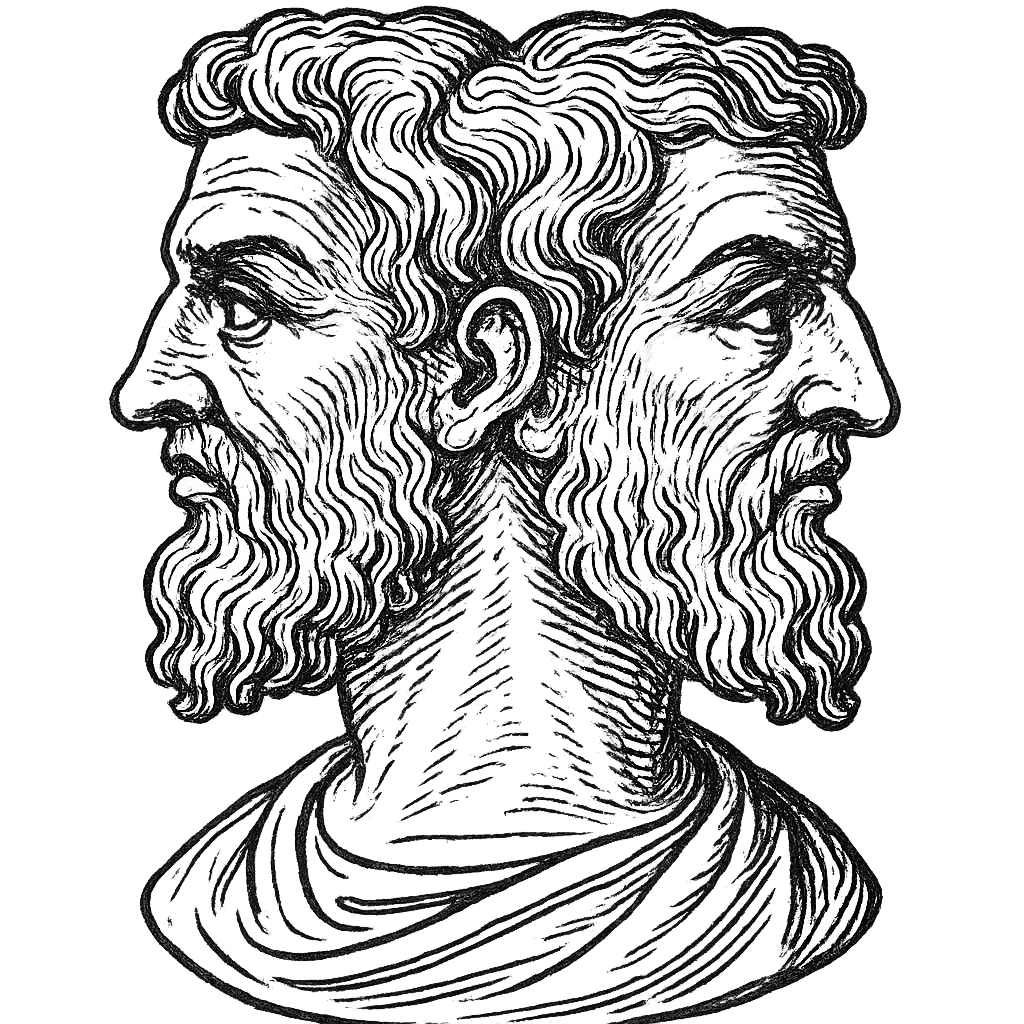
The name “Bifrons” derives from the Latin bifrons, meaning “two-faced” or “looking in two directions.” This etymology connects him to Janus, the Roman god of doorways, transitions, and duality. Like Janus, Bifrons represents liminality — the threshold between life and death, knowledge and mystery, the physical and the spiritual.
Bifrons also appears in Johann Weyer’s Pseudomonarchia Daemonum (1577), a precursor to the Ars Goetia, reflecting Europe’s Renaissance fascination with occult knowledge. These grimoires aimed to categorize supernatural entities, blending Christian demonology, pagan mythology, and astrological symbolism into a unified cosmology.
Appearance and Attributes
In most accounts, Bifrons is depicted as monstrous in form, though capable of assuming a human shape when summoned. His dual nature — both terrifying and intelligent — mirrors the paradoxes at the heart of demonology itself.
As an Earl of Hell, Bifrons governs spirits skilled in intellectual and earthly domains. His powers reflect a blend of wisdom, necromancy, and transformation, suggesting mastery over both material and metaphysical realms.
Powers and Abilities
The Ars Goetia attributes several distinct powers to Bifrons:
1. Mastery of Arts and Sciences
Bifrons is said to teach astronomy, geometry, and other liberal sciences, embodying the Renaissance ideal of the “learned magician.” His association with academic and esoteric learning reflects humanity’s desire to uncover hidden truths, even through forbidden means.
2. Command Over the Dead
Perhaps his most chilling power, Bifrons can move corpses and illuminate graves with spectral lights. This necromantic ability links him to death rituals, spirit communication, and the transmigration of souls — themes central to early modern occultism.
3. Astrological and Elemental Influence
Occult scholars associate Bifrons with Saturn — the planet of time, death, and structure — and the element of Earth, representing grounded yet somber wisdom. These connections deepen his image as a spirit of mortality and transformation.
Symbolism and Interpretation
Bifrons symbolizes duality, knowledge, and transition. His “two-faced” nature evokes Janus, suggesting the ability to perceive both past and future, light and shadow.
As a psychopompic figure, Bifrons bridges worlds — guiding souls, guarding thresholds, and overseeing the exchange between the living and the dead. In this way, he embodies both the scholar and the sorcerer, the teacher and the necromancer.
During the Renaissance, Bifrons became a symbol of forbidden knowledge — the perilous pursuit of enlightenment through supernatural aid. Summoning such a spirit, as described in the grimoires, reflected both intellectual ambition and defiance of religious orthodoxy.
In modern occultism, Bifrons is often reinterpreted as a symbol of transformation and insight, representing mastery over mortality and the pursuit of knowledge beyond the veil. His presence in ritual or meditation can be seen as a metaphor for confronting death to attain wisdom.
Bifrons in Modern Culture
While lesser-known than figures like Lucifer, Baal, or Asmodeus, Bifrons retains a quiet prominence in occult literature, modern witchcraft, and esoteric art.
He occasionally appears in fictional works, tarot systems, and symbolic studies, where his two-faced imagery reflects introspection, transition, and the dual nature of truth.
Online occult communities also discuss Bifrons as a spirit of academic study, transformation, and ancestral connection, emphasizing psychological and symbolic interpretations over literal invocation.
Conclusion
Bifrons — the two-faced Earl of Hell — remains a captivating figure in Western demonology. His unique blend of intellectual, necromantic, and symbolic power places him at the crossroads of life and death, science and spirit, curiosity and caution.
From the grimoires of the Renaissance to modern esoteric thought, Bifrons endures as a symbol of the eternal human pursuit of hidden knowledge — and the dangers that accompany enlightenment drawn from the shadows.
SEO Keyword Integration Summary
Primary keywords: Bifrons demon, Bifrons Ars Goetia, Bifrons mythology, Bifrons occult, Bifrons demonology
Secondary keywords: Lesser Key of Solomon, Pseudomonarchia Daemonum, necromancy, Earl of Hell, occult knowledge, Saturn symbolism, grimoire traditions
Search intent coverage: Historical, mythological, academic, and occult interest
Would you like me to also create SEO-optimized title tags + Open Graph metadata (for social sharing and Google previews) next?
That’ll make it fully optimized for publishing on a blog or website.