
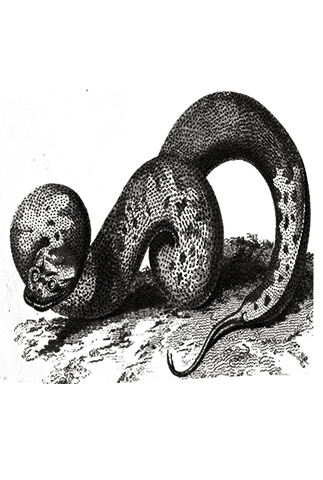
Botis: The Serpentine Demon of Wisdom and Reconciliation
Meta Description (SEO-optimized):
Explore Botis, the 17th demon of the Ars Goetia — a viper-formed spirit of wisdom and reconciliation who commands 60 legions in the infernal hierarchy.
Introduction: The Dual Nature of Botis
In the intricate realm of demonology, few spirits intrigue occult scholars as much as Botis — a serpentine demon of wisdom, truth, and reconciliation. Appearing in several classical grimoires, Botis bridges the gap between knowledge and conflict, embodying both intellect and danger.
This article explores Botis’s origins, powers, and symbolic meaning, tracing his evolution from medieval grimoires to modern psychological interpretations.
Origins and Historical References
Botis first appears in the Ars Goetia, the opening section of the 17th-century grimoire known as The Lesser Key of Solomon.
Listed as the 17th spirit, Botis holds the dual rank of Earl and President of Hell, commanding 60 legions of demons — a position of immense authority in the infernal hierarchy.
According to the Ars Goetia, Botis initially manifests as a hideous viper, but upon command takes on a human form with great teeth, two horns, and a shining sword. This transformation symbolizes the tension between instinct and intellect, cunning and command — themes that recur across his mythic identity.
Earlier demonologists like Johann Weyer, in his Pseudomonarchia Daemonum (1577), also describe Botis, emphasizing his ability to reveal truths about the past, present, and future, and to reconcile friends and enemies alike.
These consistent portrayals across centuries solidify Botis as a spirit of clarity, diplomacy, and hidden knowledge.
Attributes and Powers of Botis
The Ars Goetia and related grimoires describe Botis as a demon who offers both insight and harmony — a rare combination among infernal entities.
Key Powers of Botis:
-
Revealing hidden truths — about the past, present, and future.
-
Mediating conflicts — restoring peace between allies or adversaries.
-
Providing insight — into secret or obscure matters, aiding divination and wisdom.
Rank and Legions:
As a President and Earl, Botis wields both strategic and administrative power, commanding 60 legions (each legion traditionally numbering thousands of spirits). His authority covers both intellectual revelation and emotional reconciliation, making him a balanced figure of wisdom and control.
Symbolism and Interpretation
Botis’s serpentine form is rich in symbolic meaning. In ancient and occult traditions, the serpent represents knowledge, transformation, and duality — a creature feared and revered across cultures.
Like the Ouroboros, the serpent devouring its own tail, Botis embodies cyclical wisdom and self-renewal. His ability to shift from a viper to a horned human figure reflects the alchemy of consciousness — the evolution from primal instinct to enlightened intellect.
In esoteric thought, Botis’s gift of reconciliation mirrors the integration of dualities — light and dark, logic and emotion, conscious and unconscious. His sword, meanwhile, signifies truth cutting through illusion.
Psychological and Modern Perspectives
Modern occultists and psychologists often reinterpret Botis as a Jungian archetype rather than a literal entity. In this view, Botis represents the shadow aspect of the mind — the hidden intelligence that emerges when one confronts inner conflict.
Invoking or meditating on Botis can thus symbolize the act of reconciling internal divisions or gaining insight into one’s own motivations.
In chaos magic and eclectic spiritual practices, Botis serves as a metaphor for clarity amid turmoil, helping practitioners discern truth from deception within themselves.
Cultural and Historical Context
The prominence of Botis in grimoires such as The Lesser Key of Solomon and Pseudomonarchia Daemonum reflects the Renaissance fascination with ordering the supernatural.
Demonologists of that era sought to systematize the unseen world, merging Judeo-Christian theology with classical mysticism.
Within this framework, demons like Botis were not mere agents of evil, but cosmic intelligences — entities to be studied, categorized, and, through ritual, respectfully commanded.
Conjurers believed that, through proper ritual, willpower, and divine invocation, spirits such as Botis could grant knowledge, settle disputes, or reveal secret truths.
Botis in Ritual Practice
Traditional Goetic rituals to summon Botis followed the methods outlined in the Lesser Key of Solomon:
-
Timing: Conducted during a waxing moon or on Wednesday, a day associated with Mercury and communication.
-
Sigil: The sigil of Botis, a distinct geometric seal, serves as the spiritual “address” of the demon.
-
Protection: A magic circle inscribed with divine names, and a triangle of manifestation for the spirit’s appearance.
-
Offerings: Incense of myrrh or frankincense, and prayers invoking divine authority to maintain control.
Modern practitioners, particularly within chaos magic, adapt these techniques into meditative or symbolic rituals, using Botis’s sigil as a focal point for introspection and truth-seeking.
The Sigil of Botis
The sigil of Botis — found in The Ars Goetia — is a complex symbol featuring curved lines and intersecting points.
It represents his connection between wisdom and instinct, serving as both a seal of invocation and a symbolic tool for meditation.
In modern occult art, the sigil also appears as a glyph of reconciliation, a reminder that even in darkness, understanding can be achieved through balance.
Conclusion: Botis, the Serpent of Truth and Balance
Botis, the 17th spirit of the Ars Goetia, stands out among Goetic demons for his harmony of intelligence and mediation. His viper form and shining sword reflect a paradox: the wisdom of danger and the peace born of conflict.
Whether viewed as a literal demon, an archetype of inner reconciliation, or a mythic symbol of enlightened duality, Botis continues to fascinate occultists, historians, and mystics alike.
In the end, the demon Botis is less a figure of fear than a mirror of the mind — revealing that truth, like the serpent, sheds its skin to be reborn in clarity.
SEO Keywords and Phrases
Primary: Botis demon
Secondary: Ars Goetia demon Botis, Goetia spirit Botis, Botis sigil, Lesser Key of Solomon demons, Botis meaning, demon of reconciliation, Botis Goetia
Tertiary: Botis in mythology, Goetic magic, medieval demonology, Pseudomonarchia Daemonum spirits