
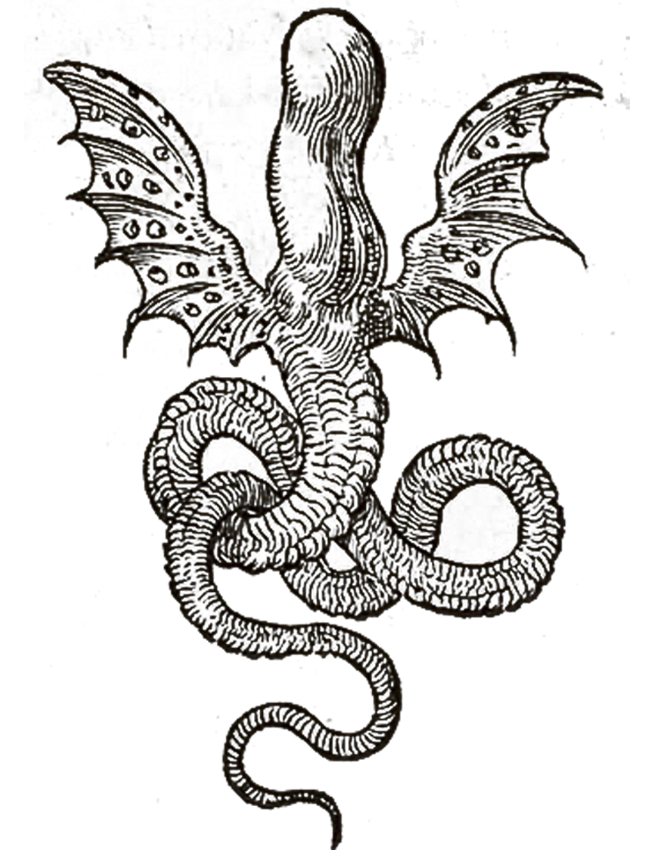
Forneus is a figure rooted in demonology, prominently featured in the Ars Goetia, the first section of the 17th-century grimoire The Lesser Key of Solomon. Described as a Great Marquis of Hell, Forneus is a complex entity associated with knowledge, eloquence, and the mysteries of the sea. This article explores Forneus’s origins, characteristics, and significance in occult traditions, drawing from historical texts and their cultural context.
Origins in Demonology
Forneus appears in the Ars Goetia, a catalog of 72 demons allegedly summoned by King Solomon. The text, compiled in the mid-17th century, draws from earlier grimoires and medieval occult traditions. Forneus’s name does not have a clear etymological root in classical mythology or Judeo-Christian texts, suggesting it may be a constructed or esoteric name, possibly derived from Latin or pseudo-Latin influences. The name could relate to “fornax” (Latin for furnace), though this connection is speculative and not explicitly supported in primary sources.
In the broader context of demonology, Forneus is one of many spirits cataloged during the European Renaissance, a period when fascination with alchemy, astrology, and the occult surged. These texts often blended Christian theology with pre-Christian mysticism, creating a framework where demons like Forneus were seen as powerful, yet controllable, entities under divine or ritualistic authority.
Description and Attributes
According to the Ars Goetia, Forneus is a Great Marquis of Hell, commanding 29 legions of spirits. His appearance is striking: he is depicted as a monstrous sea creature, often likened to a sea monster or a great fish. This aquatic imagery sets Forneus apart from other demons, who are frequently described with terrestrial or avian forms. Some interpretations suggest his form resembles a leviathan-like creature, tying him to biblical and mythological sea monsters.
Forneus’s primary powers are intellectual and social. He is said to grant the ability to speak eloquently and persuasively, making him a patron of rhetoric and diplomacy. Additionally, he imparts knowledge of languages, both human and otherwise, and can make the summoner beloved by friends and foes alike. These attributes align Forneus with the archetype of a teacher or mediator, a demon who facilitates understanding and influence rather than destruction or chaos.
The Pseudomonarchia Daemonum (1577) by Johann Weyer, a precursor to the Ars Goetia, describes Forneus similarly, emphasizing his role in teaching “all arts and sciences” and his ability to foster goodwill. This consistency across texts underscores Forneus’s established role in occult lore as a spirit of intellectual and social mastery.
Symbolism and Interpretation
Forneus’s sea monster form invites symbolic interpretation. The ocean, in many cultural traditions, represents the unknown, the subconscious, or the chaotic depths of existence. As a maritime demon, Forneus may symbolize mastery over these mysteries, channeling the chaotic into structured knowledge or eloquence. His association with water could also evoke transformation, as water is a fluid, adaptive element in alchemical and esoteric traditions.
The emphasis on rhetoric and languages suggests Forneus’s role as a bridge between disparate realms—human and demonic, known and unknown. In a historical context, where effective communication could sway courts, churches, or crowds, Forneus’s gifts would have been highly valued by occult practitioners seeking influence or wisdom.
Some modern occultists interpret Forneus as a guide for navigating social complexities or mastering intellectual pursuits. His ability to make one “beloved by foes” hints at a diplomatic power, potentially useful in conflict resolution or negotiation. This makes Forneus a uniquely non-malevolent figure in demonology, less associated with harm and more with empowerment through knowledge and charm.
Forneus in Ritual and Practice
In the Ars Goetia, summoning Forneus requires adherence to strict rituals, including the use of sigils, incantations, and protective circles. His sigil, a unique geometric design, is a focal point for invocation, believed to anchor the spirit’s presence. Practitioners would historically use these rituals to seek Forneus’s aid in scholarly or diplomatic endeavors, though such practices were fraught with spiritual and legal risks in medieval and early modern Europe.
Modern occultists, particularly those in Western esoteric traditions, may approach Forneus with less fear, viewing him as a symbolic or archetypal force rather than a literal entity. His invocation might be used in rituals for self-improvement, such as enhancing communication skills or learning new languages. However, traditional texts warn of the dangers of summoning any demon, emphasizing the need for respect and caution.
Conclusion
Forneus, the Great Marquis of Hell, is a fascinating figure in demonology, embodying the intersection of knowledge, eloquence, and the mysteries of the deep. His role as a teacher and diplomat sets him apart in the Ars Goetia, offering a nuanced perspective on the demonic as a source of empowerment rather than mere malevolence. Whether viewed as a literal spirit or a symbolic archetype, Forneus continues to captivate those who explore the esoteric, reminding us of the power of words and the allure of the unknown.