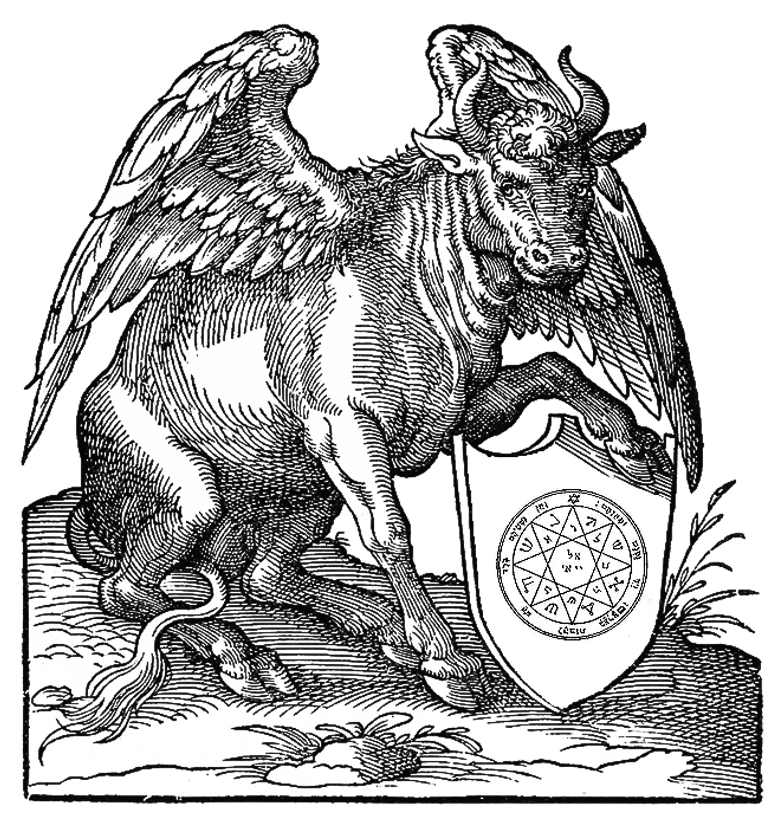
Haagenti, also known as Haage or Hgog in some sources, is a prominent figure in Western demonology, listed as the 48th spirit in the *Ars Goetia*, a section of the 17th-century grimoire *The Lesser Key of Solomon*. As a Great President of Hell, Haagenti commands thirty-three legions of demons and is renowned for his abilities in transmutation and imparting knowledge. This demon is often associated with alchemy, symbolizing transformation and enlightenment, and has roots in medieval occult traditions.
According to lore, Haagenti was once a high-ranking angel in Heaven, possibly of the Cherubim order, before falling alongside Lucifer during the heavenly rebellion. Known for his brutal demeanor in battle, he was banished to Hell, where he assumed his demonic role. In modern interpretations, Haagenti represents the alchemical process of turning the base into the profound, making him a symbol of personal and material transformation.
Appearance and Depiction
Haagenti is traditionally described as appearing in the form of a mighty bull with the wings of a griffin. This hybrid form evokes strength, flight, and mythical power, aligning with his alchemical themes. Upon the command of a summoner or conjurer, he can transform into a human shape, allowing for more direct interaction.
In various artistic renditions, Haagenti’s bull-like features are emphasized, sometimes with muscular humanoid elements or skeletal aspects to heighten his demonic aura. For instance, some depictions portray him as a horned, winged figure clutching symbols of knowledge, such as books or alchemical tools. His seal, a circular sigil inscribed with esoteric symbols and his name, is used in rituals to invoke his presence and is a key element in Goetic magic.
Powers and Abilities
Haagenti’s powers center on intellectual and material transformation, making him a sought-after entity in occult practices. He is said to make individuals wise by instructing them in every subject, from arts and sciences to more esoteric knowledge. This ability to bestow wisdom is symbolic of simplifying complex ideas, much like an alchemical distillation process.
Among his most notable talents are his alchemical feats: transmuting any metal into gold and changing wine into water, or water back into wine. These abilities not only represent literal transformation but also metaphorical ones, such as turning negative situations into positive outcomes or elevating the mundane to the extraordinary. In some interpretations, Haagenti aids in personal rebirth by stripping away false identities and illusions, fostering inner growth.
As a ruler of 33 legions, Haagenti holds significant authority in the infernal hierarchy, and his powers extend to making one witty or clever in social contexts.
Haagenti in Popular Culture and Modern Occultism
In contemporary occultism, Haagenti is invoked for matters of learning, creativity, and change. However, as with all Goetic demons, interactions are approached with caution in esoteric traditions, often involving protective rituals and his specific seal.
Conclusion
Haagenti embodies the dual nature of destruction and creation inherent in alchemical philosophy. From his origins as a fallen angel to his role as a teacher and transformer, he remains a fascinating figure in demonology. While rooted in ancient grimoires, his influence persists in modern culture, inspiring both fear and curiosity among occult enthusiasts.