
Introduction
In the vast world of demonology, few beings merge intellect and mysticism like Marax—also called Morax or Foraii. Found in the Ars Goetia, the first book of the Lesser Key of Solomon, Marax embodies wisdom, astronomy, and herbal knowledge. His legend bridges the gap between science and sorcery, showing how the search for understanding once walked hand in hand with the supernatural.
Origins and Description
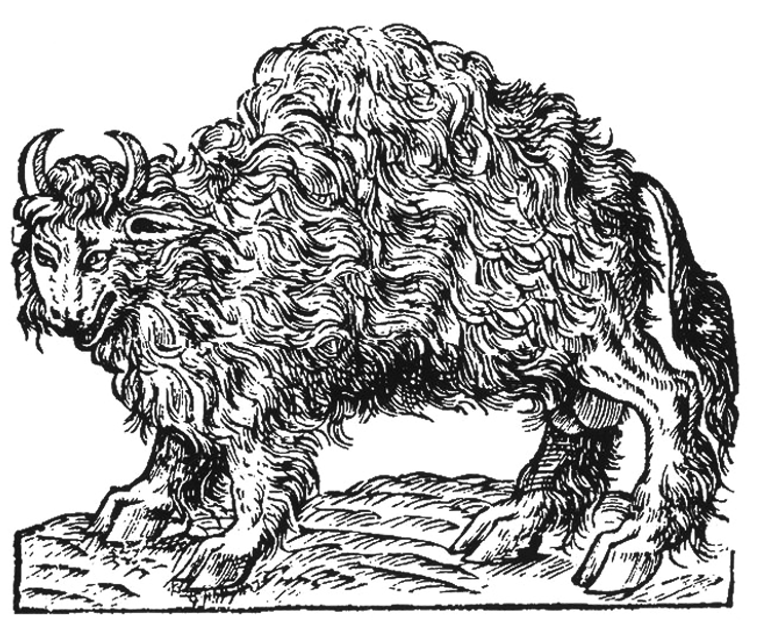
Marax appears as the 21st spirit of the Ars Goetia, a Great Earl and President of Hell who commands thirty legions of spirits. He manifests as a bull with a human face, though he may take full human form when summoned. This dual nature—animal and human—symbolizes strength guided by intellect.
The name Marax likely traces to ancient roots meaning strength or leadership, though scholars still debate its origin. He features prominently in the Ars Goetia and Johann Weyer’s Pseudomonarchia Daemonum (1577), which inspired later demonological texts. These works portray him not as chaotic, but as a disciplined teacher of hidden sciences.
Attributes and Powers
Marax is famed for his mastery of astronomy, the liberal sciences, and the virtues of herbs and stones. He grants insight into both heaven and earth, making him a guide for those seeking knowledge in nature and the cosmos.
He can also bestow “good familiars”, spiritual helpers who aid in study and protection. Marax’s lessons blend theory and practice, uniting the mystical with the tangible.
- Astronomy: Explains celestial patterns and their influence on earthly life.
- Natural Philosophy: Reveals properties of plants, minerals, and their uses in healing or magic.
- Occult Science: Discloses secret laws connecting the physical and spiritual realms.
- Spiritual Assistance: Sends helpful familiars to serve faithful summoners.
Unlike destructive spirits, Marax focuses on enlightenment and understanding. He represents the intellectual side of demonology—order within the occult.
Summoning and Ritual Context
Summoning Marax follows Solomonic ritual precision. His sigil—a seal representing his essence—is essential to the process. Practitioners use it within a protective circle, invoking him with formal words of respect and intent.
The Ars Goetia states that Marax speaks truthfully when approached with discipline and sincerity. Historically, only learned magicians, alchemists, or astrologers dared summon him. Their goal was knowledge, not power, and Marax rewarded those who sought wisdom with humility.
Even today, ceremonial magicians call upon him for:
- Academic or creative inspiration
- Herbal and alchemical discovery
- Guidance in disciplined learning
- Spiritual stability and clarity
However, the grimoires warn that improper conduct or arrogance can break the ritual’s harmony. Respect is key to unlocking his cooperation.
Cultural Significance
Marax mirrors the Renaissance pursuit of unified knowledge, when magic, philosophy, and science intertwined. In that era, astronomy, alchemy, and theology shared one purpose—to understand creation. Scholars like John Dee and Cornelius Agrippa viewed these studies as paths to divine truth.
Marax embodies this synthesis. His celestial teachings align with Hermetic and alchemical philosophy, while his herbal lore connects him to the earth’s hidden powers. Through him, the medieval magician could explore both stars and soil—two halves of the same mystery.
Modern occultists still view Marax as a symbol of reason guided by intuition. His bull-headed form reflects strength balanced with intellect, a reminder that true mastery demands patience, study, and stability.
Marax in Comparative Mythology
Marax’s image recalls ancient sacred bulls such as Apis of Egypt and the Minoan bull cults. These animals symbolized vitality, wisdom, and cosmic power. His role as a teacher of astronomy also parallels gods like Thoth, Hermes Trismegistus, and Enki, who revealed celestial knowledge to humankind.
In this sense, Marax may represent an echo of pre-Christian wisdom deities, transformed by Christian demonology into a spirit of forbidden knowledge. Where once he taught divine order, medieval scribes recast him as a servant of Hell—proof of how sacred symbols evolve across eras.
Conclusion
Marax, the bull-headed Earl of the Ars Goetia, stands as a demon of intellect and enlightenment. As a teacher of astronomy, herbs, and hidden sciences, he unites strength with reason and power with patience.
In him, the old worlds of faith, science, and magic converge. His enduring image reminds us that knowledge—whether sacred or forbidden—has always carried risk and reward. Marax endures as a timeless symbol of the human will to learn, even when the truth lies beyond the stars.