
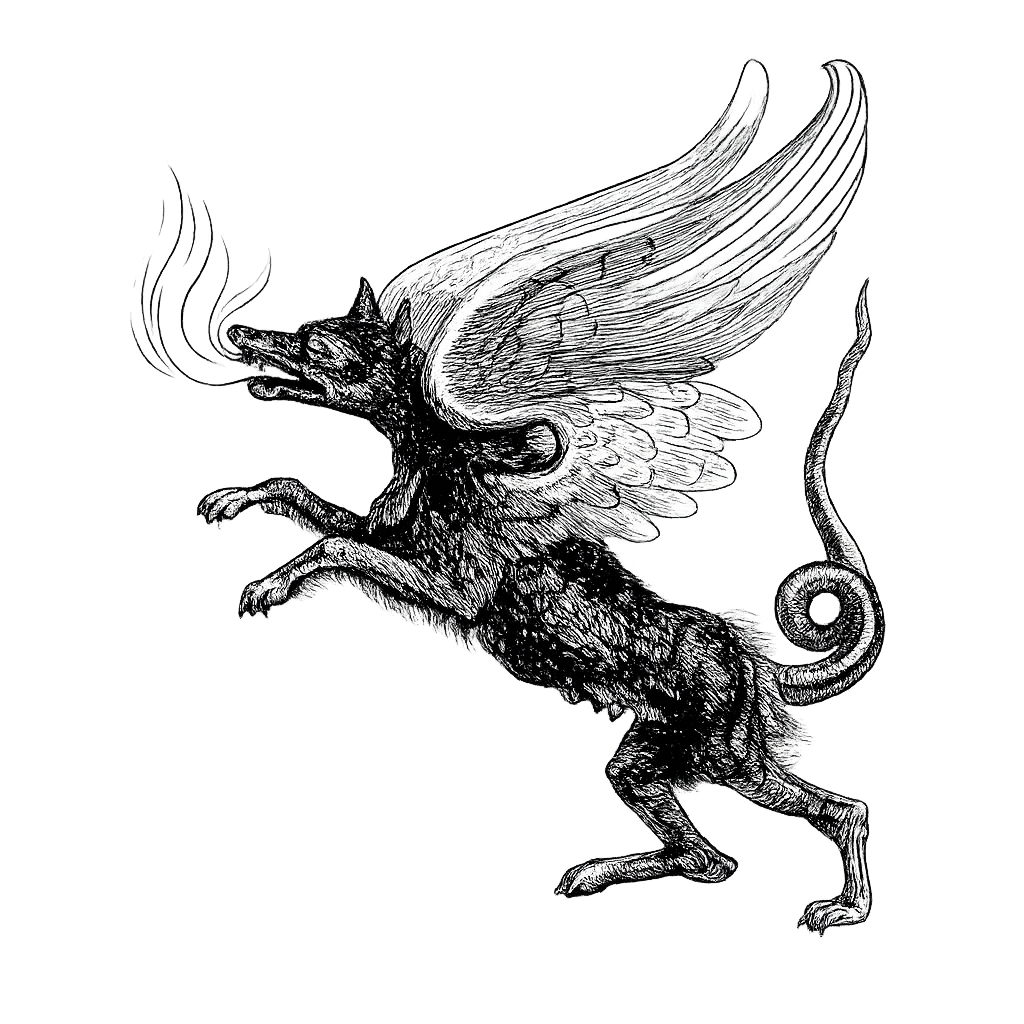
In the intricate tapestry of demonology, Marchosias stands as a fascinating figure, woven into the grimoires and occult traditions of Western esotericism. Known as a powerful marquis of Hell, Marchosias is a demon whose lore blends ferocity, loyalty, and a curious aspiration for redemption. This article explores the origins, characteristics, and cultural significance of Marchosias, drawing from historical texts and their interpretations in modern occultism.
Origins in Demonological Texts
Marchosias appears prominently in the Ars Goetia, the first section of the 17th-century grimoire The Lesser Key of Solomon. This text, a cornerstone of Western demonology, describes Marchosias as the thirty-fifth spirit, a marquis commanding thirty legions of demons. The Pseudomonarchia Daemonum (1577) by Johann Weyer also lists Marchosias, providing an earlier foundation for the demon’s attributes.
According to these sources, Marchosias manifests as a fierce she-wolf with griffin-like wings and a serpent’s tail, capable of spewing flames from its mouth. However, upon the conjurer’s command, the demon can assume a human form, often described as a strong warrior or a charismatic figure. This duality of form—bestial and human—reflects the complex nature of Marchosias, embodying both primal power and a capacity for transformation.
Characteristics and Abilities
Marchosias is renowned for several distinct traits in demonological lore:
- Martial Prowess: As a marquis, Marchosias is a warrior spirit, excelling in combat and strategy. The demon is said to provide true and faithful answers to questions, particularly those related to warfare or conflict.
- Loyalty and Truthfulness: Unlike many demons depicted as deceitful, Marchosias is noted for its honesty in responding to conjurers, a trait that sets it apart in the infernal hierarchy.
- Hope for Redemption: A peculiar aspect of Marchosias’ lore is its expressed desire to return to Heaven. According to the Ars Goetia, Marchosias belongs to the order of Dominions (or Dominations) among the fallen angels and hopes to ascend after 1,200 years. However, the text notes that this hope is likely futile, adding a layer of tragic ambition to the demon’s character.
These attributes make Marchosias a compelling figure for practitioners of ceremonial magic, who may invoke the demon for its martial knowledge or strategic insight.
Symbolism and Interpretation
The imagery associated with Marchosias—a she-wolf with griffin wings and a serpent’s tail—carries rich symbolic weight. The wolf represents ferocity, instinct, and loyalty, while the griffin wings suggest a connection to the divine or celestial realms, hinting at Marchosias’ angelic origins. The serpent’s tail evokes wisdom but also treachery, aligning with the demon’s fallen nature. Together, these elements create a multifaceted symbol of power, duality, and the tension between redemption and damnation.
In occult tradition, Marchosias is often associated with courage, discipline, and transformation. The demon’s willingness to serve conjurers faithfully may reflect a disciplined nature, while its shape-shifting ability symbolizes adaptability and the potential for change. Some modern practitioners interpret Marchosias as a guide for overcoming personal challenges, harnessing inner strength, or navigating conflicts with clarity.
Cultural Impact and Modern Relevance
In contemporary occult practices, Marchosias is sometimes invoked by those seeking guidance in leadership, conflict resolution, or personal empowerment. Its unique blend of ferocity and fidelity resonates with individuals navigating complex social or professional dynamics. However, as with all demonological practices, such invocations are approached with caution due to the inherent risks of engaging with infernal entities.
Historical Context and Evolution
The depiction of Marchosias reflects the broader evolution of demonology in European thought. During the Renaissance, grimoires like The Lesser Key of Solomon synthesized Christian theology, Jewish mysticism, and earlier pagan traditions, creating a complex hierarchy of demons. Marchosias, with its angelic origins and hope for redemption, embodies the tension between divine order and infernal rebellion central to these texts.
The demon’s portrayal also highlights the gendered dynamics of demonology. While Marchosias is often depicted as a she-wolf, its human form is typically male, reflecting the fluidity of gender in spiritual beings. This ambiguity challenges modern readers to reconsider rigid categorizations of gender and power in historical texts.
Conclusion
Marchosias, the fiery she-wolf of the Ars Goetia, is a demon of contrasts—fierce yet loyal, fallen yet hopeful. Its enduring presence in occult lore speaks to the human fascination with transformation, redemption, and the interplay of light and shadow. Whether viewed as a symbol of martial prowess, a guide for personal growth, or a cautionary tale of unattainable aspirations, Marchosias remains a captivating figure in the study of demonology and Western esotericism.
For those intrigued by the occult, Marchosias serves as a reminder of the complexity of spiritual entities and the timeless questions they raise about power, loyalty, and the possibility of change.