
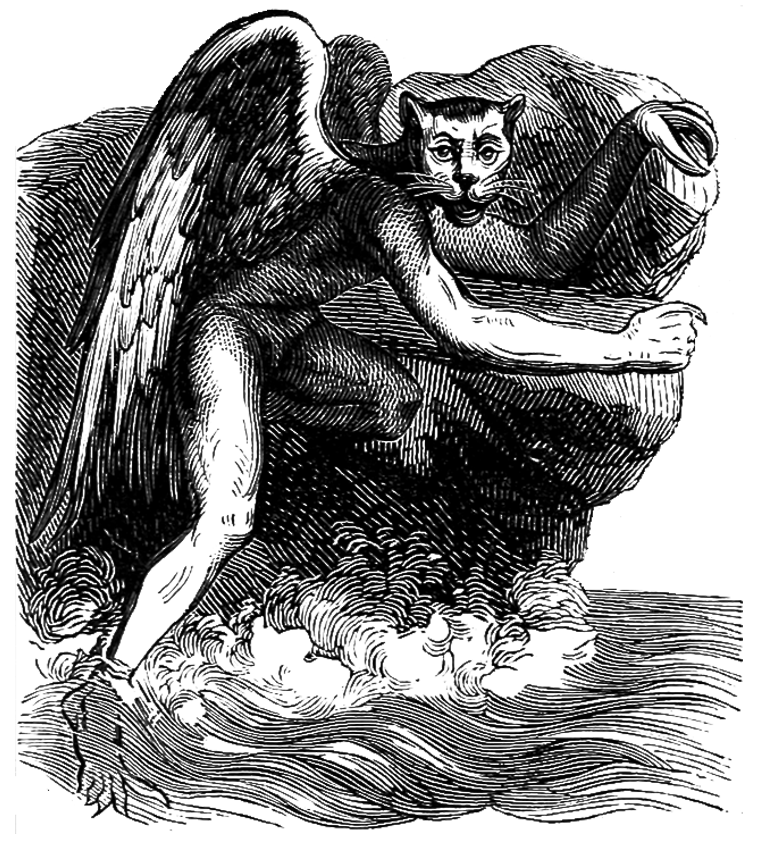
Murmur: The Whispering Duke of Hell in Demonology and Occult Lore
Introduction
In the shadowy realm of demonology, few entities are as enigmatic as Murmur, a demon whose name echoes through ancient grimoires and Western occult traditions. Known for his deep association with music, philosophy, and necromancy, Murmur occupies a singular place in the infernal hierarchy.
This article explores the origins, appearance, powers, and symbolism of Murmur, drawing from historical demonological texts such as the Ars Goetia and interpreting his lasting impact on esoteric culture and modern occultism.
Origins in Demonology
Murmur — also spelled Murmuur or Murmux — appears prominently in the Ars Goetia, the first book of the 17th-century grimoire The Lesser Key of Solomon. Listed as the 54th spirit, Murmur holds the high ranks of Great Duke and Earl of Hell, commanding 30 legions of infernal spirits.
His name derives from the Latin murmur, meaning “whisper” or “low sound.” This linguistic link emphasizes his connection to subtle communication and hidden voices, evoking the murmurs of the spirit world.
Like many demons in the Solomonic tradition, Murmur’s origins reflect the fusion of Christian demonology, Renaissance philosophy, and pagan symbolism. He embodies the intellectual and mystical curiosity that drove medieval magicians to seek forbidden wisdom.
Description and Attributes
According to the Ars Goetia, Murmur appears as a noble warrior clad in ducal robes, crowned and riding a griffin—a mythic beast combining eagle and lion. Two trumpeters often accompany him, announcing his presence with celestial yet haunting sound.
This regal imagery underscores Murmur’s authority and harmony, distinguishing him from more chaotic demonic figures. He is a teacher rather than a tyrant, commanding respect through knowledge and eloquence.
Powers and Abilities
The grimoires attribute two primary powers to Murmur:
1. Master of Philosophy and Wisdom
Murmur teaches philosophy with unmatched precision. Those who invoke him in legend gain insights into metaphysical truths and the nature of existence. This aligns with Renaissance ideals of illumination through forbidden knowledge.
2. Command Over the Dead
Murmur’s second domain is necromancy — the art of summoning and questioning spirits of the deceased. He can compel the dead to speak and reveal hidden truths, a theme that places him among the most intellectually oriented spirits of the infernal hierarchy.
Unlike many demonic entities, Murmur is depicted as calm, reasoned, and balanced, suggesting an archetype of philosophical death — understanding mortality rather than merely commanding it.
Symbolism and Esoteric Meaning
Murmur’s symbolism bridges the celestial and the chthonic, reflecting harmony between opposites: life and death, intellect and spirit, order and chaos.
-
The griffin he rides represents duality and guardianship, symbolizing wisdom that protects as well as tests.
-
The trumpet serves as a sign of revelation — the divine call to truth, yet twisted into infernal resonance.
-
His calm demeanor marks him as a demon of intellect and restraint, embodying the pursuit of truth through the unknown.
In mystical philosophy, Murmur reflects the archetype of the psychopomp — a guide between worlds. His whisper symbolizes intuition and revelation, urging seekers to confront mortality as a path to enlightenment.
Murmur in Modern Occultism and Culture
Murmur’s legacy extends beyond medieval grimoires into modern occultism, literature, and media. He often appears as a philosopher-demon or necromantic sage in novels, games, and symbolic art, embodying the allure of forbidden wisdom.
In contemporary esoteric practices, Murmur is sometimes invoked as a spirit of insight, ancestral communication, and artistic inspiration. His connection to music and harmony resonates with those exploring sound as a spiritual or ritual medium.
Although such practices remain niche and symbolic, Murmur’s image as a griffin-riding Duke of Hell continues to captivate artists, writers, and students of the occult alike.
Conclusion
Murmur — the Duke of Whispers and Wisdom — stands as one of the most intriguing spirits of the Ars Goetia. His dual mastery of philosophy and necromancy, combined with his regal and musical imagery, makes him a complex figure bridging the worlds of intellect, art, and death.
Whether viewed as an archetype, a mythological construct, or a genuine occult symbol, Murmur embodies humanity’s timeless fascination with knowledge beyond the veil — the whisper of the unknown that calls from the shadows.