
Introduction
In the intricate world of demonology, few entities captivate scholars and occultists like Ose.
Also known as Osé, Oso, or Voso, this demon blends intellect, transformation, and mystery.
Described in the Ars Goetia—a key section of The Lesser Key of Solomon—Ose represents both knowledge and metamorphosis, bridging divine insight and infernal power.
This article explores Ose’s origins, symbolism, and influence, revealing how this enigmatic spirit embodies the tension between wisdom and danger within occult lore.
Origins in Demonology
Ose’s primary appearance comes from the Ars Goetia, a 17th-century grimoire cataloging 72 demons bound by King Solomon.
Listed as the 57th spirit, Ose holds the title of Great President of Hell, commanding 30 legions of spirits.
His description in the Lesser Key of Solomon reflects the Renaissance fascination with hierarchy, knowledge, and magical order.
The Ars Goetia itself draws from medieval and earlier Jewish, Christian, and pagan traditions, where angels, spirits, and deities were reinterpreted through a Christianized lens.
Ose’s name and traits may trace back to Near Eastern or Greco-Roman mythologies that revered gods of wisdom, metamorphosis, and divine revelation.
These associations reinforce Ose’s connection to intellectual mastery and transformation—hallmarks of the Goetic current in Western occultism.
Some scholars even speculate that Ose’s name may share etymological roots with “Osiris” or “Ossa,” hinting at themes of rebirth and divine truth.
While speculative, these links suggest that Ose’s mythic ancestry may predate the Christian demonological framework by millennia.
Description and Attributes
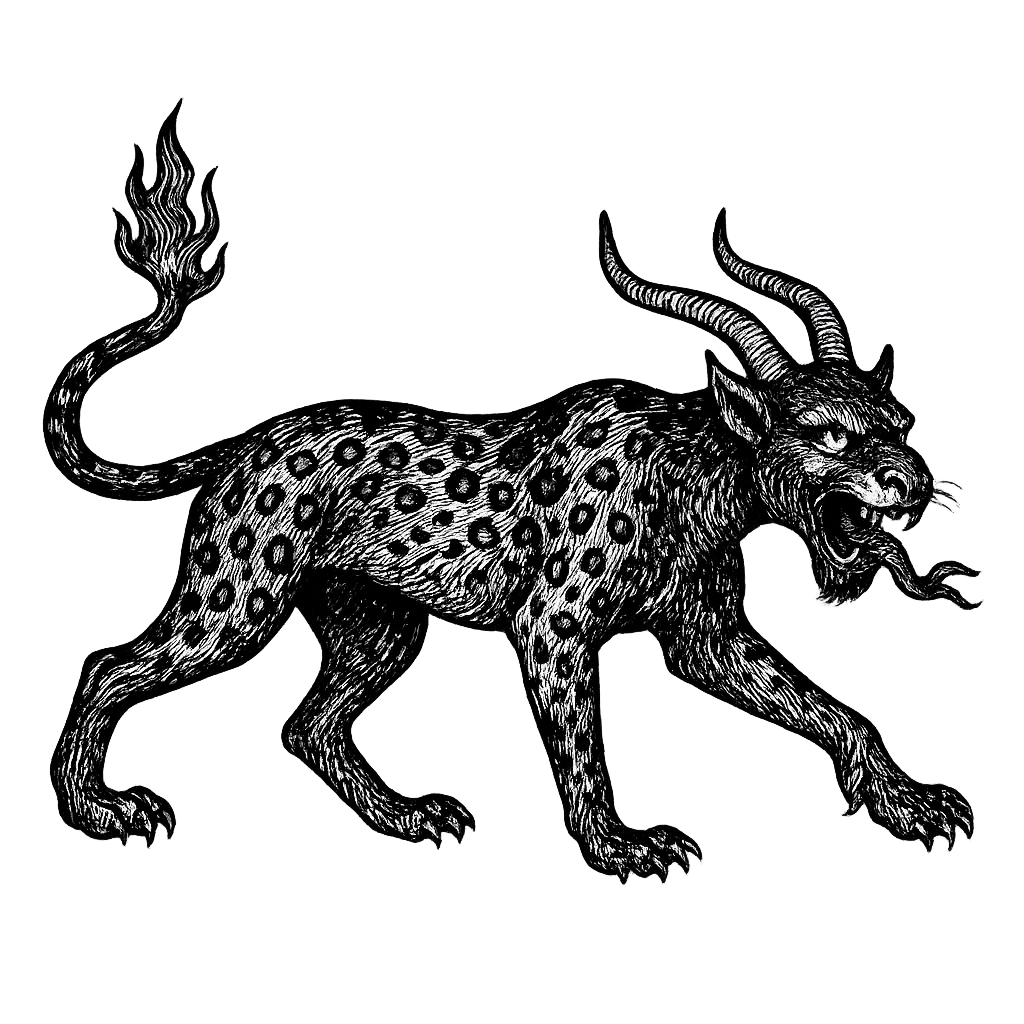
The Ars Goetia describes Ose as a leopard who can assume human form at the magician’s command.
This shapeshifting ability embodies the essence of adaptability, a defining feature of many trickster and intellectual archetypes.
Upon transformation, Ose reveals himself as a regal, wise figure capable of granting profound knowledge and perception.
As President of Hell, Ose governs the realms of science, logic, and the liberal arts.
He is said to command 30 legions, acting as a cosmic tutor to those who seek understanding beyond mortal bounds.
Ose’s primary powers include:
- Granting Knowledge: He imparts expertise in astronomy, rhetoric, logic, and metaphysics.
- Divination: He reveals divine and hidden truths, offering clarity about past, present, and future events.
- Transformation: Ose can shift his form—or that of others—reflecting his dominion over illusion and perception.
- Deceptive Revelation: He answers truthfully yet ambiguously, challenging the seeker to interpret his wisdom carefully.
His leopard form carries rich symbolism. In medieval lore, leopards represented cunning, ferocity, and liminality—creatures that dwell between wilderness and civilization, embodying both grace and danger.
Symbolism and Interpretation
Ose’s leopard imagery reveals deep esoteric meaning.
The animal’s agility mirrors Ose’s intellectual prowess, while its spotted coat symbolizes multiplicity and duality—visible order masking hidden chaos.
Like the leopard, Ose moves between forms, embodying the fluid nature of truth itself.
In occult philosophy, Ose embodies the archetype of the trickster scholar—a being who offers enlightenment wrapped in paradox.
His shapeshifting represents the transformation of consciousness, where perception and identity merge into transcendence.
Moreover, Ose’s dominion over the “liberal sciences” aligns him with Renaissance ideals of rationality and mastery of the cosmos.
Yet his infernal nature warns that knowledge untempered by wisdom can lead to delusion or madness.
Some occult texts describe Ose as capable of inducing insanity, causing humans to believe they are kings or gods.
This reflects his darker function: the boundary between illumination and hubris.
He grants insight, but only to those disciplined enough to discern truth from illusion.
Ose in Ritual and Goetic Practice
In traditional Solomonic magic, summoning Ose requires precise ritual conduct.
The practitioner must inscribe his sigil within a consecrated circle, invoking divine names to ensure protection and command.
During manifestation, Ose first appears as a leopard before assuming a human shape if commanded.
The magician must maintain authority yet humility, for Ose tests the resolve of all who summon him.
According to grimoires, offerings of incense and the recitation of Psalms or divine conjurations accompany his invocation.
When approached with respect, Ose bestows insight and eloquence, guiding seekers toward intellectual mastery or spiritual clarity.
However, reckless summoning may lead to confusion or obsession, reflecting his power to blur reality’s edges.
In modern occultism, practitioners often interpret Ose symbolically rather than literally.
Invoking Ose may represent an inner journey toward mental transformation, where the magician confronts illusions to uncover hidden wisdom.
Thus, Ose becomes not a devil to command, but an archetype of enlightenment through change.
Cultural and Psychological Significance
Ose’s archetype resonates across mythology, psychology, and literature.
As a shapeshifter and revealer of secrets, he parallels Hermes, Thoth, and Odin—deities of knowledge and cunning.
His dual nature as both teacher and deceiver embodies the paradox of forbidden wisdom, a theme central to the human pursuit of truth.
In Jungian psychology, Ose mirrors the figure of the shadow-intellect, the subconscious drive to seek mastery over the unknown.
His lessons caution that self-knowledge demands the courage to face distortion and ambiguity.
Culturally, Ose appears in various works of fantasy and occult fiction, often symbolizing intellect corrupted by ambition.
While not as infamous as Lucifer or Asmodeus, his subtlety and transformational nature make him a favorite among modern occult thinkers exploring self-deification and mental evolution.
Ose’s Role in Modern Esotericism
In contemporary Left-Hand Path and chaos magic traditions, Ose is invoked as a patron of intellect, creativity, and adaptability.
Practitioners may meditate upon his sigil to unlock insight, break psychological stagnation, or master abstract thought.
He is also seen as a guardian of scientific curiosity, bridging rational exploration with mystical intuition.
In this interpretation, Ose’s shapeshifting mirrors the fluid nature of reality itself—a universe in constant transformation, shaped by perception and will.
His invocation serves as both empowerment and warning: wisdom without humility breeds illusion, and transformation without grounding invites chaos.
Conclusion
Ose, the 57th spirit of the Ars Goetia, stands as a timeless symbol of transformation through knowledge.
His leopard form reflects adaptability and cunning, while his intellect embodies the pursuit of enlightenment through change.
To those who seek his guidance, Ose offers both illumination and peril—reminding that truth, when unrestrained, can consume as much as it reveals.
Whether viewed as a literal demon, psychological symbol, or archetype of transformation, Ose endures as a figure of profound complexity.
He challenges seekers to question perception itself and to embrace the eternal metamorphosis that defines both knowledge and the soul.