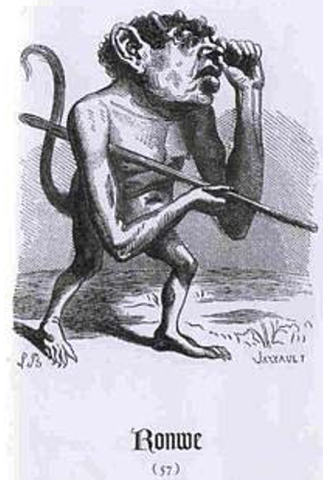
Ronove, a demon featured in various grimoires and occult traditions, holds a unique place in demonology as a figure associated with knowledge, rhetoric, and servitude. Known primarily through texts like the Ars Goetia, a section of the 17th-century grimoire The Lesser Key of Solomon, Ronove is a complex entity whose attributes reflect both intellectual prowess and supernatural power. This article explores Ronove’s origins, characteristics, and cultural significance, shedding light on the demon’s role in esoteric traditions.
Origins in Demonology
Ronove appears in the Ars Goetia as the 27th spirit among the 72 demons allegedly summoned by King Solomon. The Ars Goetia, derived from earlier medieval texts, is a cornerstone of Western occultism, cataloging demons with their ranks, abilities, and sigils. Ronove’s inclusion in this text places him within a structured hierarchy of infernal spirits, each with specific roles and powers.
The name “Ronove” lacks a clear etymological origin, but some scholars suggest it may derive from Latin or Hebrew roots, possibly linked to terms for strength or wisdom. Unlike more infamous demons like Beelzebub or Asmodeus, Ronove’s profile is less menacing, focusing on intellectual and communicative gifts rather than destruction or temptation.
Characteristics and Powers
According to the Ars Goetia, Ronove is a Marquis and Great Earl of Hell, commanding 19 legions of spirits. His appearance is described as monstrous, though specific details vary across sources. Some accounts depict him as a humanoid figure with bestial features, while others leave his form vague, emphasizing his function over his physicality.
Ronove’s primary abilities include:
Rhetoric and Eloquence: Ronove is said to grant the summoner the gift of persuasive speech and rhetorical skill, making him a patron of orators, diplomats, and scholars.
Knowledge of Languages: He imparts understanding of all languages, facilitating communication and intellectual mastery.
Servitude: Ronove provides “good and faithful servants,” often interpreted as spiritual or demonic aides who assist the summoner in their endeavors.
Favor and Friendship: He can secure the favor of friends and foes alike, suggesting influence over social dynamics.
These attributes make Ronove a demon of intellect and influence rather than brute force, appealing to those seeking wisdom or social leverage.
Symbolism and Sigil
Ronove’s sigil, a unique symbol used in rituals to summon or communicate with him, is a complex design of intersecting lines and curves. Like other Goetic sigils, it serves as a focal point for practitioners, believed to connect the summoner to the demon’s essence. The sigil’s intricate nature reflects Ronove’s association with complexity and intellectual depth.
Symbolically, Ronove embodies the pursuit of knowledge and the power of words. His role as a teacher of languages and rhetoric aligns with the Renaissance-era fascination with eloquence as a tool for influence, a theme prevalent in the grimoires of that period. His ability to provide “servants” may symbolize the harnessing of resources or allies to achieve one’s goals.
Role in Occult Practice
In traditional Goetic magic, summoning Ronove requires precise rituals, including the use of his sigil, protective circles, and incantations. Practitioners would seek Ronove’s aid for intellectual pursuits, such as mastering a language, excelling in debate, or gaining social influence. However, as with all Goetic demons, caution is advised, as these entities are considered powerful and potentially treacherous.
Modern occultists view Ronove through varied lenses. Some see him as a metaphorical archetype of intellectual ambition, while others approach him as a literal spiritual entity. His emphasis on rhetoric and knowledge makes him particularly appealing in contemporary esoteric circles, where communication and persuasion remain highly valued.
Cultural Significance
Ronove’s presence extends beyond grimoires into broader cultural contexts. While not as prominent as figures like Lucifer or Lilith, he appears in modern media, including literature, video games, and television, often as a scholarly or cunning demon. These portrayals draw on his Goetic attributes, emphasizing his role as a master of words and wisdom.
In a broader sense, Ronove reflects humanity’s fascination with the intersection of knowledge and power. His abilities resonate with the archetype of the “wise counselor” or “silver-tongued advisor,” a figure prevalent in mythology and folklore across cultures. By granting eloquence and influence, Ronove embodies the idea that words can be as powerful as physical might.
Conclusion
Ronove, the demon of rhetoric and knowledge, occupies a distinctive niche in the pantheon of Goetic spirits. His association with intellectual gifts and social influence sets him apart from the more destructive or malevolent demons of tradition. Whether viewed as a supernatural entity or a symbolic archetype, Ronove’s enduring appeal lies in his promise of mastery over language and relationships—skills as relevant today as they were in the era of the grimoires. For those intrigued by the mysteries of demonology, Ronove offers a compelling blend of intellect, power, and enigma.