In the shadowy annals of demonology, where ancient grimoires whisper secrets of infernal hierarchies and forbidden knowledge, few entities captivate the imagination quite like Amy. A president of Hell’s vast legions, Amy emerges not as a grotesque monster but as a paradoxical figure—a blazing intellect cloaked in fire, offering enlightenment to those bold enough to summon him. Rooted in medieval and Renaissance texts, Amy’s legend bridges the divine and the damned, embodying the allure of forbidden wisdom and the peril of celestial rebellion. This article delves into Amy’s origins, attributes, powers, and enduring legacy, drawing from the sacred pages of occult tradition.
Origins and Historical Context
Amy’s tale begins in the turbulent spiritual landscape of 16th- and 17th-century Europe, amid the rise of systematic demonologies that cataloged the infernal realm with the precision of a royal court ledger. He first appears prominently in Johann Weyer’s Pseudomonarchia Daemonum (1577), a groundbreaking appendix to Weyer’s De Praestigiis Daemonum, which listed 69 demons in a hierarchical order, challenging the era’s witch-hunt hysteria by portraying them as fallen but structured beings rather than chaotic evils. Weyer, a Dutch physician and occultist, described Amy as a “jinni” (a term evoking Islamic spirits) formerly of the angelic Order of Powers, who joined Lucifer’s rebellion against Heaven.
This narrative expands in the Ars Goetia, the first section of the Lesser Key of Solomon (Lemegeton Clavicula Salomonis), compiled around the mid-17th century. Here, Amy ranks as the 58th spirit among the 72 demons bound by King Solomon, the biblical sage renowned for commanding infernal forces to build his temple. The text, influenced by earlier Kabbalistic and Solomonic traditions, positions Amy as a Great President of Hell, ruling 36 legions of demons—a formidable command in the infernal bureaucracy.
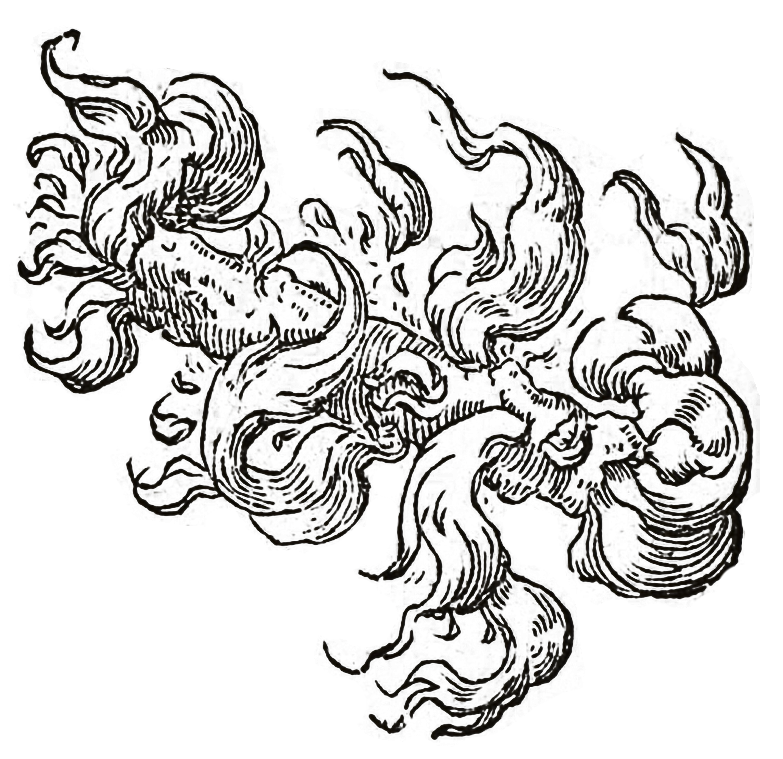
Jacques Collin de Plancy’s Dictionnaire Infernal (1818, revised 1863) further cements Amy’s profile, illustrating him amid flames and reiterating his presidential status. Unlike more malevolent demons like Asmodeus, Amy’s story carries a thread of tragic redemption: Weyer notes that Amy confided to Solomon a “futile hope” of returning to the Seventh Heaven after 1,200 years, a poignant echo of his fallen angelic origins. This motif, absent in some later accounts, underscores the Renaissance fascination with free will, fall from grace, and the blurred line between angel and demon.
Amy’s name—variously spelled Avnas, Auns, Hanar, or Hanni—may derive from Hebrew or Aramaic roots, possibly linked to “ayin” (eye) or “am” (people), symbolizing insight or multitudes under his sway. He is distinct from similarly named demons like Aamon (a wolf-like marquis) or Aim (a destructive duke), though phonetic overlaps in grimoires occasionally cause confusion.
Appearance and Demeanor
Summoners beware: Amy’s manifestation is no gentle apparition. He first erupts as a “flaming fire” or a “humanly-shaped pillar of flames,” scorching the air with infernal heat—a visceral reminder of his fiery fall from grace. This initial form, detailed across sources, evokes the biblical burning bush or Prometheus’s stolen fire, blending terror with transformative potential. After a moment, he assumes the shape of a man, though his touch remains “hot,” a lingering mark of his punishment.
In de Plancy’s iconic illustrations, Amy appears regal yet otherworldly, his humanoid form wreathed in subtle embers, eyes gleaming with arcane light. Unlike brutish demons, he speaks with eloquence, his voice carrying the weight of celestial libraries. Modern occult interpretations, such as those in Gustav Davidson’s A Dictionary of Angels (1967), emphasize his intellectual poise, portraying him as a “great president” whose vanity stems not from cruelty but from vast erudition.
Powers and Abilities
Amy’s dominion lies not in destruction but in elevation—a tempter who trades souls for stars. As a President, he commands 36 legions, a force capable of swaying earthly fortunes. His gifts, enumerated in the Ars Goetia, include:
Mastery of Sciences: He imparts “wonderful knowing” in astrology, astronomy, and the liberal arts—grammar, rhetoric, logic, arithmetic, geometry, music, and philosophy. To medieval scholars, this was no small boon; Amy could unlock the cosmos, revealing planetary influences and celestial mechanics long before telescopes pierced the night sky.
Familiar Spirits: Amy bestows “good familiars”—loyal spirit aides that assist in magic or daily labors, akin to a supernatural apprentice.
Political Influence: He incites “love between friends and foes,” reconciling divides or currying favor with rulers, making him invaluable to ambitious courtiers.
Treasure Revelation: Excluding the Munich Manual of Demonic Magic, most texts credit Amy with uncovering hidden treasures guarded by spirits, blending avarice with arcane detection.
In esoteric traditions, Amy aligns with solar and fiery elements, strongest at noon, and is opposed by the Shem HaMephorash angel Ieialel. His sigil—a complex geometric seal—serves as a focal point for evocation, channeling his energy without direct confrontation.
The Sigil and Summoning Rituals
Central to Amy’s invocation is his sigil, a intricate emblem resembling interlocking flames and eyes, inscribed on virgin parchment during a waxing moon. Traditional rituals, drawn from Solomonic magic, demand purity: the summoner stands barefoot, head uncovered, reciting conjurations in a protective circle etched with divine names. A sample invocation might plead: “By thy sigil and name, Amy, I summon thee in respect, seeking thy light amid shadows.”
Warnings abound—Amy’s heat can overwhelm the unprepared, and his knowledge tempts with soul-binding pacts. Yet, for the resolute, he offers not damnation but dominion over ignorance.
Cultural Impact and Modern Interpretations
In popular fiction, Amy symbolizes the double-edged sword of knowledge—enlightening yet incendiary. His hopeful return to grace resonates in themes of redemption, as seen in Neil Gaiman’s Sandman or H.P. Lovecraft’s cosmic tomes, where forbidden lore burns the mind.
Conclusion: A Beacon in the Inferno
Amy stands as a testament to demonology’s nuanced tapestry: not a harbinger of doom, but a fallen scholar yearning for the stars. In an age of information overload, his promise—of astrology’s maps, science’s keys, and treasures unearthed—remains tantalizing. Yet, as grimoires caution, such gifts come at a price: the summoner’s resolve, and perhaps a sliver of their soul. To gaze upon Amy’s flame is to court both brilliance and blaze—a eternal dance between light and shadow in the human quest for the divine. Whether as historical curiosity or occult icon, Amy endures, whispering that even in Hell, knowledge is the ultimate power.