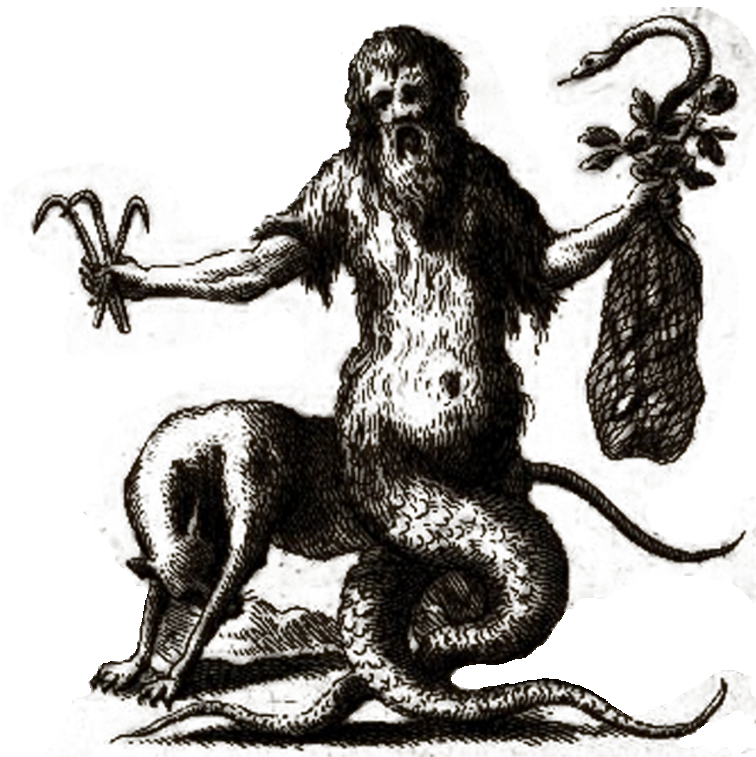
n the shadowed annals of demonology, few figures evoke the blend of celestial wisdom and infernal ferocity quite like Orias. As the 59th spirit in the Ars Goetia—the infamous first section of the 17th-century grimoire The Lesser Key of Solomon—Orias stands as a Great Marquis of Hell, commanding thirty legions of lesser demons. This infernal noble is not merely a tempter or destroyer but a scholar of the stars, a transformer of forms, and a bestower of honors, embodying the paradoxical allure of forbidden knowledge. Rooted in Renaissance occult traditions that drew from Jewish, Christian, and Arabic mysticism, Orias represents the Goetic demons’ dual nature: fallen angels who rebelled alongside Lucifer, now bound in service to those bold enough to summon them.
The Infernal Hierarchy: Orias’s Place Among the 72
The Ars Goetia catalogs 72 demons, each with a noble rank mirroring medieval European aristocracy—kings, dukes, marquises, and more—each governing legions of spirits in Hell’s vast bureaucracy. Orias, as a Great Marquis, occupies a mid-tier position of authority, below the commanding kings but above the more specialized earls and presidents. These marquis are often depicted as warriors or beasts, their powers leaning toward transformation and earthly dominion. Orias rules over thirty legions, a formidable force that underscores his role as a leader in Lucifer’s infernal court.
According to the grimoire, these spirits are not chaotic evils but structured entities, once angels who fell during the War in Heaven. They convene in Hell’s shadowy councils, plotting from opulent castles or tethered dimensions, always under Lucifer’s watchful eye. Orias, in this hierarchy, is a predator-scholar: a “dark and black-hearted” figure whose dominion spans astrology, prophecy, and blood magic, making him a potent ally for those seeking cosmic insights or personal elevation.
Manifestation: The Lion’s Ride and the Serpent’s Grasp
Summoners beware—Orias’s appearance is as striking as it is terrifying. The Ars Goetia describes him manifesting as a majestic lion astride a mighty, strong horse, his form crowned with a serpent’s tail that writhes like living shadow. In his right hand, he clutches two great serpents, their fangs bared and hisses echoing like whispers from the abyss. This chimeric visage symbolizes his mastery over beasts and deception: the lion for raw power and nobility, the horse for unyielding charge, and the serpents for cunning prophecy and hidden truths.
Under a conjurer’s command, Orias may assume a more humanoid guise, shedding some of his bestial traits to converse directly. Yet, his eyes—fiery and unblinking—betray the predator beneath. Modern occult interpretations, such as those in The Demonic Paradise wiki, emphasize his “lust for death” and sadistic edge, portraying him as a hunter who stalks both the physical and astral planes. To invoke him, one must etch his sigil—a intricate, interlocking glyph of curves and angles evoking celestial charts—onto silver, the metal befitting a marquis, and recite incantations under the stars.
Dominion and Powers: Stars, Transformations, and Treasures
Orias’s arsenal is as diverse as the night sky he commands. Chief among his gifts is unparalleled knowledge of astrology: he reveals the movements of planets and stars, granting summoners foresight into fates, fortunes, and cosmic alignments. This makes him invaluable to diviners and strategists, who might petition him for guidance in love, war, or ambition. He teaches the liberal sciences, from astronomy to the arts of rhetoric, elevating the worthy to heights of intellectual mastery.
But Orias’s influence extends beyond the ethereal. As a master of transformation, he alters the forms of men—shifting shapes to deceive enemies or fulfill desires—while bestowing dignities and promotions upon the faithful. Hidden treasures yield to his command, whether buried gold or esoteric secrets guarded by rival spirits. Darker aspects lurk in his portfolio: prophecy laced with destruction, blood magic for binding oaths, and a sadistic thrill in unraveling foes. In one esoteric account, his name derives from “ARY-ATz,” an ancient method of lion-hunting from treetops, hinting at his patient, predatory patience.
Astrologically, Orias aligns with Virgo, his planetary ruler Mercury lending swift intellect, while his elemental affinity is earth—grounded yet fertile with potential. Offerings of incense, astrological charts, or serpent motifs appease him, forging a symbiotic bond with other Goetic spirits like Haagenti (transmutation) or Foras (herbal lore).
Historical Echoes: From Solomon to Modern Shadows
The legend of Orias traces to King Solomon, the biblical sage said to have bound the 72 Goetic demons into a brass vessel, compelling their aid in building the Temple of Jerusalem. In this myth, Orias’s astrological prowess illuminated sacred geometries, while his transformations thwarted demonic rivals. By the Renaissance, demonologists like Johann Weyer in Pseudomonarchia Daemonum (1577) echoed these traits, solidifying Orias’s place in Western esotericism.
Speculation swirls around his origins: some link him to the Egyptian god Osiris (pronounced “Oh-rih-us”), a deity of resurrection and the underworld, suggesting syncretic roots in ancient pantheons. Others see echoes in Mesopotamian star-lore, where serpentine figures guarded astral gates. In popular culture, Orias lurks in the margins—whispered in heavy metal lyrics, referenced in occult novels like those of H.P. Lovecraft’s successors, or evoked in role-playing games like Dungeons & Dragons as a chaotic neutral force. Films and series, from Hereditary (featuring Goetic king Paimon) to indie horror, nod to his kind, portraying summonings gone awry.
The Double-Edged Pact: Wisdom or Ruin?
To engage Orias is to dance on damnation’s edge. The Ars Goetia warns that these spirits tempt with “worthy gifts”—knowledge, power, wealth—in exchange for souls, their obedience fragile without proper ritual. Yet, for the prepared occultist, Orias offers enlightenment: a bridge between heaven’s fallen light and earth’s buried riches. In an era of quantum uncertainties and astrological apps, his archetype endures as a reminder of humanity’s hunger for the unseen.
Orias, the marquis astride his starry steed, invites us to gaze upward—not in fear, but in calculated ambition. Whether fallen angel or primordial force, he embodies the Goetic truth: power resides not in the light, but in the shadows we dare to command.