
Vapula: The 60th Spirit of the Ars Goetia
Vapula, also called Vapuala or Naphula, appears as the sixtieth spirit in the Ars Goetia, part of the Lesser Key of Solomon.
He is a Great Duke of Hell commanding thirty-six legions of spirits. His powers unite craftsmanship, intellect, and infernal authority.
Among the seventy-two demons of Solomon, Vapula represents the mastery of skill and the disciplined pursuit of knowledge.
Origins in Demonology
Vapula’s name surfaces in seventeenth-century grimoires that shaped Western occult study.
The Ars Goetia compiles earlier material from Johann Weyer’s Pseudomonarchia Daemonum (1577) and medieval magical traditions.
These sources merge Christian angelology, Jewish mysticism, and classical symbolism, forming the framework of organized demonology.
Within this hierarchy, Vapula embodies the transmission of knowledge rather than chaos or destruction.
Description and Attributes
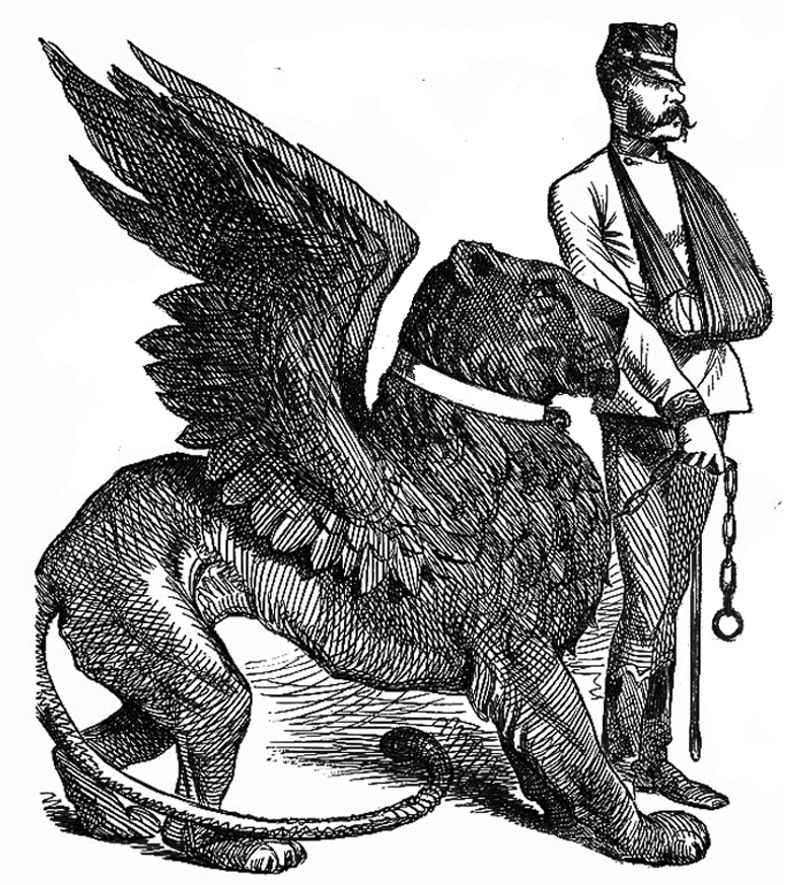
The Ars Goetia depicts Vapula as a lion with griffin wings, a hybrid form combining strength and elevation.
This image reflects both earthly dominance and celestial aspiration.
His hybrid shape mirrors his dual nature—ferocity tempered by wisdom.
The grimoire states that Vapula “maketh men cunning in all handicrafts and professions, also in philosophy and sciences.”
Thus, his influence extends across the intellectual and practical arts.
He teaches philosophy, mechanics, and design, bridging physical labor and theoretical learning.
Unlike destructive spirits, Vapula serves as a patron of intellectual refinement and technical mastery.
Role and Summoning in the Ars Goetia
Within Goetic hierarchy, Vapula’s title of Duke marks him as a commander of disciplined legions.
Practitioners of ceremonial magic once sought his guidance to perfect skills or uncover lost techniques.
Each demon in the Ars Goetia possesses a unique sigil, believed to embody its essence.
Vapula’s sigil, drawn upon parchment or metal, served as a symbolic focus during invocation rituals.
Historical magicians followed strict ceremonial rules—protective circles, divine names, and invocations—to command such spirits.
These methods, however, reflect the symbolic mindset of early modern occultism rather than practical science.
Historical Context and Significance
The inclusion of Vapula in the Ars Goetia reflects Europe’s fascination with secret knowledge during the Renaissance and early modern periods.
As artists, engineers, and philosophers expanded human understanding, society often blurred the line between genius and heresy.
A demon who granted mastery in crafts and sciences symbolized both ambition and danger.
Vapula’s gifts echoed the belief that advanced knowledge carried moral risk.
In this sense, he personified the archetype of the inspired artisan guided by hidden forces.
For scholars of esotericism, Vapula represents the tension between divine inspiration and forbidden curiosity.
Vapula in Other Texts
Beyond the Ars Goetia, Vapula appears in Weyer’s Pseudomonarchia Daemonum, described in similar terms.
Weyer lists him as a duke teaching philosophy and all mechanical arts, confirming textual continuity between sources.
Few earlier references exist, and the name’s origin remains uncertain.
Its lack of Hebrew or Latin roots adds to Vapula’s mystery, suggesting an invented name drawn from composite mythic traditions.
This consistency across grimoires reinforces Vapula’s role as an intellectual rather than destructive entity within demonological literature.
Symbolism and Interpretation
Vapula’s lion body symbolizes strength and sovereignty, while his griffin wings represent ascension and insight.
Together, they convey dominion over both earth and air—the physical and the mental realms.
The combination also reflects Renaissance ideals of unity between art, craft, and intellect.
His domain over handicrafts and sciences embodies the period’s reverence for skill and learning.
By granting proficiency, Vapula bridges the divide between human effort and divine inspiration.
The imagery of a winged lion teaching wisdom transforms demonic fear into a metaphor for enlightened mastery.
Cultural Implications
During the Renaissance, craftsmen, scholars, and alchemists sought knowledge viewed as both sacred and perilous.
Vapula’s legend mirrors this paradox.
He offered mastery at a cost—an allegory for the struggle between moral obedience and intellectual freedom.
Through his association with art and invention, Vapula highlights society’s ambivalence toward creative power.
He thus stands as a symbol of progress shadowed by spiritual risk.
Conclusion
Vapula, the sixtieth spirit of the Ars Goetia, embodies the pursuit of excellence through knowledge.
His lion-winged form and scholarly nature reveal a demon more mentor than destroyer.
In early modern thought, he personified the daring intellect that seeks perfection beyond mortal limits.
Today, Vapula endures in demonological study as a figure where power, artistry, and wisdom converge.