The prayer begins in the language of liturgy and turns toward the defeated angel. Baudelaire’s “Les Litanies de Satan” names Satan as prince of exile, healer of anguish, lamp of inventors and companion of those whom respectable society abandons. The poem is neither a transparent confession of worship nor a joke that can be safely dismissed. It belongs to a collection prosecuted by the French state, written by a poet whose imagination remained saturated with Catholic sin, judgment and desire. In Baudelaire, revolt does not lead into a clean world of freedom. It descends into the modern city, where beauty flowers beside corruption and the adversary speaks for the condemned.
The Historical and Philosophical Problem
Baudelaire’s Satan and the Poetry of Revolt belongs to Catholic imagery, the modern Parisian city, the 1857 censorship trial and the emergence of Decadent aesthetics. Its central problem is Baudelaire’s use of Satan as a liturgical and poetic figure through whom exile, forbidden desire and social revolt can be voiced. The article follows close reading of the Revolt poems, publication history, legal censorship and nineteenth-century reception and keeps one contradiction in view: the poems sympathize with the defeated and cursed while retaining an acute awareness of guilt, degradation and self-deception. The purpose is not to turn a literary or philosophical figure into an object of compulsory belief. It is to show how rebellion, knowledge and authority were argued through real texts and institutions.
The stakes concern whether blasphemous reversal can reveal the cruelty hidden inside respectable morality without becoming merely another pose. That question is larger than the original author or event because later readers inherited the symbol under different conditions. The history must therefore distinguish initial meaning, hostile accusation, sympathetic reception and modern appropriation while allowing them to illuminate one another.
The 1857 Book and Its Trial
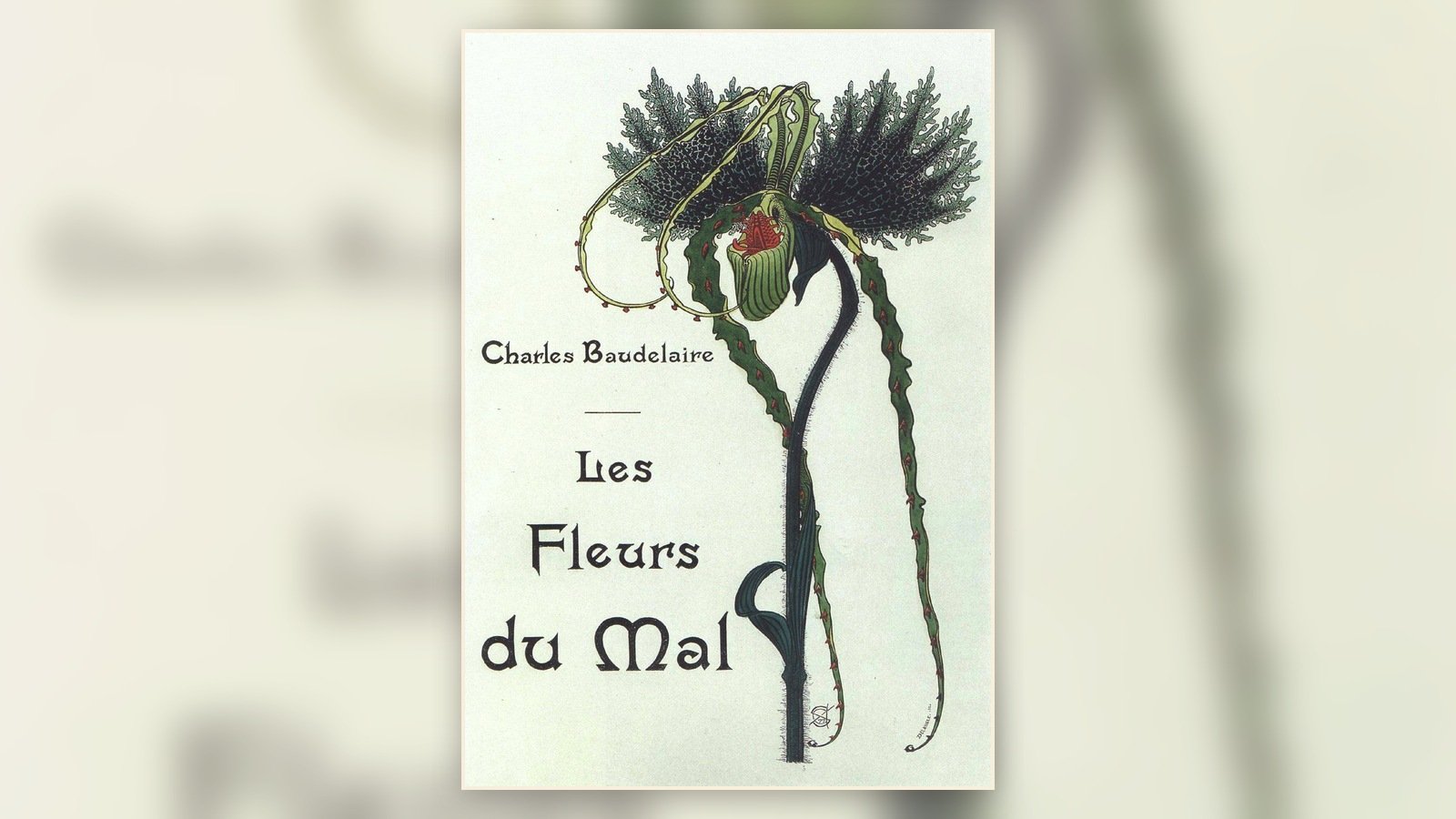
Les Fleurs du mal appeared in 1857 through Poulet-Malassis and de Broise. Within weeks, Baudelaire and his publishers faced prosecution. Six poems were condemned for offending public morality and remained officially banned in France until 1949. The trial did not focus primarily on the Satanic poems, but it fixed the collection’s reputation as a dangerous book. Censorship confirmed the poet’s central intuition: modern authority could condemn a work in the name of morality while exposing its fear of the desires and contradictions the work made visible.
The conflict over whether blasphemous reversal can reveal the cruelty hidden inside respectable morality without becoming merely another pose also explains why the subject repeatedly crosses the boundary between literature and religion. A literary figure can become a spiritual emblem; a theological accusation can become a political identity. Accuracy requires following the passage rather than deciding in advance where the “real” meaning must reside.
The Section Called Revolt
In the 1861 arrangement, the poems “The Denial of Saint Peter,” “Abel and Cain,” and “The Litanies of Satan” form a section explicitly titled Revolt. Their sequence moves through disappointment with divine justice, class conflict imagined through biblical brothers, and an inverted prayer to the adversary. Baudelaire does not offer a systematic theology. He constructs a ritual of opposition in which Christian names are retained but their moral alignments are destabilized. The language of the sacred becomes the instrument of accusation.
A darker implication is that authority often creates the adversary it fears. By forbidding a question, persecuting a book or demanding ritual assent, an institution gives dissent a shared symbol. Yet prohibition alone does not prove the dissenter correct. It proves only that power has entered the argument.
A Litany Turned Downward
A litany normally repeats petitions to saints or divine persons. Baudelaire preserves the recurring plea and redirects it to Satan. The formal choice matters because repetition produces a devotional rhythm stronger than ordinary satire. Each invocation adds a constituency: the sick, the exiled, the condemned, the inventors, the conspirators and those crushed by wealth. Satan becomes a dark intercessor for lives that official sanctity appears not to protect. The inversion is effective because the original liturgical structure remains audible beneath it.
The individual reader is implicated as well. It is easy to admire defiance at a historical distance while avoiding the discipline of self-critique. The adversarial method becomes serious only when it tests cherished rebellion with the same severity used against inherited authority.
Prince of Exile
Baudelaire’s Satan is repeatedly imagined as defeated yet unbroken. Exile is not only a metaphysical condition; it is social and psychological. The poet identifies with people displaced from honour, health, wealth and acceptable desire. The adversary’s grandeur comes from surviving condemnation. This does not erase the possibility of corruption. Rather, it gives humiliation a language that refuses to ask permission from the authorities that inflicted it.
This is why the subject belongs to dark philosophy rather than inspirational mythology. It asks what freedom costs, what knowledge fails to repair, and how a person acts after certainty has been broken. The darkness is not decoration; it is the absence of an innocent position.
Satan and the Modern City
The Satanic imagination of Les Fleurs du mal belongs to urban modernity. Paris appears as a landscape of crowds, commodities, prostitution, poverty, boredom and sudden beauty. Traditional moral categories remain present, but they no longer organize experience securely. The Devil is therefore not confined to a medieval wilderness. He becomes a figure moving through boulevards and rented rooms, intimate with the compromises of modern life and the forms of despair concealed by progress.
The historical value of satan and the modern city is that it exposes Baudelaire’s use of Satan as a liturgical and poetic figure through whom exile, forbidden desire and social revolt can be voiced. Later summaries often preserve the dramatic conclusion and lose the route by which it was reached. Restoring publication, audience and argument makes the subject more disturbing rather than less: the symbol was produced through real conflicts over whether blasphemous reversal can reveal the cruelty hidden inside respectable morality without becoming merely another pose.
Catholicism Without Consolation
Baudelaire’s relation to Catholicism was conflicted and enduring. His poetry uses sin, fall, damnation and prayer with an intensity that would be impossible if the religious language meant nothing to him. Yet consolation repeatedly fails. God can appear distant, justice obscure and respectable virtue cruel. Satanic speech occupies the vacancy created when the condemned still think in sacred forms but no longer trust the institution that defines holiness.
This stage also sharpens the central tension: the poems sympathize with the defeated and cursed while retaining an acute awareness of guilt, degradation and self-deception. The opposition cannot be resolved by declaring one side enlightened and the other benighted. The archive shows intelligence, fear, self-interest and sincere conviction operating across the conflict. A serious adversarial reading keeps those mixed motives visible.
Irony, Sincerity and the Impossible Choice
Critics have long debated whether the Satanic poems are sincere, theatrical, ironic or strategically blasphemous. The alternatives may be too simple. A poem can perform devotion, expose its own performance and still communicate real sympathy. Baudelaire’s art thrives on divided consciousness. The voice kneels and mocks, believes and recoils, seeks transcendence and returns to the body. The unresolved tone is not a defect; it is the psychological truth of the collection.
The material should be read through close reading of the Revolt poems, publication history, legal censorship and nineteenth-century reception. Primary language establishes what the author actually constructed; reception shows how the work escaped its first context; later movements reveal which elements became usable symbols. None of these layers may silently replace the others.
The Condemned as Counter-Society
The litany assembles a counter-society from those excluded by moral and economic order. Its solidarity is imaginative rather than institutional, but it anticipates later countercultures that adopt condemned symbols to reverse stigma. By praising the being defined as absolute evil, the poem asks who benefits from the definition. Yet Baudelaire does not idealize the marginalized as pure. His outsiders remain damaged, contradictory and capable of cruelty, which keeps the poem from becoming sentimental propaganda.
The most common distortion is reading the poems as straightforward devotional Satanism or explaining away every invocation as empty irony. That simplification removes the ethical pressure from the subject by making judgment automatic. The original work is stronger because it allows attraction and danger to occupy the same scene, forcing the reader to decide without the protection of a slogan.
From Decadence to Modern Satanic Symbolism
Baudelaire’s Satan influenced Decadent literature, Symbolism, anti-clerical art and later occult or countercultural appropriations. The adversary became associated with artistic autonomy, sexual transgression and solidarity with the despised. Modern readers sometimes recruit the poem into religious identities that did not exist in Baudelaire’s form. Such reception is historically significant, but it should not collapse the poet’s divided Catholic imagination into a single modern creed.
At the philosophical centre lies the temptation to romanticize suffering, addiction and exclusion because they produce powerful artistic symbols. Rebellion is not purified merely because its opponent is oppressive. Every adversarial tradition must ask what forms of conduct it authorizes once the old command has been rejected and whether another person remains more than material for the rebel’s freedom.
Deeper Questions
The trial of Les Fleurs du mal reveals that “forbidden” literature is not defined only by content. It is produced through institutions—courts, publishers, newspapers and moral campaigns—that decide which bodies and desires may be represented. The Satanic reputation of the book grew within this machinery of condemnation.
Baudelaire’s language of pity is as important as his language of revolt. The repeated plea asks for mercy from the figure denied mercy. This reversal accuses a moral universe that abandons the suffering while preserving the vocabulary of righteousness.
The poem’s beauty creates an ethical problem. Exile and degradation become aesthetically powerful, and readers may mistake the splendour of expression for an endorsement of every destructive condition it depicts. Baudelaire’s art demands attention to both attraction and damage.
Satan functions here as a symbol of knowledge because he sees the underside of respectable order. He knows the prison, the scaffold, the hospital and the hidden bargain. Illumination is therefore not radiant innocence but familiarity with what society refuses to acknowledge.
For Luciferian thought, Baudelaire offers no stable doctrine. He offers a method of reversal: take the condemned image, place it inside the form of prayer, and listen for the voices that become audible. The result is darker and more human than a simple declaration of belief.
A further question concerns the material form of the archive. Books, paintings, trials and institutional procedures do not merely carry ideas; they decide who may encounter them and under what conditions. The survival of Baudelaire Satan as a searchable subject depends upon acts of preservation that earlier authorities may have intended as refutation or control.
The language of illumination should not be confused with the possession of final truth. Every figure in this history sees something the official order excludes, but partial sight can still become arrogance. The ethical measure is whether new knowledge enlarges responsibility or merely enlarges the self’s claim to rule.
Reception also changes when a work moves from scandal to canon. Once taught, collected and digitized, a forbidden text can lose the danger of its first appearance. Recovering the original conflict restores the cost paid by writers, publishers and readers without requiring modern audiences to imitate their conclusions.
The political lesson is equally unstable. Institutions need continuity, but continuity can protect error; rebels need disruption, but disruption can destroy the conditions of freedom. The archive offers no formula that removes this tension. It offers cases through which judgment can be trained.
A further question concerns the material form of the archive. Books, paintings, trials and institutional procedures do not merely carry ideas; they decide who may encounter them and under what conditions. The survival of Baudelaire Satan as a searchable subject depends upon acts of preservation that earlier authorities may have intended as refutation or control.
The language of illumination should not be confused with the possession of final truth. Every figure in this history sees something the official order excludes, but partial sight can still become arrogance. The ethical measure is whether new knowledge enlarges responsibility or merely enlarges the self’s claim to rule.
Reception also changes when a work moves from scandal to canon. Once taught, collected and digitized, a forbidden text can lose the danger of its first appearance. Recovering the original conflict restores the cost paid by writers, publishers and readers without requiring modern audiences to imitate their conclusions.
The political lesson is equally unstable. Institutions need continuity, but continuity can protect error; rebels need disruption, but disruption can destroy the conditions of freedom. The archive offers no formula that removes this tension. It offers cases through which judgment can be trained.
A further question concerns the material form of the archive. Books, paintings, trials and institutional procedures do not merely carry ideas; they decide who may encounter them and under what conditions. The survival of Baudelaire Satan as a searchable subject depends upon acts of preservation that earlier authorities may have intended as refutation or control.
The language of illumination should not be confused with the possession of final truth. Every figure in this history sees something the official order excludes, but partial sight can still become arrogance. The ethical measure is whether new knowledge enlarges responsibility or merely enlarges the self’s claim to rule.
Reception also changes when a work moves from scandal to canon. Once taught, collected and digitized, a forbidden text can lose the danger of its first appearance. Recovering the original conflict restores the cost paid by writers, publishers and readers without requiring modern audiences to imitate their conclusions.
The political lesson is equally unstable. Institutions need continuity, but continuity can protect error; rebels need disruption, but disruption can destroy the conditions of freedom. The archive offers no formula that removes this tension. It offers cases through which judgment can be trained.
A further question concerns the material form of the archive. Books, paintings, trials and institutional procedures do not merely carry ideas; they decide who may encounter them and under what conditions. The survival of Baudelaire Satan as a searchable subject depends upon acts of preservation that earlier authorities may have intended as refutation or control.
The language of illumination should not be confused with the possession of final truth. Every figure in this history sees something the official order excludes, but partial sight can still become arrogance. The ethical measure is whether new knowledge enlarges responsibility or merely enlarges the self’s claim to rule.
What Remains
The subject leaves no painless conclusion. It preserves the Decadent and countercultural Satan who shelters outsiders and transforms condemnation into style while exposing the temptation to romanticize suffering, addiction and exclusion because they produce powerful artistic symbols. The inherited authority may be unjust, the rebel’s question may be necessary, and the rebel may still fail. Dark philosophy begins where those statements are allowed to remain true together.
SatanWorld approaches this history as an archive of contested knowledge. The task is to hear the forbidden voice without granting it automatic innocence, and to examine authority without treating opposition as a substitute for evidence. What remains is the responsibility of judgment: freedom after command, knowledge after prohibition, and the difficult refusal to become the power one resisted.