The story of Clara Germana Cele did not enter history through a contemporary newspaper report, a medical transcript or a court record. It emerged years later from the mission world of colonial Natal, where priests remembered a schoolgirl whose body, voice and behaviour had seemed to become occupied by something hostile. Later retellings would make the case more spectacular with every repetition: levitation, impossible strength, languages never learned, a pact signed in blood. Beneath those additions lies a smaller and more disturbing archive—several clerical versions of events said to have unfolded at St Michael’s mission in 1906 and 1907, written after the fact by men who believed that an exorcism had taken place.
The Mission at the Edge of the Record
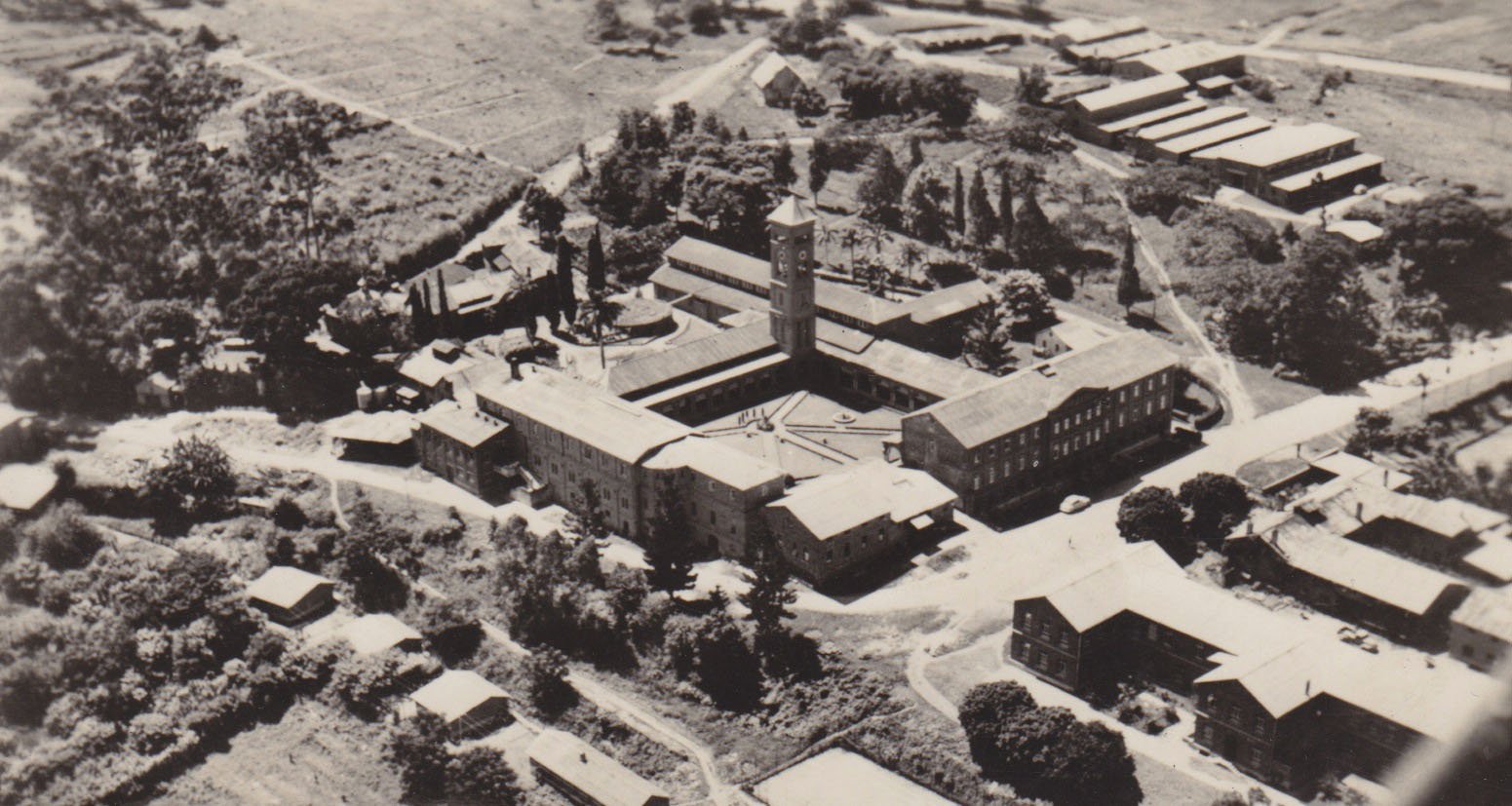
St Michael’s mission lay in the region between Umzinto and Ixopo, within the ecclesiastical network connected to Mariannhill. The setting matters because the surviving account was produced inside a Catholic institution shaped by missionary authority, colonial administration and unequal relationships between European clergy and African pupils. Clara is often described as a sixteen-year-old Zulu girl and an orphan educated by the mission. Beyond that, reliable biographical detail is scarce. Even the most repeated portrait of her life comes from sources written by the people who interpreted her crisis as demonic.
The Mariannhill community combined schooling, religious formation, agricultural work and disciplined communal life. It also existed within a colonial society that classified African bodies, beliefs and conduct through European categories. When Clara’s behaviour changed, the available explanations were not neutral. Illness, rebellion, spiritual affliction and moral transgression could become entangled in the same institutional language.
This does not mean that the witnesses invented everything they saw. It means that every surviving sentence passed through a system that already knew what possession should look like and what authority should confront it.
Father Erasmus Hörner’s Account
The principal narrative is associated with Father Erasmus Hörner, who arrived at Mariannhill in 1892 and later served at St Michael. His written account, usually titled “Positive Facts of Mysterious Occurrences of Demoniacal Possession,” dates from 1920—approximately thirteen years after the events. A revised version appeared in 1932. Bishop Henri Delalle also preserved an official version, and a Catholic Digest article published in 1947 helped carry the story into a wider English-speaking audience.
Those dates are crucial. The case was not recorded in one stable document written while each event occurred. It developed through retellings. Details differ. Some elements appear more strongly in later versions than in the earliest known account. Modern websites often fuse all four strands into a single seamless narrative and present every detail as if it had been witnessed, written and verified on the same day.
A source-driven article must resist that fusion. Clara’s case is not one story but a family of related stories, each shaped by memory, theology and the intended audience.
The First Crisis
According to the clerical accounts, Clara’s disturbance began in 1906. She was said to display sudden hostility toward religious objects and sacred speech. Her voice altered. She reacted violently to prayer and to the presence of blessed items. The missionaries interpreted these reactions not as ordinary misconduct but as signs that another intelligence recognized what Clara herself should not have been able to detect.
The later tradition adds that she understood languages unknown to her, revealed private information and demonstrated unusual physical force. These are classic signs in Catholic possession literature, which makes them important but also demands caution. A feature that perfectly matches an established demonological pattern may reflect what witnesses saw, what memory selected, or what later editors believed a complete possession narrative required.
The accounts describe Clara as entering states in which her expression changed and speech came from her in an unfamiliar manner. Those around her believed they were not merely hearing a distressed girl. They believed a presence answered through her.
The Alleged Pact
One of the most repeated claims is that Clara had made a pact with the Devil. Popular versions describe a document, sometimes signed with blood, by which she surrendered herself. The documentary foundation for this scene is weak and varies across retellings. It should not be presented as an independently preserved object.
Within the religious logic of the case, however, the pact explains why the possession began. It converts an unexplained crisis into a moral chain: temptation, consent, invasion and deliverance. That chain also places responsibility upon the afflicted person. A vulnerable pupil becomes both victim and accused participant.
The darker possibility is that the language of a pact emerged from Clara’s own statements during distress. If she confessed to forbidden contact, the missionaries would have interpreted that speech within a theology in which words could open a door. Whether those words were autobiographical, coerced, visionary or spoken during an altered state cannot now be established.
The First Exorcism
The first formal intervention was reportedly conducted after clergy concluded that the disturbances exceeded ordinary illness or misconduct. The rite is described as prolonged and difficult. Clara allegedly struggled, shouted, insulted sacred figures and reacted to prayers. Witnesses claimed that forces beyond her ordinary strength resisted restraint. At moments, later accounts say, her body rose from the bed or floor.
Levitation is one of the claims most often repeated as proof. It is also among the least securely documented. The surviving sources are clerical narratives, not measurements or photographs. The event should therefore be preserved exactly where it belongs: as testimony within the possession tradition, not as a verified physical demonstration.
The rite was understood as a contest of authority. The priests did not believe they were persuading Clara. They believed they were addressing a hostile inhabitant compelled by sacred names. The girl’s cries, physical exhaustion and periods of apparent calm were read as phases of that conflict.
At the end of the first episode, the presence was said to depart. Clara returned to ordinary awareness. For a time, the mission considered her delivered.
The Return in 1907
The case did not end with a single victory. Reports state that the disturbance returned in 1907. This second outbreak made the story more troubling because it suggested either incomplete liberation or renewed access. Catholic demonology often treats recurrence as evidence that a door has reopened through consent, despair or unaddressed spiritual danger. In a modern reading, recurrence can also suggest an unresolved medical or psychological condition.
Bishop Henri Delalle became associated with the later phase and with the official preservation of the case. A second exorcistic struggle was reported. Again, the signs included altered voice, aversion to sacred objects, physical agitation and phenomena interpreted as beyond Clara’s normal capacity.
The repeated cycle—crisis, ritual, relief, relapse—gave the narrative its final structure. It also ensured that Clara’s own perspective disappeared. We possess accounts of what clergy observed and believed. We do not possess a sustained testimony in which Clara explains her experience in her own words after recovery.
Languages, Secrets and Impossible Knowledge
Modern summaries frequently state that Clara spoke French, German, Latin and Polish despite never studying them. The lists vary. Some sources say she understood languages rather than speaking them fluently. Others describe knowledge of private matters or distant events. Such claims belong to a long history of possession narratives in which hidden knowledge demonstrates the presence of an intelligence distinct from the afflicted person.
The evidential problem is not that the claims are automatically false. It is that the surviving accounts rarely provide the exact phrases, the qualifications of the listeners, the circumstances of testing or the possibility that Clara had heard liturgical and European speech throughout mission life. A few recognized words can become “speaking a language” when recollected years later.
The frightening core is narrower. Witnesses believed that something answered them with knowledge they did not expect Clara to possess. Their certainty became part of the event, shaping every prayer and every restraint that followed.
The Body as Evidence
Possession cases often turn the body into a courtroom. Pain, posture, voice, appetite and reaction are treated as exhibits. Clara’s body was watched for signs that would distinguish illness from invasion. If she recoiled from a blessed object whose identity had been concealed, that response could be interpreted as supernatural recognition. If she remained calm, the observers might wait for another test.
This method creates a closed system. Once possession is suspected, nearly any response can reinforce the diagnosis. Violence proves resistance. Stillness can prove concealment. Knowledge proves the demon’s intelligence. Confusion proves the victim’s suppression. The afflicted person has little power to define what is happening.
Yet the closed nature of the interpretation does not tell us what witnesses actually encountered. A girl may have undergone seizures, dissociation, trauma, psychosis, religious terror or an experience that the available medical language could not contain. The clergy believed a demon was present because the pattern matched their tradition and because prayer appeared, in their memory, to alter it.
Colonial Silence Around Clara
The most serious weakness in the archive is the absence of Clara’s independent voice. She was young, African, female and institutionally dependent. The men who named, treated and documented the case possessed religious and social authority over her. Later writers transformed her into a famous example of possession without recovering the life that existed before and after the crisis.
Even her name is often used as if it were a complete biography. Little is reliably known about her family, education, health, friendships or fate. Some popular accounts claim that she died soon afterward; others extend her life. Without secure records, these claims should remain outside the narrative.
The ethical task is not to dismiss the case as colonial fantasy, nor to repeat the missionaries’ certainty as neutral fact. It is to keep both realities visible: clergy reported events they believed were supernatural, and the person at the centre was never given equal control over the record.
How the Story Became More Terrible
The 1947 Catholic Digest treatment and later paranormal compilations made the case accessible to readers far from Natal. Each retelling selected the most dramatic signs. Internet summaries then condensed the narrative into a list: pact, levitation, unknown languages, clairvoyance, superhuman force, two exorcisms. Context disappeared.
This process is common in modern demonology. An uncertain phrase in an early account becomes a precise feat. A delayed recollection becomes a contemporary report. Different versions are combined, and the resulting story appears stronger because contradictions have been removed.
Clara’s case is more powerful when those seams remain visible. The gaps are not an inconvenience. They are where memory, authority and fear entered the record.
What the Clergy Believed Happened
For Father Hörner and the church authorities who preserved the narrative, Clara was genuinely possessed and genuinely delivered through exorcism. They understood the hostility toward sacred objects, the altered voice and the reported knowledge as signs of a personal demonic intelligence. The recurrence confirmed the seriousness of the threat. The eventual calm confirmed the authority of the rite.
That interpretation should be stated clearly because it is the foundation of the story’s survival. The missionaries did not present the episode as metaphor. They believed that a battle had occurred within and around a human body.
A reader may consider medical, psychological and social explanations without pretending that they fully reconstruct an event recorded late and incompletely. No diagnosis can now be made. The archive is too thin, too mediated and too distant.
What Remains
The possession of Clara Germana Cele survives at the border between religious testimony and historical uncertainty. Its best-known details are also its least secure. Its most secure fact is that members of the Mariannhill mission network believed a pupil had undergone two episodes of demonic possession and that clergy later committed that belief to writing.
The horror of the case is not only the alleged presence. It is the enclosure of a young person inside interpretations she did not control. If the missionaries were correct, Clara was subjected to an intelligence that used her voice. If they were mistaken, she was subjected to a system that interpreted her suffering as the voice of a demon. In either possibility, the girl disappears behind what others heard coming from her mouth.
Sources and Further Reading
This article distinguishes the four principal clerical and later published versions identified by modern source analysis. It uses the Archaeus study of the documentary history, Catholic summaries that preserve the mission tradition, institutional history of Mariannhill, and an authentic historical image of the monastery network. Claims such as levitation, foreign languages and a written pact are attributed to versions of the story rather than presented as independently verified facts.