
Jinn, Divs and Desert Spirits
Akvan Div
Persian and Iranian epic traditions
Akvan Div is a Persian epic demon who appears as an immense wild ass, traps Rostam by lifting the ground beneath him and is finally…
Read profileSearch the archive
Entity Classification
Jinn, shayāṭīn, ifrits, marids, Persian divs and spirits connected with deserts, ruins, wind and fire.
26 documented entities
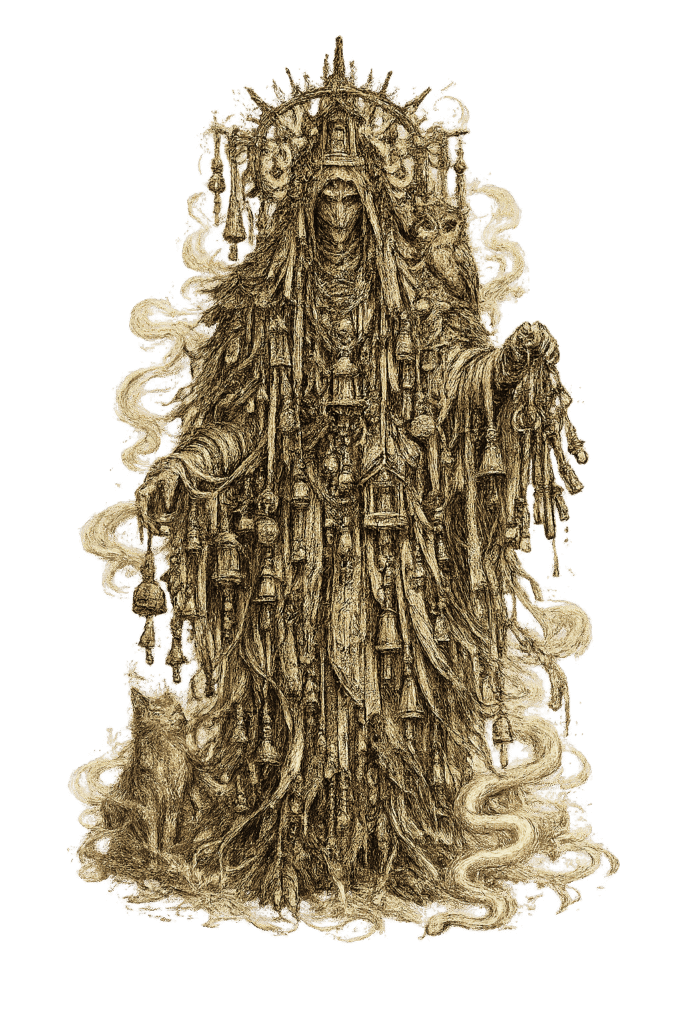
Jinn, Divs and Desert Spirits
Persian and Iranian epic traditions
Akvan Div is a Persian epic demon who appears as an immense wild ass, traps Rostam by lifting the ground beneath him and is finally…
Read profileJinn, Divs and Desert Spirits
Persian and Iranian traditions
Araska is an obscure Persian div-name preserved in modern registries and derivative demonological catalogues, while its independent narrative and precise early office remain uncertain.
Read profileJinn, Divs and Desert Spirits
Persian and Iranian epic traditions
Arzhang Div is a commander among the demons of Mazandaran in the Shahnameh, killed by Rostam before the hero enters the stronghold of the White…
Read profileJinn, Divs and Desert Spirits
Avestan, Zoroastrian and Persian epic traditions
Azi Dahaka is an Avestan serpent-dragon later transformed into Zahhak, the tyrant of the Shahnameh whose shoulders bear serpents fed with human brains.
Read profileJinn, Divs and Desert Spirits
Persian and Iranian epic traditions
Div-e Sepid, the White Div, is the ruler or greatest champion of the Mazandaran demons in the Shahnameh, defeated by Rostam so that the blinded…
Read profileJinn, Divs and Desert Spirits
Avestan, Zoroastrian and Persian traditions
Divs are the demons, monsters and adversarial beings of Iranian tradition, descending linguistically from the ancient daeva and transformed dramatically in Zoroastrian theology, Persian epic…
Read profileJinn, Divs and Desert Spirits
Islamic, Arabian and Perso-Arabic traditions
Ghūlah is the explicitly female form of the ghoul in Arabic and Perso-Arabic tradition, a shapeshifting desert predator associated with lonely roads, ruins and the…
Read profileJinn, Divs and Desert Spirits
Islamic, Arabian and Persian literary traditions
Hatif is the unseen caller or disembodied voice of Arabic and Persian tradition, heard without a visible speaker and interpreted as warning, omen, inspiration, spirit…
Read profileJinn, Divs and Desert Spirits
Later Islamic cosmography and Arabian folklore
Hinn are beings placed by some later Islamic cosmographies before the jinn, often paired with Binn and described as inhabitants of the earth in a…
Read profileJinn, Divs and Desert Spirits
Avestan and Zoroastrian traditions
Indra in Zoroastrian tradition is a daeva named in the Avesta among adversarial powers, sharply distinguished from the celebrated Vedic god bearing the same inherited…
Read profileJinn, Divs and Desert Spirits
Islamic and Arabian traditions
Jann is a Qur’anic and later Islamic term related to the jinn, interpreted variously as the collective species, a primordial progenitor, an ancient class or…
Read profileJinn, Divs and Desert Spirits
East African and Swahili traditions
Jini is the Swahili singular form associated with Arabic jinn, while majini is the plural; on the Swahili coast these spirits enter local histories of…
Read profileJinn, Divs and Desert Spirits
Islamic and Arabian traditions
Jinn are a morally diverse class of hidden beings in Islam, created from fire and capable of belief, disbelief, community, speech and responsibility.
Read profileJinn, Divs and Desert Spirits
Persian epic tradition
Kundrav is the steward or court official of Zahhak in the Shahnameh, a liminal figure sometimes swept into demonological registries because of his service to…
Read profileJinn, Divs and Desert Spirits
East African and Swahili traditions
Mashetani is the Swahili plural of shetani, used for varied spirit beings whose classification ranges from troublesome or malevolent presences to named possession spirits embedded…
Read profileJinn, Divs and Desert Spirits
Avestan and Zoroastrian traditions
Naonhaithya is an Avestan daeva named with Indra and Saurva, later positioned as an adversary of Spenta Armaiti and the qualities of devotion, right-mindedness and…
Read profileJinn, Divs and Desert Spirits
Iranian, Persian and Islamic literary traditions
Peri or pari is a Persian supernatural being whose history moves from the dangerous Avestan pairika toward the beautiful, elusive and often morally elevated fairy…
Read profileJinn, Divs and Desert Spirits
Persian and Iranian epic traditions
Pulad-Ghandi is a div commander associated with the demon army of Mazandaran in Persian epic tradition, remembered as a powerful martial opponent during the campaign…
Read profileJinn, Divs and Desert Spirits
Islamic and Middle Eastern traditions
Qarin is the companion associated with a person in Qur’anic and hadith traditions, while qarina develops in some regional folklore as a feminine companion or…
Read profileJinn, Divs and Desert Spirits
Persian and Iranian epic traditions
Sanjas, often rendered Sanjeh, is a lord or herald among the demons of Mazandaran in Shahnameh retellings, sent to summon or inform the White Div…
Read profileJinn, Divs and Desert Spirits
Avestan and Zoroastrian traditions
Saurva is an Avestan daeva named with Indra and Naonhaithya and later understood as the opponent of Khshathra Vairya, desirable dominion and rightly ordered power.
Read profileJinn, Divs and Desert Spirits
Islamic and Arabian traditions
Shayatin is the Arabic plural of shaytan, referring to rebellious, deceptive and adversarial beings; the Qur’an can speak of shayatin among both jinn and humans.
Read profileJinn, Divs and Desert Spirits
East African and Swahili traditions
Shetani is a Swahili spirit term derived from Arabic shaytan but transformed within East African traditions, where an individual shetani may possess, disturb, communicate, heal…
Read profileJinn, Divs and Desert Spirits
Avestan and Zoroastrian traditions
Spazga is a Zoroastrian demon associated with slander, calumny, gossip and speech that sets people against one another.
Read profileJinn, Divs and Desert Spirits
Avestan and Zoroastrian traditions
Taurvi is an Avestan and Zoroastrian daeva paired with Zairicha and placed against Haurvatat and Ameretat, the powers of wholeness and immortality.
Read profileJinn, Divs and Desert Spirits
Avestan and Zoroastrian traditions
Zairicha is an Avestan and Zoroastrian daeva paired with Taurvi and opposed to Haurvatat and Ameretat, later associated with thirst, poison, sickness or the corruption…
Read profile