
Underworld Beings and Death Spirits
Achlys
Greek and Roman tradition
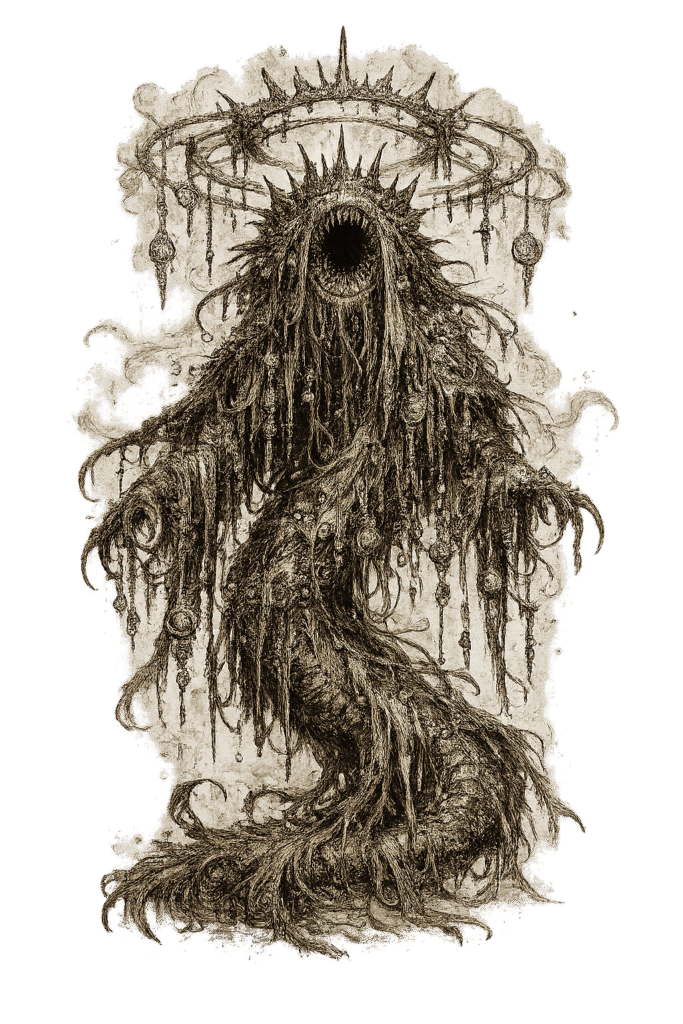
Achlys is the ancient Greek personification of the mist of death, misery and the dimming obscurity that gathers around the dying.
Read profileSearch the archive
Entity Classification
Rulers, guardians, messengers and inhabitants of underworlds, realms of the dead and afterlife traditions.
64 documented entities
Underworld Beings and Death Spirits
Greek and Roman tradition
Achlys is the ancient Greek personification of the mist of death, misery and the dimming obscurity that gathers around the dying.
Read profileUnderworld Beings and Death Spirits
Maya and Mesoamerican traditions
Ah Puch is a widely circulated modern name for a Maya death deity, but the label arises mainly from colonial Yucatec dictionaries and later scholarship…
Read profileUnderworld Beings and Death Spirits
Maya and Mesoamerican traditions
Ahalgana is one of the named Lords of Xibalba in the Popol Vuh, paired with Ahalpuh and assigned the work of making bodies swell, suppurate…
Read profileUnderworld Beings and Death Spirits
Maya and Mesoamerican traditions
Ahalmez is a Lord of Xibalba in the Popol Vuh, paired with Ahaltocob and charged with bringing sudden disaster to people near their homes or…
Read profileUnderworld Beings and Death Spirits
Maya and Mesoamerican traditions
Ahalpuh is one of the Lords of Xibalba in the Popol Vuh, paired with Ahalgana and associated with swelling, pus and the yellowing of the…
Read profileUnderworld Beings and Death Spirits
Maya and Mesoamerican traditions
Ahaltocob is the Xibalban lord paired with Ahalmez in the Popol Vuh, associated with disasters that leave people wounded and dead near home.
Read profileUnderworld Beings and Death Spirits
Ancient Greek and Roman tradition
Alecto is the unceasing Fury of blood guilt, pursuing the murderer and the corrupted household long after human witnesses have turned away.
Read profileUnderworld Beings and Death Spirits
Ancient Egyptian tradition
Am-heh is an ancient Egyptian underworld being whose name is commonly translated as Devourer of Millions or Eater of Eternity and who is associated with…
Read profileUnderworld Beings and Death Spirits
Ancient Egyptian tradition
Ammit is the ancient Egyptian composite devourer who waits beside the scales in judgment scenes, ready to consume the heart that fails the test of…
Read profileUnderworld Beings and Death Spirits
Ancient Egyptian tradition
Babi is an ancient Egyptian baboon deity associated with ferocity, virility, blood, the devouring of enemies and dangerous power in the afterlife.
Read profileUnderworld Beings and Death Spirits
Afro-Caribbean traditions
Baron Cimitière is a Haitian Vodou cemetery spirit associated with graves, burial ground authority and the Baron and Gede families of the dead.
Read profileUnderworld Beings and Death Spirits
Afro-Caribbean traditions
Baron La Croix is a Haitian Vodou Baron associated with the cemetery cross, the dead, graveyard authority and the crossing point between visible and ancestral…
Read profileUnderworld Beings and Death Spirits
Afro-Caribbean traditions
Baron Samedi is one of the best-known Haitian Vodou lwa of death, cemeteries, healing, obscenity, humor and the boundary between the living and the dead.
Read profileUnderworld Beings and Death Spirits
Chinese and Korean traditions
Black and White Impermanence are paired Chinese underworld officers, commonly called Heibai Wuchang, who escort souls, enforce underworld authority and embody the sudden inevitability of…
Read profileUnderworld Beings and Death Spirits
Kʼicheʼ Maya
Camazotz is the death bat of the house of knives, a presence preserved in Kʼicheʼ Maya traditions of death, passage and the unseen world.
Read profileUnderworld Beings and Death Spirits
Ancient Greek and Roman tradition
Cerberus is the many-headed hound at the gate of Hades, admitting the dead while ensuring that what has entered the underworld does not return without…
Read profileUnderworld Beings and Death Spirits
Maya and Mesoamerican traditions
Chamiabac is a Lord and constable of Xibalba in the Popol Vuh, paired with Chamiaholom and assigned the work of wasting bodies until only skin…
Read profileUnderworld Beings and Death Spirits
Maya and Mesoamerican traditions
Chamiaholom is the Xibalban lord paired with Chamiabac in the Popol Vuh, a constable whose office is to waste human bodies until only skin and…
Read profileUnderworld Beings and Death Spirits
Ancient Greek and Roman tradition
Charon is the ancient ferryman of the dead, waiting beyond the final shore to carry properly released souls across waters no living map contains.
Read profileUnderworld Beings and Death Spirits
Hindu and Buddhist traditions
Citipati are paired skeletal protector deities in Tibetan Buddhist tradition, associated with charnel grounds, impermanence, wrathful protection and the destruction of spiritual obstacles.
Read profileUnderworld Beings and Death Spirits
Maya and Mesoamerican traditions
Cuchumaquic is a Lord of Xibalba in the Popol Vuh, paired with Xiquiripat and associated with causing or gathering the blood shed by human beings.
Read profileUnderworld Beings and Death Spirits
Mesopotamian
Dumuzi is the shepherd taken in place of a goddess, a presence preserved in Mesopotamian traditions of death, passage and the unseen world.
Read profileUnderworld Beings and Death Spirits
Mesopotamian
Ereshkigal is the queen beneath the great earth, a presence preserved in Mesopotamian traditions of death, passage and the unseen world.
Read profileUnderworld Beings and Death Spirits
Ancient Greek tradition
Eurynomos is the dark corpse-eater of the Greek underworld, consuming the flesh of the dead until burial, beauty and identity have been reduced to bone.
Read profileUnderworld Beings and Death Spirits
Ancient Egyptian tradition
The Gate Guardians of the Duat are the many named deities, serpents, knife-bearers and divine officials who protect the gates traversed by the solar barque…
Read profileUnderworld Beings and Death Spirits
Afro-Caribbean traditions
Gede is the Haitian Vodou family of lwa associated with the dead, cemeteries, ancestors, sexuality, healing, humor and the social power of confronting mortality without…
Read profileUnderworld Beings and Death Spirits
Mesopotamian
Geshtinanna is the dream interpreter who descended for her brother, a presence preserved in Mesopotamian traditions of death, passage and the unseen world.
Read profileUnderworld Beings and Death Spirits
Greek and Roman tradition
Hades’ Spectral Retinue is a comparative archive entry for the shades, attendants, judges, messengers and personified powers surrounding the Greek lord of the dead in…
Read profileUnderworld Beings and Death Spirits
Norse and Germanic traditions
Hel is the Norse female ruler associated with the underworld realm that shares her name, receiving many of the dead who do not enter the…
Read profileUnderworld Beings and Death Spirits
Canaanite and Egyptian
Horon is the chthonic lord behind the poisoned name, a presence preserved in Canaanite and Egyptian traditions of death, passage and the unseen world.
Read profileUnderworld Beings and Death Spirits
Chinese Buddhist and popular religion
Horse-Face is the long-faced guard at the road to judgment, a presence preserved in Chinese Buddhist and popular religion traditions of death, passage and the…
Read profileUnderworld Beings and Death Spirits
Kʼicheʼ Maya
Hun-Camé is the first lord of death in xibalba, a presence preserved in Kʼicheʼ Maya traditions of death, passage and the unseen world.
Read profileUnderworld Beings and Death Spirits
Chinese and Korean traditions
Jeoseung Saja is the Korean underworld messenger who escorts the dead, serves the bureaucracy of the afterlife and appears in folklore as the official bearer…
Read profileUnderworld Beings and Death Spirits
Ancient Greek tradition
The Keres are black-winged spirits of violent death, descending where blood has opened the body and doom has become visible above the battlefield.
Read profileUnderworld Beings and Death Spirits
Maya
Kisin is the maya lord of death and corruption, a presence preserved in Maya traditions of death, passage and the unseen world.
Read profileUnderworld Beings and Death Spirits
Ancient Egyptian tradition
Knife-Bearing Guardians are the many armed deities and underworld beings shown in Egyptian funerary texts carrying knives to restrain, cut or destroy enemies of the…
Read profileUnderworld Beings and Death Spirits
Ancient Egyptian tradition
Lake-of-Fire Guardians are the Egyptian underworld beings associated with fiery lakes, burning basins and punitive regions that destroy enemies while leaving the justified or divine…
Read profileUnderworld Beings and Death Spirits
Ancient Greek tradition
Macaria is the quiet underworld power of blessed death, appearing where the final darkness becomes release rather than terror.
Read profileUnderworld Beings and Death Spirits
Afro-Caribbean and Haitian Vodou traditions
Maman Brigitte is a powerful Haitian Vodou lwa of cemeteries, the dead, justice and fierce protection, closely linked with the Gede family and Baron Samedi.
Read profileUnderworld Beings and Death Spirits
Ancient Greek and Roman tradition
Megaera is the Fury of jealous wrath and preserved resentment, entering intimate bonds until every gesture is interpreted through an injury that refuses to heal.
Read profileUnderworld Beings and Death Spirits
Orphic and ancient Greek tradition
Melinoe is the divided queen of night apparitions, sending ghosts through dreams and forcing sleepers to confront the dead waiting beneath memory.
Read profileUnderworld Beings and Death Spirits
Chinese popular and Buddhist-influenced tradition
Meng Po is the lady of forgetfulness at the final bridge, a presence preserved in Chinese popular and Buddhist-influenced tradition traditions of death, passage and…
Read profileUnderworld Beings and Death Spirits
Aztec and Central Mexican
Mictecacihuatl is the lady who keeps the bones of the dead, a presence preserved in Aztec and Central Mexican traditions of death, passage and the…
Read profileUnderworld Beings and Death Spirits
Aztec and Central Mexican
Mictlantecuhtli is the skeletal lord of mictlan, a presence preserved in Aztec and Central Mexican traditions of death, passage and the unseen world.
Read profileUnderworld Beings and Death Spirits
Greek and Roman traditions
The Moirai are the Greek powers of fate, commonly named Clotho, Lachesis and Atropos, who spin, allot and end the thread of mortal life.
Read profileUnderworld Beings and Death Spirits
Canaanite and Ugaritic
Mot is the mouth of death that swallows gods, a presence preserved in Canaanite and Ugaritic traditions of death, passage and the unseen world.
Read profileUnderworld Beings and Death Spirits
Mesopotamian
Namtar is the herald whose name became fate, a presence preserved in Mesopotamian traditions of death, passage and the unseen world.
Read profileUnderworld Beings and Death Spirits
Ancient Egyptian tradition
Nehebkau is an ancient Egyptian serpent deity associated with the afterlife, the binding of vital powers and the protection or nourishment of the justified dead.
Read profileUnderworld Beings and Death Spirits
Mesopotamian
Nergal is the lord of plague and the burning dead, a presence preserved in Mesopotamian traditions of death, passage and the unseen world.
Read profileUnderworld Beings and Death Spirits
Mesopotamian
Neti is the gatekeeper of the land of no return, a presence preserved in Mesopotamian traditions of death, passage and the unseen world.
Read profileUnderworld Beings and Death Spirits
Mesopotamian
Ningishzida is the serpent lord at the door of the dead, a presence preserved in Mesopotamian traditions of death, passage and the unseen world.
Read profileUnderworld Beings and Death Spirits
Chinese Buddhist and popular religion
Ox-Head is the horned officer who seizes the dead, a presence preserved in Chinese Buddhist and popular religion traditions of death, passage and the unseen…
Read profileUnderworld Beings and Death Spirits
Norwegian and Scandinavian traditions
Pesta is the personified plague woman of Norwegian folklore, remembered as an old traveler whose arrival marks the spread of epidemic death.
Read profileUnderworld Beings and Death Spirits
Greek and Roman traditions
Poena is the Greek and Roman personification of punishment, retribution and the penalty that follows a violated order.
Read profileUnderworld Beings and Death Spirits
Hindu, Buddhist and South Asian traditions
Preta is a South Asian category of departed or hungry spirit, especially prominent in Buddhist cosmology as a being consumed by unsatisfied craving.
Read profileUnderworld Beings and Death Spirits
West Semitic and Egyptian
Resheph is the archer of plague and burning war, a presence preserved in West Semitic and Egyptian traditions of death, passage and the unseen world.
Read profileUnderworld Beings and Death Spirits
Chinese, Korean and East Asian Buddhist traditions
The Ten Kings of Hell are the judicial rulers of a sequence of East Asian underworld courts in which the dead are examined, sentenced and…
Read profileUnderworld Beings and Death Spirits
Ancient Greek tradition
Thanatos is the winged Greek spirit of quiet death, lowering the final torch when the body can no longer hold the life that once moved…
Read profileUnderworld Beings and Death Spirits
Ancient Greek and Roman tradition
Tisiphone is the Fury who avenges murder, standing behind the slain until concealed blood is answered and the guilty can no longer escape the dead.
Read profileUnderworld Beings and Death Spirits
Kʼicheʼ Maya
Vucub-Camé is the second lord of death in xibalba, a presence preserved in Kʼicheʼ Maya traditions of death, passage and the unseen world.
Read profileUnderworld Beings and Death Spirits
K’iche’ Maya and Mesoamerican traditions
Xiquiripat is one of the named lords of Xibalba in the Popol Vuh, paired with Cuchumaquic and associated with blood, bodily affliction and violent wasting.
Read profileUnderworld Beings and Death Spirits
Hindu, Buddhist, Tibetan and East Asian traditions
Yama is an ancient South Asian lord of death who becomes a judge of the dead in Hindu and Buddhist traditions; the registry’s Shinje label…
Read profileUnderworld Beings and Death Spirits
Chinese Buddhist and popular religion
Yanluo Wang is the judge who reads the record of every life, a presence preserved in Chinese Buddhist and popular religion traditions of death, passage…
Read profileUnderworld Beings and Death Spirits
Tibetan Buddhist traditions
Yidag is the Tibetan Buddhist term for hungry ghosts or preta beings whose existence is shaped by insatiable desire, deprivation and karmic obstruction.
Read profile