On 18 August 1928, Father Theophilus Riesinger entered a room in a Franciscan convent near Earling, Iowa, and began the Roman rite of exorcism over a forty-year-old woman. The woman known in print as Emma Schmidt or Anna Ecklund was bound to an iron bed. According to the principal account, her body rose, animal voices filled the room, and four names emerged from the struggle: Beelzebub, Judas, Jacob and Mina.
The Woman Behind the Pseudonyms
The identity of the woman at the centre of the Earling exorcism was deliberately concealed. Published accounts called her “Anna Ecklund,” “Emma Schmidt” or simply “Mary.” The principal pamphlet, Begone Satan!, protected her residence and family while presenting the rite as an authenticated Catholic case.
She was about forty years old in 1928. According to the account assembled by Father Carl Vogl, her symptoms had begun around the age of fourteen. She experienced violent interior suggestions, aversion to sacred things and a sense that hostile voices urged her toward despair.
The names Emma Schmidt and Anna Ecklund should therefore be treated as documentary identities rather than licence to expose a private individual. The historical story concerns the woman as witnesses described her, not the reconstruction of a modern personal profile.
The First Signs at Fourteen
The pamphlet states that the young woman became unable to enter church peacefully or receive Communion. Blessed objects produced resistance. She felt driven toward thoughts and actions she considered alien and shameful.
Her family history was later woven into the possession. The voices claimed that her father, Jacob, had cursed her after she resisted sexual advances, and that an aunt named Mina practised witchcraft and placed enchanted substances into food. These allegations come from the exorcism narrative and should remain attributed to it.
Within that narrative, the possession entered through both curse and family sin. The home that should have protected the girl became the channel of the attack. The later demons would speak in the identities of the dead relatives themselves.
Father Theophilus Riesinger
Theophilus Riesinger was a German-born Capuchin priest, born in 1868 and experienced in the rite of exorcism. By 1928, Catholic sources credited him with numerous previous cases. He was known for physical endurance, strict prayer and confidence in the Church’s authority over possessing spirits.
Riesinger had earlier performed an exorcism over the same woman, often dated to 1912. The symptoms later returned or intensified. When he encountered her again, he believed a second solemn rite was necessary.
He sought a place distant from her home where secrecy could be preserved and where religious women could assist. His friend Father Joseph Steiger, pastor at Earling, offered access to the convent of Franciscan Sisters connected with the parish.
The Convent Chosen for Secrecy
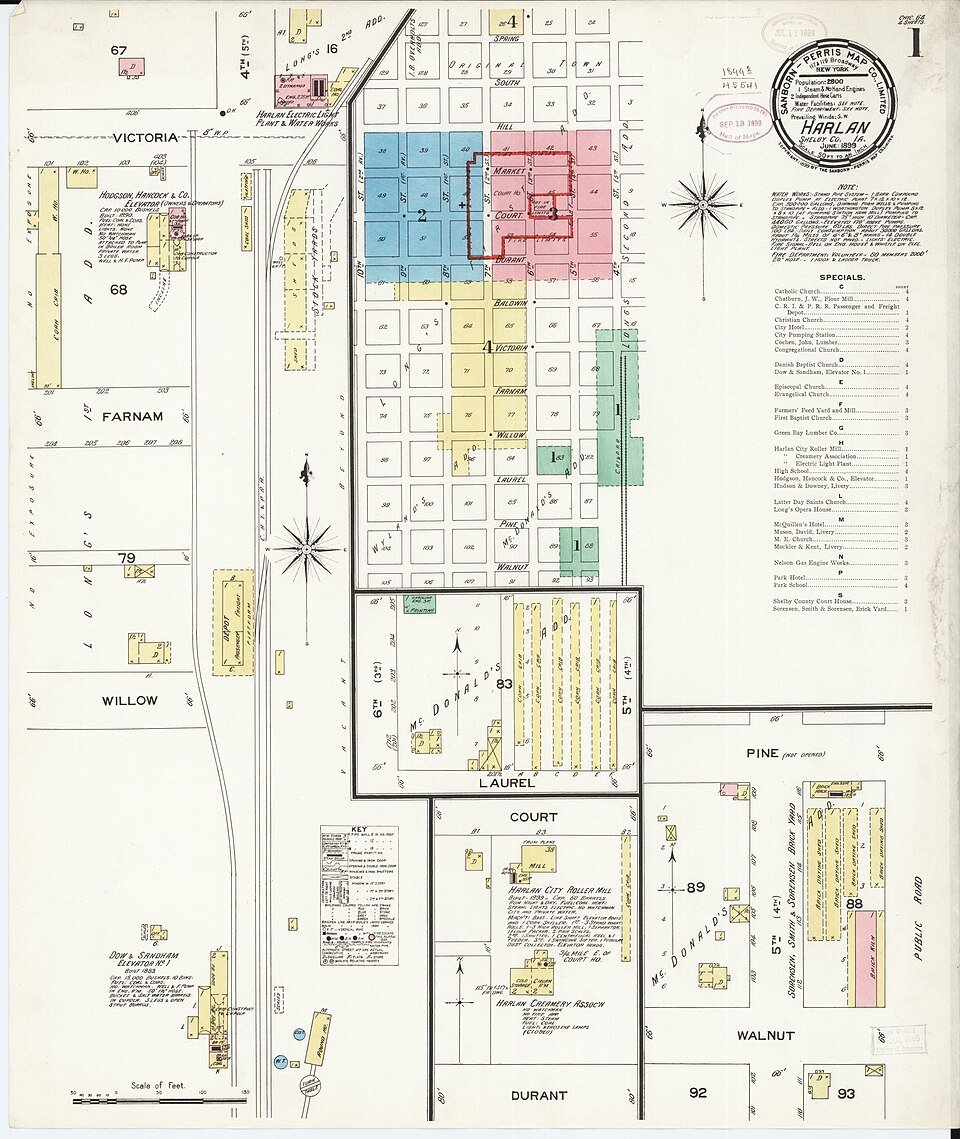
Earling was a small Iowa community surrounded by farmland and shaped by German Catholic settlement. The convent stood apart from the woman’s ordinary life. She travelled there by train under arrangements intended to conceal the purpose of the visit.
The strongest sisters were selected to assist. They would help restrain the woman, care for her between sessions and maintain prayer. The room was prepared with an iron bed strong enough to withstand violent movement.
Father Steiger served as host and witness. The later pamphlet states that he observed almost the entire exorcism and affirmed the essential truth of its events.
Arrival on 17 August 1928
The woman arrived in Earling on 17 August. Even before the formal rite, the convent reportedly entered tension. She reacted to the religious environment and resisted approach to sacred places.
The exorcism began on 18 August. The first stage lasted through 26 August. A second series ran from 13 to 20 September, and the final stage from 15 to 23 December. Together, the sessions totalled twenty-three days spread across four months.
This chronology is important. The Earling exorcism was not four uninterrupted months of ritual. It was three concentrated periods separated by intervals in which Riesinger and the attendants recovered and prepared.
The First Command
Riesinger began with the prayers prescribed by the Roman Ritual. He invoked the name of Jesus, the Virgin Mary, the saints and the authority of the Church. He commanded the possessing spirits to identify themselves and disclose the manner of entry.
The woman’s response became violent. The account describes the body stiffening, twisting and rising from the bed despite restraint. Animal sounds—barking, howling and cries compared to lions and hyenas—filled the room.
The nuns holding her were confronted with strength beyond what they expected from an exhausted woman. The iron bed shook. The rite continued through hours of prayer and command.
Beelzebub Speaks
When Riesinger demanded the leader’s name, the voice answered “Beelzebub.” It described itself as a fallen angel and claimed high rank among the infernal powers. The exorcist questioned it in English, German and Latin; the pamphlet states that answers came in the language used.
The dialogue was hostile and theological. Beelzebub mocked errors in Latin, interrupted the priest and claimed to have afflicted the woman since her fourteenth year. It attributed entrance to the father’s curse and obedience to Satan.
The voice did not merely roar. It argued. That intelligence, preserved through Vogl’s written account, became one of the strongest reasons Catholic readers treated Earling as a true possession rather than a convulsive illness.
Judas in the Deep Voice
Riesinger commanded another spirit to identify itself. A deep voice answered as Judas Iscariot. The pamphlet describes a prolonged cry that caused the room to tremble and sent some attendants fleeing.
The voice claimed the identity of the apostle who betrayed Christ. Spitting and vomiting followed, interpreted as a repetition of hatred toward the Saviour. The exorcist demanded to know why Judas was present within the woman.
By invoking Judas, the possession joined personal family history to the central betrayal of Christianity. The room in Iowa became, within the ritual narrative, a meeting point for fallen angel, damned apostle and human dead.
Jacob and Mina
Two further identities emerged: Jacob, described as the woman’s father, and Mina, the aunt accused of witchcraft. The voices claimed that both had been damned and joined the possession after death.
Jacob’s alleged history involved sexual threat and curse. Mina’s involved magical contamination of food. These details are among the most disturbing and most difficult parts of the account because they transform family abuse into an infernal alliance.
The final litany of departing names—Beelzebub, Judas, Jacob and Mina—would later define the case. Four separate sources of evil were believed to occupy one body.
The Nuns at the Bed
The Franciscan Sisters were not distant observers. They held the woman’s limbs, cleaned the room, prepared food and returned after nights of screams. The account emphasizes their fear and endurance.
Some fled temporarily when voices or physical manifestations became overwhelming. Others remained in prayer. Their communal discipline allowed the rite to continue when a family household could not have sustained the secrecy or physical demands.
The convent setting intensified every inversion. Women vowed to religious service heard blasphemy from a bed inside their own house. The demons insulted prayer, mocked the priest and filled a place of silence with animal sound.
Food Refused and Strength Preserved
The woman often refused or could not retain food during the sessions. Vomiting and spitting weakened her. Yet the account states that extraordinary strength returned whenever the rite began.
Attendants watched a body appear exhausted between confrontations and then resist several adults. The contrast was interpreted as power supplied by the possessing entities rather than the woman herself.
Riesinger also fasted and prayed. Exorcism was understood as spiritual combat requiring discipline from the priest, not simply recitation of words over a passive patient.
The First Interval
After the August session, the rite paused. The early confrontation had identified the principal spirits but had not expelled them. Riesinger left or rested before returning in September.
The interval did not mean deliverance. The woman remained under observation and continued to show aversion and disturbance. The spirits had been named, which in ritual logic gave the exorcist greater authority, but they had not obeyed the final command.
When the second stage began on 13 September, the same struggle resumed. The persistence reinforced the belief that the possessing company was deeply rooted and organized.
The September Assault
From 13 to 20 September, prayers and commands continued. The manifestations repeated and varied: voices, contortions, foul odours, vomiting and resistance to sacred objects.
Riesinger pressed each named entity to disclose its role and submit. The dialogues described in Begone Satan! gave readers an infernal hierarchy speaking in a rural convent.
Again the rite stopped without final release. The longest and most severe confrontation remained for December.
Return in Advent
The final period began on 15 December, during Advent, as the Church prepared for Christmas. The timing placed the exorcism beneath the expectation of Christ’s birth and the defeat of darkness.
Riesinger and the attendants entered extended sessions with little rest. The woman’s body was restrained to the iron bed. The voices cursed, argued and claimed knowledge of hidden things.
Outside, winter held the Iowa landscape. Inside, the convent room became the entire world of the rite: bed, crucifix, holy water, exhausted nuns and the priest repeating commands through the night.
The Iron Bed and the Work of Restraint
The iron bed was not a decorative detail added by later storytellers. In Vogl’s narrative it was the practical centre of the room. The woman was secured because the attendants expected sudden arching, striking and violent resistance once the commands began. Strong sisters took positions at the arms and legs while Riesinger stood close enough to pray, question and apply the sacramentals of the rite.
The account describes the body drawing rigid, bending backward and rising despite the weight of those holding it. At other moments the woman was said to become heavy or immovable. Restraint had two purposes within the witnesses’ understanding: to prevent injury and to keep the body before the priest when the possessing voices attempted to interrupt the ceremony.
Hours at the bedside reduced the sisters’ work to endurance. Hands slipped, clothing and bedding had to be cleaned, and attendants were replaced when fear or exhaustion overcame them. The physical labour behind the exorcism is easy to lose beneath the more spectacular descriptions, yet it explains how a ritual lasting across twenty-three days could be sustained at all.
The Languages of Command
Riesinger was German-born and could move between German and English; the formal commands of the Roman Ritual were delivered in Latin. Begone Satan! states that the voices answered questions put in different languages and sometimes mocked errors or pronunciation. The pamphlet presents this responsiveness as evidence of an intelligence distinct from the woman’s ordinary speech.
The exorcist repeatedly demanded names because traditional Catholic practice treated disclosure as an act of submission. A spirit that identified itself had begun to answer the authority confronting it. Beelzebub, Judas, Jacob and Mina were therefore more than dramatic characters in the printed narrative: their names organized the whole progression of interrogation, resistance and final departure.
The dialogues should be read as the testimony transmitted by Vogl and Steiger rather than as a verbatim modern transcript. No recording device preserved the room. What survives is a clerical reconstruction written to retain the exchanges considered most important—the claims of entry, the hierarchy among the voices, their hostility to sacred names and the final command that forced each to leave.
Three Campaigns, Not One Continuous Vigil
The separation of the exorcism into August, September and December is one of the most important protections against sensational retelling. The first campaign lasted from 18 through 26 August; the second from 13 through 20 September; the third from 15 through 23 December. Between them came pauses, ordinary daylight, recovery and renewed preparation.
Each return carried the knowledge that the earlier sessions had failed to finish the work. The first period exposed the names and the alleged family history. The second tested whether repeated command would break the resistance. The December stage brought the prolonged final struggle toward the eve of Christmas.
Seen in this chronology, Earling was less a single night of terror than a siege. The convent room was reopened to the same ritual months after it had first been prepared, the iron bed waiting in the same place while priest and attendants entered knowing precisely what the voices had done before.
The Vision of Lucifer
Near the conclusion, the principal narrative describes a vision of Lucifer wearing a crown and carrying a fiery sword. Beelzebub stood beside him, and the room appeared filled with flame. The figure cursed in rage.
This scene belongs explicitly to the Catholic witness account. It was understood as a final display of infernal authority before defeat. The presence no longer spoke only through names; it appeared as hierarchy and fire.
No physical conflagration destroyed the convent. The flames belonged to the vision, but the witnesses experienced them within a ritual already marked by heat, odour, noise and bodily violence.
The Night of 23 December
At about nine o’clock on 23 December, after three intense stages across twenty-three ritual days, the struggle reached its end. The woman suddenly broke from the grip of those holding her and stood erect upon the bed.
A piercing sound filled the room. The voices of Beelzebub, Judas, Jacob and Mina were heard repeating their names as if receding into the distance. The word “Hell” accompanied them.
Then the body collapsed. The stiffness left her. According to the account, she opened her eyes and spoke praise of Jesus Christ. The exorcist declared the possession ended.
Father Steiger’s Testimony
Joseph Steiger later affirmed that he had witnessed almost the whole period and that the principal facts in Begone Satan! were correct. His testimony supplied the local clerical foundation for Vogl’s publication.
The sisters’ names were largely protected, and the convent did not become a permanent public shrine to the event. Secrecy remained part of the story even after the pamphlet circulated.
The witnesses framed the result as successful expulsion through the ancient power of the Church. For them, the silence after the final names was not ambiguous.
From German Pamphlet to National News
Father Carl Vogl wrote the account in German after gathering testimony. Father Celestine Kapsner translated it into English. The publication carried ecclesiastical approval and was circulated by Catholic publishers in the mid-1930s.
In 1936, Time summarized the story for a national audience under the title “Exorcist & Energumen.” It noted that Catholic publications had already brought the narrative to hundreds of thousands of readers.
The Earling convent, chosen for secrecy, became one of the most famous sites in American exorcism history.
The Historical Limits of the Record
Most detailed knowledge of Earling comes from Begone Satan!, a devotional account written to affirm the reality and effectiveness of exorcism. The original private notes and identities are less accessible than Bishop’s diary in the St. Louis case.
Extreme accuracy therefore requires clear attribution. The levitation, voices, vision and identities are what Vogl’s account and Steiger’s testimony report. The dates of the three stages can be stated firmly within that publication history.
This discipline strengthens rather than weakens the story. It prevents modern films and websites from adding scenes unsupported by the principal text. The actual pamphlet is dark enough.
What Remained in Earling
The convent building associated with the rite was later removed. St. Joseph’s parish remained, and local memory preserved the story even when public discussion was cautious. The exact room disappeared from the landscape.
Riesinger became nationally known through the 1936 publicity. He died in 1941. Steiger’s witness statement continued to accompany editions of the account.
The woman lived beyond 1928. Some reports describe later, milder disturbances, but the great Earling possession was considered ended on 23 December.
The Four Names Receding
Earling’s most memorable image is not the rising body or the iron bed. It is the departure described as sound moving away: four names repeated until they faded into distance.
Beelzebub represented the fallen angel. Judas represented betrayal. Jacob and Mina represented family corruption carried beyond death. Together they formed a possession that joined cosmic and domestic evil.
When the voices vanished, the room remained—a winter convent chamber filled with exhausted witnesses and a woman finally lying still. The rite had begun in August and ended two days before Christmas. According to those who stood beside the bed, the silence was the first sign that she belonged to herself again.
Sources and Further Reading
- Father Carl Vogl, Begone Satan!, based on testimony concerning the 1928 Earling exorcism.
- English translation by Father Celestine Kapsner, O.S.B.
- Statement of Father Joseph Steiger, pastor and witness.
- “Exorcist & Energumen,” Time, 1936.
- Catholic archival and historical discussions of Father Theophilus Riesinger and the Earling case.