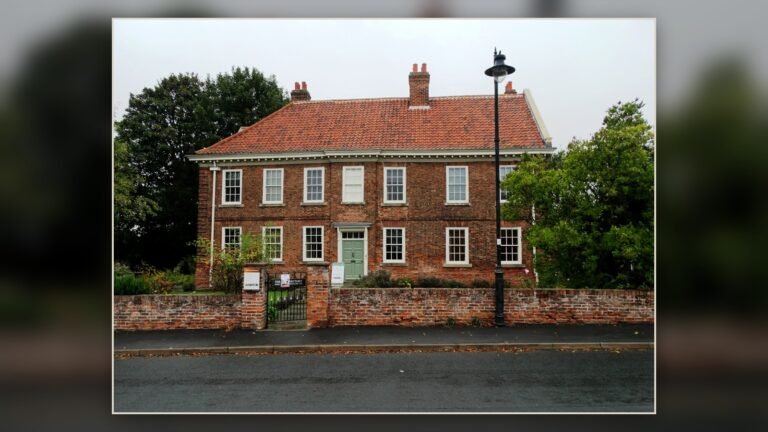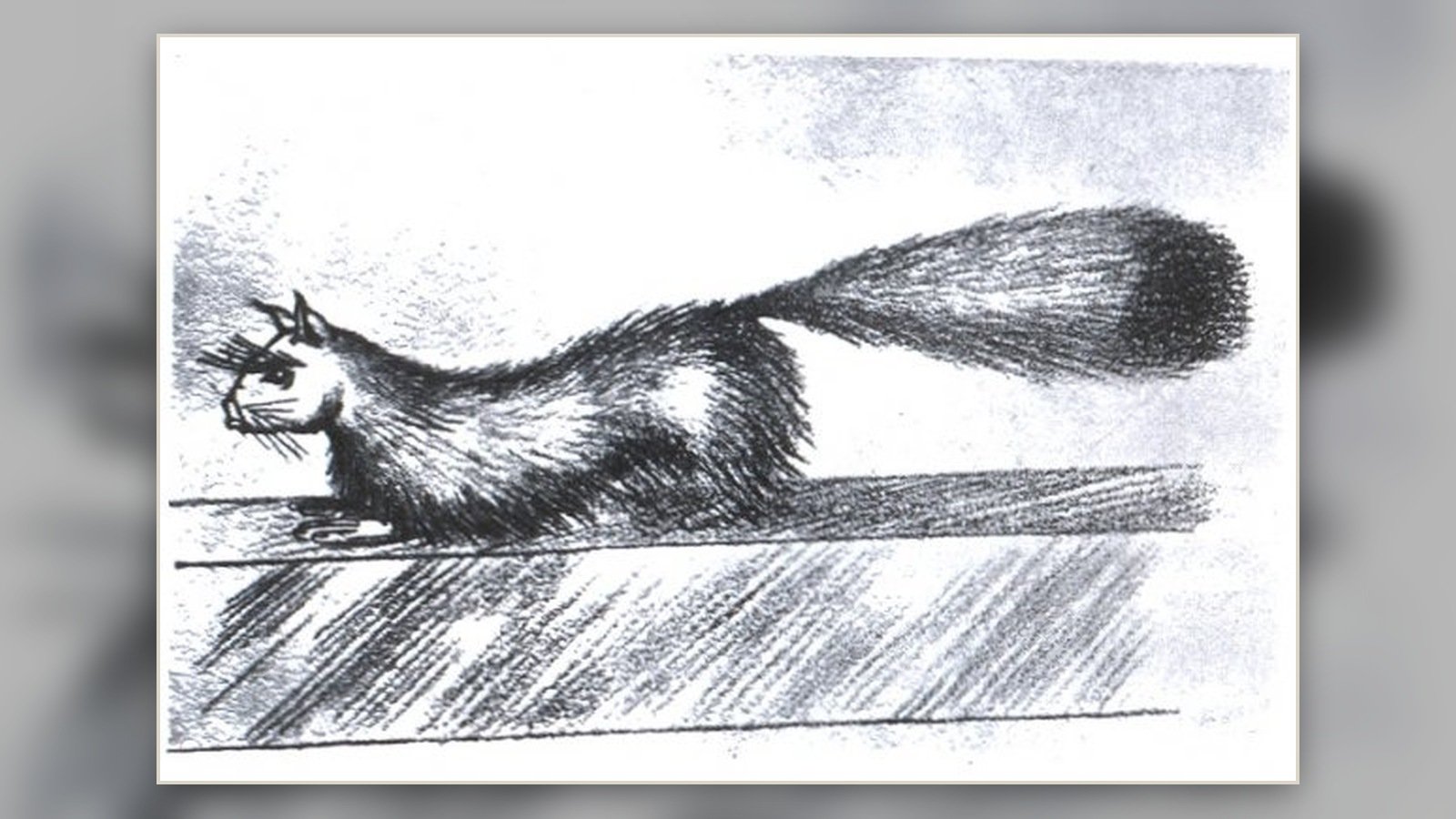
The voice began in the walls. At first it imitated animals—growls, whistles and the cries of creatures that did not belong inside the farmhouse. Then it learned words. In the autumn of 1931, the Irving family at Doarlish Cashen on the Isle of Man heard something moving behind the wooden panelling and addressing them from places too narrow for a person to hide. It claimed to be a mongoose. It gave its name as Gef. It teased thirteen-year-old Voirrey, carried news from distant farms and announced that it was an “extra clever mongoose.” The house at Cashen’s Gap did not become silent again. It became home to one of the strangest alleged entities in modern paranormal history: animal, poltergeist, familiar, household trickster and unseen witness to island life.
The World Around the Case
This case unfolded within an isolated stone farmhouse in the hills near Dalby, occupied by James, Margaret and Voirrey Irving during the economic hardship of the early 1930s. Its principal foundation is the Irving family’s notebooks and letters, visitors’ statements, Harry Price’s archive at Senate House Library and the 1936 book written with Richard Lambert. Those materials do not create perfect certainty, but they make possible a detailed reconstruction of when the reports began, who witnessed them and how interpretation changed as the disturbance entered public knowledge. SatanWorld follows the testimony closely, attributes extraordinary claims to the people and records that preserved them, and keeps the supernatural presence at the centre of the narrative without replacing history with invented scenes.
At the heart of the story is a voice that seemed mobile, observant and independent while rarely allowing a clear view of the creature that claimed to produce it. The case later became a uniquely modern supernatural personality whose wit and ambiguity continue to resist classification as animal, hoax, poltergeist or spirit. That legacy can obscure the people who endured the original events, so the account returns repeatedly to chronology, room, witness and consequence. The goal is not to produce a courtroom verdict on the unseen. It is to restore the full oppressive shape of an event that contemporaries believed had crossed the boundary between the ordinary world and something acting from beyond it.
Doarlish Cashen
James Irving moved his wife Margaret and daughter Voirrey to the remote farm known as Doarlish Cashen. The house stood in a landscape of wind, stone walls and long distances between neighbours. Its wooden interior partitions provided cavities through which small animals—and sounds—could travel. Isolation shaped the case. A noise heard behind the wall could not be dismissed by walking into the street and returning to ordinary crowds. The family lived with it through dark evenings, farm work and financial strain until the voice became part of the household’s daily organization.
The surviving record gives this stage particular weight because it appears inside the Irving family’s notebooks and letters, visitors’ statements, Harry Price’s archive at Senate House Library and the 1936 book written with Richard Lambert. Details were written by people who did not share one theory, yet they converged upon the sense that a voice that seemed mobile, observant and independent while rarely allowing a clear view of the creature that claimed to produce it. The article preserves that convergence without pretending that a witness could see every room, motive or mechanism. The darkness comes from the limits of inspection: those present could describe what the event did, while its identity remained beyond the ordinary categories available to them.
From Animal Cries to Words
The earliest activity consisted of scratching and imitations of dogs, cats and other animals. James reportedly encouraged the hidden creature, repeating sounds and words until it answered. The mimicry became speech. The family said the voice could alter pitch, sing, laugh and conduct conversations from behind walls or above the ceiling. The transition from noise to language transformed the problem. A pest could be trapped; a speaker demanded relationship. Once the unseen presence understood questions, every silence appeared intentional.
Within an isolated stone farmhouse in the hills near Dalby, occupied by James, Margaret and Voirrey Irving during the economic hardship of the early 1930s, the events described under “From Animal Cries to Words” carried meanings larger than a private disturbance. A noise, voice or bodily reaction could indicate sin, intrusion, restless death, public danger or a failure of institutional protection. That cultural field did not make the witnesses foolish; it supplied the language through which an otherwise shapeless terror became narratable. The same language could also place immense pressure upon the afflicted person, whose every movement was watched for confirmation.
“I Am a Mongoose”
Gef described itself in contradictory ways. It was a mongoose born in India, an earthbound spirit, a freak and something unlike any ordinary animal. It boasted, threatened, begged and joked. The name may have developed from the family’s exchanges, but in their account the personality quickly became autonomous. Gef insisted upon its intelligence and resented disbelief. The contradictions did not weaken the family’s conviction; they made the creature resemble a trickster whose identity was deliberately unstable.
This phase also explains why the case endured as a uniquely modern supernatural personality whose wit and ambiguity continue to resist classification as animal, hoax, poltergeist or spirit. Later summaries often isolate the most spectacular incident, but the original force lay in accumulation: repeated nights, changing witnesses, failed searches and the intrusion of the phenomenon into worship, work or family routine. No single detail must carry the entire story. The authority of the narrative rests upon a sequence in which ordinary explanations were tried, doubted and tried again.
Voirrey and the Hidden Companion
Voirrey Irving was the person most closely associated with Gef. The voice spoke to her, quarrelled with her and sometimes seemed protective. Outsiders later suspected ventriloquism, yet the family maintained that Gef spoke when Voirrey’s mouth was visible or when she was elsewhere. The relationship exposed the girl to ridicule that lasted long after the events. Within the house, however, Gef occupied the ambiguous position of companion and persecutor—intimate enough to know private life, independent enough to betray it.
Testimony must be read as human evidence rather than as a transparent window. Fear sharpens some perceptions and distorts others; memory selects; institutions preserve the statements that fit their procedures. Yet these limits do not reduce the event to nothing. They reveal how a voice that seemed mobile, observant and independent while rarely allowing a clear view of the creature that claimed to produce it was experienced by people whose decisions had real consequences. The case remains frightening because uncertainty did not suspend action. Families, clergy, doctors, technicians or courts still had to decide what to do next.
News from Across the Hills
Gef reportedly travelled beyond the farmhouse and returned with information about neighbours, conversations and events the Irvings claimed not to know. This made the creature useful and frightening. It was not confined to the walls; the walls were its chosen speaking place. Islanders who learned of the reports had to consider that an unseen listener might be present on paths or near windows. The gossip element gave the haunting social reach and ensured that disbelief could itself become material for Gef’s commentary.
The physical setting matters here. Rooms, roads, chapels, offices and courtrooms organize what witnesses can hear and whom they can observe. In this case, architecture became part of the phenomenon: it concealed sources, directed attention and gave the disturbance a route through which it could seem to approach or withdraw. The resulting atmosphere was not decorative gothic invention. It arose from the practical problem of trying to locate an event that repeatedly escaped the person searching for it.
Food, Tracks and Physical Traces
The Irvings left food for Gef and said it carried small objects, killed rabbits and placed items in selected locations. Footprints, hairs and tooth marks were collected as possible evidence. Examinations did not establish an unknown species. Some traces resembled ordinary animals, and the strongest manifestations remained tied to testimony. Yet the presence of material samples changed the investigation. Gef was not presented solely as a voice from the dead; it claimed an animal body that might leave hair, blood and tracks.
The occult interpretation gained strength because the incident appeared intentional. Random disorder becomes haunting when it answers, follows, selects or arrives at meaningful moments. Witnesses did not merely report abnormal movement; they reported behaviour. Whether that behaviour originated in an entity, a human action, unconscious process or collective expectation remains the deepest question. What the record establishes is that those present felt addressed by the disturbance rather than merely exposed to it.
Visitors at the Farm
Neighbours and curious visitors came to Cashen’s Gap. Some heard a voice or unexplained sounds; others left unconvinced. Gef often refused to perform when demanded, speaking from a distance or not at all. This selective appearance belongs to many haunting traditions, but in the Irving case it also protected the phenomenon from decisive inspection. Each unsuccessful visit could be explained as Gef’s choice, while each unusual sound entered the growing archive of witness statements.
The surviving record gives this stage particular weight because it appears inside the Irving family’s notebooks and letters, visitors’ statements, Harry Price’s archive at Senate House Library and the 1936 book written with Richard Lambert. Details were written by people who did not share one theory, yet they converged upon the sense that a voice that seemed mobile, observant and independent while rarely allowing a clear view of the creature that claimed to produce it. The article preserves that convergence without pretending that a witness could see every room, motive or mechanism. The darkness comes from the limits of inspection: those present could describe what the event did, while its identity remained beyond the ordinary categories available to them.
Harry Price and Richard Lambert
Psychical researcher Harry Price and editor Richard Lambert investigated the case and published The Haunting of Cashen’s Gap in 1936. Price did not obtain the unambiguous encounter he wanted. He collected family records, photographs, samples and reports, preserving them in an archive that still survives at Senate House Library. The book’s cautious title called Gef a modern “miracle” while exposing the weaknesses of the evidence. It transformed a local island story into an international paranormal controversy.
Within an isolated stone farmhouse in the hills near Dalby, occupied by James, Margaret and Voirrey Irving during the economic hardship of the early 1930s, the events described under “Harry Price and Richard Lambert” carried meanings larger than a private disturbance. A noise, voice or bodily reaction could indicate sin, intrusion, restless death, public danger or a failure of institutional protection. That cultural field did not make the witnesses foolish; it supplied the language through which an otherwise shapeless terror became narratable. The same language could also place immense pressure upon the afflicted person, whose every movement was watched for confirmation.
After Cashen’s Gap
The Irving family eventually left the farm. Later occupants reported killing an unusual animal, but no evidence connected the carcass securely to Gef. Voirrey lived with the story for the rest of her life and rejected the suggestion that she had simply invented it. Gef remained behind as a personality without a body: boastful, comic, invasive and occasionally sinister. Unlike a ghost tied to a death, the talking mongoose offered no tragedy that explained its arrival. Its motive seemed to be the continuation of attention itself.
This phase also explains why the case endured as a uniquely modern supernatural personality whose wit and ambiguity continue to resist classification as animal, hoax, poltergeist or spirit. Later summaries often isolate the most spectacular incident, but the original force lay in accumulation: repeated nights, changing witnesses, failed searches and the intrusion of the phenomenon into worship, work or family routine. No single detail must carry the entire story. The authority of the narrative rests upon a sequence in which ordinary explanations were tried, doubted and tried again.
A further layer concerns the passage from private ordeal to public case. Once strangers arrived, the people involved were no longer only witnesses; they became objects of examination. Their words could be repeated without their control, and every inconsistency acquired importance. Publicity enlarged the archive while changing the conditions under which new events occurred.
The event also carried an ethical burden. Belief in an invading presence could produce vigilance, solidarity and sustained care, but it could also expose vulnerable people to restraint, interrogation and spectacle. A serious occult history must preserve both realities. The witnesses’ supernatural interpretation belongs to the case, and so do the consequences of acting upon it.
Later culture often compresses the subject into a single image or phrase. Returning to the longer record restores duration: waiting, interrupted sleep, repeated consultation and the slow erosion of confidence in familiar surroundings. The most frightening cases are rarely one impossible moment. They are the days during which no one knows whether the moment will return.
A further layer concerns the passage from private ordeal to public case. Once strangers arrived, the people involved were no longer only witnesses; they became objects of examination. Their words could be repeated without their control, and every inconsistency acquired importance. Publicity enlarged the archive while changing the conditions under which new events occurred.
The event also carried an ethical burden. Belief in an invading presence could produce vigilance, solidarity and sustained care, but it could also expose vulnerable people to restraint, interrogation and spectacle. A serious occult history must preserve both realities. The witnesses’ supernatural interpretation belongs to the case, and so do the consequences of acting upon it.
What Remains
Gef is frightening because it violates categories. A speaking animal might be marvellous; a poltergeist might be hostile; a familiar might serve a magician. Gef moved among all three roles and accepted none.
The family archive matters more than any one sensational quotation. Diaries and letters show the way the presence became routine, woven into meals, farm work and the emotional life of the Irvings.
The case also reveals the cost of paranormal fame. The unseen creature gained a legend while Voirrey, a real child, carried suspicion and mockery for decades.
What remains is a uniquely modern supernatural personality whose wit and ambiguity continue to resist classification as animal, hoax, poltergeist or spirit. The names and places survive because the event entered documents before it became entertainment. Those documents preserve voices that are sincere, frightened, partisan, careful and sometimes contradictory. They do not eliminate the darkness. They give it historical weight. The case continues to disturb because a voice that seemed mobile, observant and independent while rarely allowing a clear view of the creature that claimed to produce it, and because the actions taken in response changed lives long after the last reported manifestation.
The final boundary must therefore remain open. A historical archive can show what witnesses heard, what bodies endured, what instruments registered and what courts or churches decided. It cannot command the unseen to identify itself for a later reader. These stories persist in the interval between record and presence—the place where testimony becomes memory, memory becomes legend, and the legend still carries the pressure of something that once entered an ordinary room and refused to behave like anything known.