
Historical Ritual Archive
The Power Being Addressed
Vassago is approached as Third spirit of the Ars Goetia, a mighty Prince commanding twenty-six legions.
Vassago is grave, restrained and unusually direct. He is known for revealing past and future matters and finding what has been hidden or lost.
Daemonology profile: Read the complete Daemonology profile of Vassago
Why the Rite Exists
The rite creates a controlled threshold between ordinary life and the domain attributed to Vassago. Preparation separates the practitioner from ordinary noise. The sigil and name establish the centre. The petition directs the encounter. The offering defines exchange. Dismissal restores the chamber to ordinary time.
A rite without preparation is only demand. A rite without closure is pressure without a boundary.
Personality and Ritual Conduct
Vassago is grave, restrained and unusually direct. He is known for revealing past and future matters and finding what has been hidden or lost.
The practitioner should enter with one clear purpose and avoid contradictory requests. The entity's rank and temperament determine the tone. Respect does not mean submission, and command does not mean theatrical aggression.
The Atmosphere of Manifestation
The chamber may smell of old paper, dust or closed rooms. Forgotten names return suddenly, neglected objects draw attention and a robed or angelic figure may appear without a stable form.
Manifestation may begin before any full figure is seen. Sound, temperature, dream, bodily pressure, altered flame, animal imagery or a complete inner sentence may mark the transition from preparation into contact.
Historical Image and Ritual Figure
BLACK PLACEHOLDER — replace with a verified historical image, sigil manuscript or ritual object before publication.
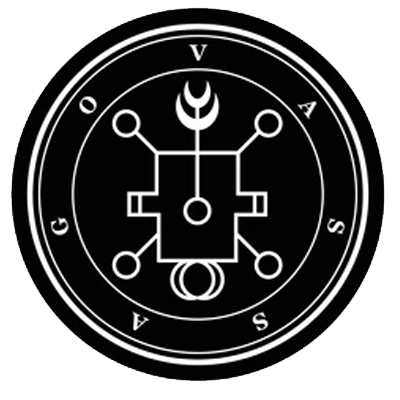
Sigil of Vassago
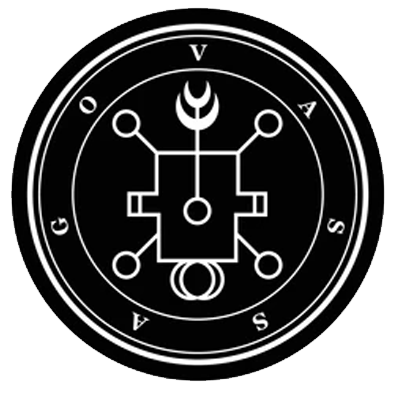
Sigil of Vassago. Traditionally drawn on parchment and placed at the centre of the rite as the principal visual focus for the invocation.
The Rite: Full Ceremonial Sequence
The following material preserves the original SatanWorld article's ritual content without omitting its operative details.
How to summon Vassago
How to summon Vassago
Vassago (also known as Vasago or Usagoo) is the third demon listed in the Ars Goetia section of the Lesser Key of Solomon, a 17th-century grimoire of demonology. Described as a mighty Prince of Hell with a "good nature" (similar to the demon Agares), he commands 26 legions of spirits. Unlike many demons, Vassago is portrayed as truthful, just, and benevolent—often appearing as an angelic or robed figure in muted greens or earth tones. His primary powers include revealing past and future events, locating lost or hidden objects, uncovering treasures, and aiding in divination, prophecy, and clear communication. Practitioners report him as approachable, humorous, mischievous yet serious when needed, and excellent for beginners due to his forgiving and diplomatic demeanor.
Preparation for Summoning
Summoning Vassago, like any Goetic ritual, requires respect, focus, and ethical intent—treat it as a sacred interaction, not a game. Approach with purity of mind and body to avoid unintended consequences. Key steps from traditional and modern sources:
Timing and Conditions: Perform the ritual on a Sunday (associated with the Sun, his planetary influence) around 2 AM, during a waxing or full moon for enhanced clarity. Ensure a quiet, distraction-free space—Vassago thrives in calm, meditative environments. Abstain from meat, alcohol, and sexual activity for 4+ days prior to purify yourself.
Study the Spirit: Research Vassago deeply before proceeding. Meditate on his sigil (a geometric seal symbolizing his essence) daily for a week to build a personal connection. Visualize him as a tall, robed figure with multiple arms or as an ethereal angel.
Gather Materials (Substitutes are fine if intent is strong; symbolism matters more than extravagance):
Sigil: Draw or print Vassago's sigil on parchment or paper. This is the core "link" to him—trace it with precision.
Candles: One light green (for harmony) and one white (for clarity). Light them during the ritual.
Offerings: Copper coins, a green or rose quartz stone, sweet wine, or incense made from rose petals and frankincense. Other traditional items include bone, cedar, saffron, lemon balm, steel, tin, gold, Gilead, grain of paradise, cedarwood, ambergris, or saffron incense.
Tools: A black mirror or scrying tool for visions; optional protective circle (drawn with chalk or salt) for safety. No need for elaborate items like swords—use a knife or finger to trace symbols.
Attire: Dress neatly and respectfully, as if meeting royalty—clean clothes in earth tones.
Step-by-Step Summoning Ritual
This is a simplified, safe method adapted from the Lesser Key of Solomon, modern occultist guides, and practitioner accounts. It's beginner-friendly but customizable—always prioritize consent and mutual respect. If you're new, consider guidance from an experienced practitioner.
Set the Space: In your quiet room, draw a protective circle (about 9 feet in diameter) on the floor with chalk or visualize it mentally. Place the sigil in the center. Arrange offerings nearby. Light the candles and incense. Sit or stand facing east (direction of revelation).
Ground and Center: Breathe deeply for 5-10 minutes. Meditate on your intent (e.g., "Reveal the location of my lost keys" or "Show me future opportunities"). Recite a personal prayer: "Vassago, Prince of truth and hidden knowledge, I approach with respect and seek your wisdom."
Invoke with the Enn: Chant his enn (summoning call) 3-9 times, focusing on the sigil
"Keyan vefa jedan tasa Vassago."
(Pronounced: KAY-an VEH-fah JED-an TAH-sah VAS-ah-go.) This vibrates his name and essence.
Full Invocation: Recite a formal call (adapted from Goetia texts)
"I call thee, Vassago, mighty Prince of the infernal realms, thou who discerns past, present, and future. By the power of thy legions and the bonds of Solomon, appear before me in friendly guise. Reveal what is hidden, guide my sight, and grant thy truthful counsel. I offer [list offerings] in gratitude and bind thee to peace."
Gaze into the black mirror or sigil. Burn the sigil if it feels right (safely, in a fireproof bowl).
Communicate and Receive: Wait patiently—Vassago may appear visually, as a sensation, voice, or intuitive flashes. Ask clear questions one at a time. He communicates via images, words, or emotions; journal everything. Sessions last 15-30 minutes.
Dismiss and Close: Thank him: "Vassago, I thank thee for thy presence and wisdom. Depart in peace to thy realms, harming none." Extinguish candles (snuff, don't blow). Dismantle the circle. Bury or dispose of offerings respectfully (e.g., pour wine into earth).
Tips and Warnings
Personal Touches: Vassago appreciates humor, flexibility, and emotional openness—share a light-hearted story during invocation. Build a long-term relationship via pendants charged with his sigil or dedicated meditations/sexual energy (as some practitioners note his affinity for eros and love).
Safety: Despite his benevolence, all summonings carry risks—mental strain, unexpected insights, or spirit interference. Use protections like the Lesser Banishing Ritual of the Pentagram beforehand. If overwhelmed, end the ritual firmly.
Ethics: Only summon for positive, non-harmful purposes. Vassago aids truth-seekers, not manipulators.
Results vary by practitioner—many report profound clarity and lost items recovered. If this aligns with your path, proceed mindfully.
Ritual Architecture
Separation
Bathing, silence, fasting, abstinence, darkness or isolation signal that ordinary time has been left behind. The preparation should be coherent rather than assembled from random gestures.
Construction of the Chamber
Candles, incense, circle, salt, water, metals, herbs, stones and offerings organize the room around the office of Vassago. Each item should perform one function.
Establishing Contact
The sigil, name, chant or enn becomes the visual and verbal axis of the operation. Repetition narrows attention until the chamber feels organized around one intelligence.
The Petition
The petition should contain one principal request, one boundary and one completion condition. Ambiguous wishes invite expansion.
Recognition of Presence
The central phase begins when the atmosphere changes in a sustained way. Pressure, heat, cold, altered flame, internal speech, animal forms or dreamlike imagery may mark the crossing.
Offering and Exchange
The offering represents reciprocity. It may carry the entity's color, office, appetite or symbolic domain. A promise should never be made casually.
Dismissal and Return
The operation ends only when Vassago is thanked or dismissed according to the preserved method. Candles are extinguished safely, the chamber aired where appropriate and the result written before sleep or distraction changes memory.
Instruments and Their Symbolism
The sigil acts as the visual body of the name. The candle establishes color, rank and duration. Incense gives density to the air. Salt or the circle defines limits. Water reflects and carries emotional force. Metal, stone, herb or coin embodies office.
More objects do not automatically create more power. A crowded altar can divide attention.
Timing and Correspondence
Where several systems appear, one coherent system should govern the operation.
Manifestation Signs
Signs associated with Vassago include:
- a sustained shift in the chamber's emotional pressure;
- dreams repeating the spirit's form or office;
- unusual candle movement without a matching draft;
- sounds, smells or bodily sensations consistent with the entity;
- a complete phrase arising inside thought;
- external events beginning to mirror the petition;
- fear, attraction or resistance intensifying at the moment of contact.
A repeated pattern across chamber, dream and aftermath carries greater weight than one isolated sign.
The Frightening Edge of the Rite
Vassago's danger is the end of ignorance. What is found may expose grief, betrayal or knowledge that cannot be returned to silence.
The deepest danger is transformation that feels useful. The practitioner may begin to imitate the spirit's temperament, organize life around the petition or interpret every event as part of the operation.
Failure Patterns
Failure appears when preparation is abandoned, the request changes repeatedly, symbols are mixed without purpose, panic replaces attention, impossible offerings are promised or the practitioner refuses to close because no dramatic apparition appeared.
Failure can also appear as excess success: the requested current enters ordinary life faster than expected.
Boundaries of the Petition
The petition should state what is requested, where the result may operate, what form the result may take and what event marks completion. Knowledge can destroy innocence. Protection can become isolation. Transformation can become instability. Justice can become vengeance.
The wording is therefore part of the danger.
Completion and Aftermath
The rite is complete when the petition has been spoken, the exchange acknowledged, the presence dismissed and the chamber returned to ordinary order.
Record the date, timing, preparation, tools, words, signs, dreams, first external movement, emotional changes and fulfillment of any promised offering.
The aftermath belongs to the rite. Results may arrive as opportunity, conflict, warning, sudden knowledge, disappearance of an obstacle or an intensification that reveals the true shape of the request.
The Inner Ordeal
The rite of Vassago is also an ordeal of resemblance. The chamber reveals where the spirit's office already exists inside the seeker's life.
The frightening moment is often recognition rather than apparition. The seeker discovers that the request has already shaped behavior before the first candle was lit.
The Weight of the Name
The name of Vassago is repeated because repetition changes the relation between sound and meaning. At first it is a word. Later it becomes atmosphere, pressure and a point around which expectation gathers.
The rite becomes dangerous when that point remains active after dismissal. Extinguishing, washing, recording and leaving the room are therefore part of the operation.
When the Rite Is Truly Complete
A ritual is not complete because the candles have burned down. It is complete when the petition has reached a defined result, the promised exchange has been honored and ordinary life is no longer suspended around the operation.
If no result arrives, the record must still be closed. An unanswered petition should not become a permanent altar.
The Return to Ordinary Life
After closure, eat, drink, wash, change clothing, step outside or speak with another person. These acts declare that ritual time has ended.
Do not repeat the operation immediately because silence feels uncomfortable.
Final Warning
Vassago's danger is the end of ignorance. What is found may expose grief, betrayal or knowledge that cannot be returned to silence.
Do not leave the altar active indefinitely. Do not continue chanting after dismissal. Do not add a second petition during closure.