No original Key of Solomon has ever been found. There is no single medieval volume from which every later copy descends, no stable table of contents, and no final version authorized by an identifiable author. What survives is more elusive: a family of manuscripts copied across languages and centuries, each claiming access to the ritual wisdom of Solomon.
A Book That Exists in Many Forms
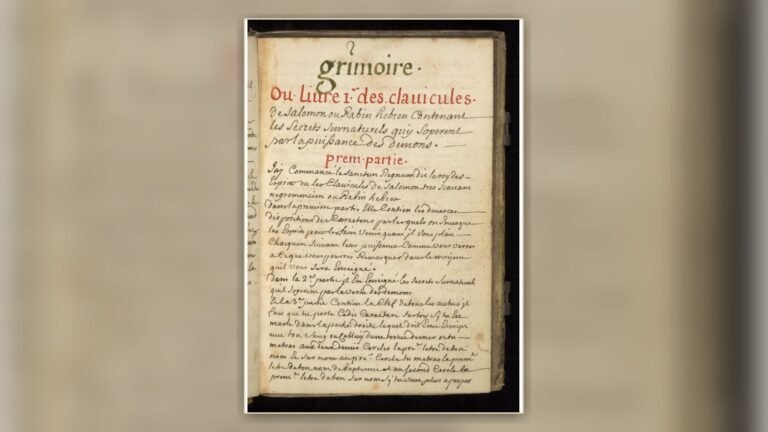
The title Clavicula Salomonis—The Little Key or Key of Solomon—names a manuscript tradition rather than one uniform work. Copies differ in language, sequence, diagrams and the operations they preserve. Latin, Italian, French, English, German and Hebrew witnesses survive. Some manuscripts contain two books while others add or remove experiments. The result is a body of evidence that must be read through manuscripts, catalogues and the material history of the object rather than through later legend alone.
The surviving record places this material within a precise historical world. Scribes adapted prayers, divine names and pentacles to local practice.. Every copied name, altered diagram, ownership mark or change of sequence records a decision made by a reader who believed the text deserved preservation. Those decisions are often as revealing as the stated operation itself.
The instability is not corruption around a lost perfect text. It is the tradition’s normal condition. The Key lived because copyists treated it as a working archive rather than a closed literary composition. In the culture that produced it, sacred language, natural philosophy, astrology, law and ritual were not always separated by the boundaries used today. The manuscript therefore speaks from a world in which knowledge could be devotional, technical and forbidden at the same time.
Read closely, this section also explains why the subject continued to generate fear. Its authority does not depend upon a modern claim that every operation worked exactly as promised. It rests on the historical fact that scribes, collectors, judges or practitioners treated the words as consequential—important enough to copy, hide, condemn, transport or preserve across generations.
Solomon as the Master of Spirits
The authority of the work rests upon the biblical and legendary image of King Solomon as a ruler granted wisdom and command over spirits. Late antique, Jewish, Christian and Islamic traditions expanded that image far beyond the canonical biblical account. The Testament of Solomon describes demons questioned and constrained by the king. Magical texts attributed rings, seals and divine names to him. The result is a body of evidence that must be read through manuscripts, catalogues and the material history of the object rather than through later legend alone.
The manuscript becomes clearer when its physical details are read beside its claims. Medieval compilers used his name to guarantee both antiquity and sacred legitimacy.. Every copied name, altered diagram, ownership mark or change of sequence records a decision made by a reader who believed the text deserved preservation. Those decisions are often as revealing as the stated operation itself.
Attribution to Solomon performed two functions at once. It promised power over dangerous beings, and it placed that power beneath a monarch associated with divine wisdom rather than rebellious sorcery. In the culture that produced it, sacred language, natural philosophy, astrology, law and ritual were not always separated by the boundaries used today. The manuscript therefore speaks from a world in which knowledge could be devotional, technical and forbidden at the same time.
Read closely, this section also explains why the subject continued to generate fear. Its authority does not depend upon a modern claim that every operation worked exactly as promised. It rests on the historical fact that scribes, collectors, judges or practitioners treated the words as consequential—important enough to copy, hide, condemn, transport or preserve across generations.
Purification Before Command
The Key repeatedly insists that magical authority begins with preparation. The operator is not told simply to draw a circle and speak names; the body, clothing, time and instruments must be separated from ordinary use. Ritual bathing, fasting, prayer and sexual abstinence appear in many versions. Garments and tools are consecrated. The result is a body of evidence that must be read through manuscripts, catalogues and the material history of the object rather than through later legend alone.
What appears at first to be a single mystery is actually a chain of copying, use and reinterpretation. Planetary hours, days and astrological conditions govern the timing of operations.. Every copied name, altered diagram, ownership mark or change of sequence records a decision made by a reader who believed the text deserved preservation. Those decisions are often as revealing as the stated operation itself.
This disciplined preparation gives the manuscripts their severe atmosphere. Power is approached through restriction. The magician becomes ritually isolated before attempting to make invisible powers answer. In the culture that produced it, sacred language, natural philosophy, astrology, law and ritual were not always separated by the boundaries used today. The manuscript therefore speaks from a world in which knowledge could be devotional, technical and forbidden at the same time.
Read closely, this section also explains why the subject continued to generate fear. Its authority does not depend upon a modern claim that every operation worked exactly as promised. It rests on the historical fact that scribes, collectors, judges or practitioners treated the words as consequential—important enough to copy, hide, condemn, transport or preserve across generations.
The Knife, the Wand and the Circle
The manuscripts describe a material workshop of ceremonial magic. Knives, swords, wands, ink, parchment, incense and lamps acquire power through words, timing and consecration. Some versions distinguish a black-handled knife from other blades. Circles are inscribed with divine names and protective limits. The result is a body of evidence that must be read through manuscripts, catalogues and the material history of the object rather than through later legend alone.
The archive preserves both the ambition of the text and the limitations of what can now be known. Inks may be prepared from specified ingredients and written with dedicated instruments.. Every copied name, altered diagram, ownership mark or change of sequence records a decision made by a reader who believed the text deserved preservation. Those decisions are often as revealing as the stated operation itself.
The objects are not theatrical props. Within the system, they establish jurisdiction. The circle defines where the operator stands, the blade commands, the incense attracts or honours, and the written name fixes intention into matter. In the culture that produced it, sacred language, natural philosophy, astrology, law and ritual were not always separated by the boundaries used today. The manuscript therefore speaks from a world in which knowledge could be devotional, technical and forbidden at the same time.
Read closely, this section also explains why the subject continued to generate fear. Its authority does not depend upon a modern claim that every operation worked exactly as promised. It rests on the historical fact that scribes, collectors, judges or practitioners treated the words as consequential—important enough to copy, hide, condemn, transport or preserve across generations.
Pentacles as Portable Authority
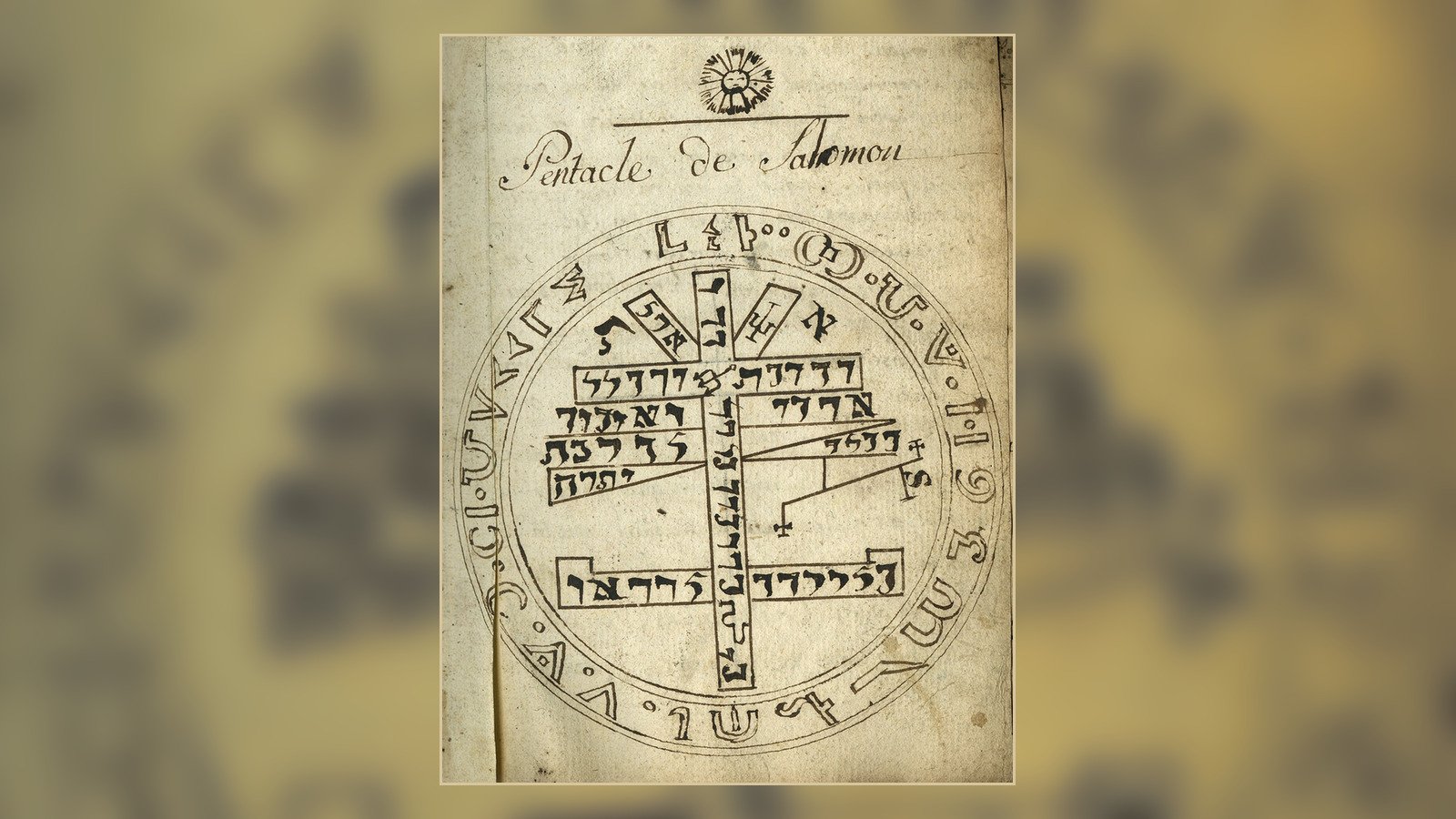
Pentacles are among the most recognisable features of the Key of Solomon. They combine Hebrew letters, divine names, biblical verses, geometric forms and planetary correspondences. Different manuscript families arrange the pentacles differently. Sets are commonly associated with Saturn, Jupiter, Mars, the Sun, Venus, Mercury and the Moon. The result is a body of evidence that must be read through manuscripts, catalogues and the material history of the object rather than through later legend alone.
The surviving record places this material within a precise historical world. Their stated purposes include protection, knowledge, favour, constraint and defence.. Every copied name, altered diagram, ownership mark or change of sequence records a decision made by a reader who believed the text deserved preservation. Those decisions are often as revealing as the stated operation itself.
A pentacle is both image and text. Its power is imagined to emerge from the compression of scriptural language, sacred names and celestial order into a form that can be carried, displayed or placed within a rite. In the culture that produced it, sacred language, natural philosophy, astrology, law and ritual were not always separated by the boundaries used today. The manuscript therefore speaks from a world in which knowledge could be devotional, technical and forbidden at the same time.
Read closely, this section also explains why the subject continued to generate fear. Its authority does not depend upon a modern claim that every operation worked exactly as promised. It rests on the historical fact that scribes, collectors, judges or practitioners treated the words as consequential—important enough to copy, hide, condemn, transport or preserve across generations.
Conjuration Without a Single Demon Catalogue
Unlike later works famous for numbered lists of demons, many Keys focus on general ritual authority and operations rather than a fixed infernal hierarchy. The spirits may be addressed through offices, directions and planetary or elemental correspondences. Conjurations invoke the God of biblical revelation before commanding spirits. Threats and bindings escalate when obedience is delayed. The result is a body of evidence that must be read through manuscripts, catalogues and the material history of the object rather than through later legend alone.
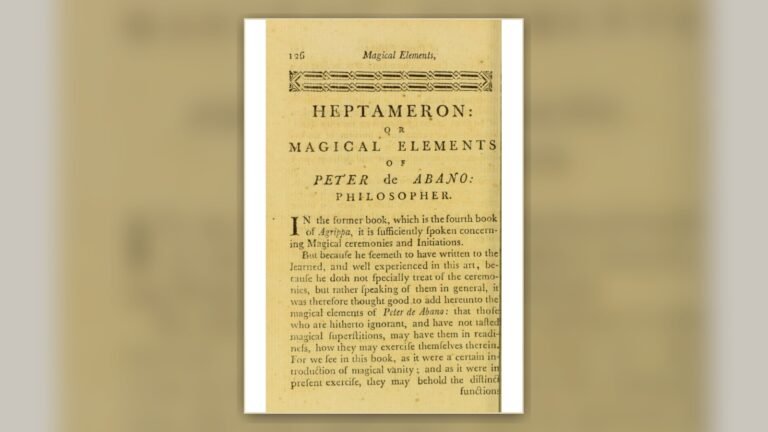
The manuscript becomes clearer when its physical details are read beside its claims. Some copies incorporate material from the Heptameron or other ritual traditions.. Every copied name, altered diagram, ownership mark or change of sequence records a decision made by a reader who believed the text deserved preservation. Those decisions are often as revealing as the stated operation itself.
The rhetoric is coercive, but it is not presented as worship of the summoned beings. The operator claims delegated authority through divine names and Solomonic precedent. In the culture that produced it, sacred language, natural philosophy, astrology, law and ritual were not always separated by the boundaries used today. The manuscript therefore speaks from a world in which knowledge could be devotional, technical and forbidden at the same time.
Read closely, this section also explains why the subject continued to generate fear. Its authority does not depend upon a modern claim that every operation worked exactly as promised. It rests on the historical fact that scribes, collectors, judges or practitioners treated the words as consequential—important enough to copy, hide, condemn, transport or preserve across generations.
From Hebrew to Italian, French and English
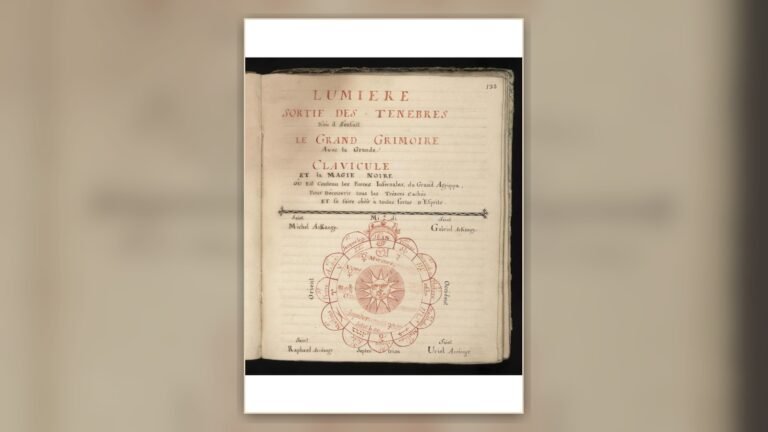
One manuscript can preserve an entire history of translation in its own title. British Library Kings MS 288 describes a French text translated from Hebrew into Italian by Abraham Colorno and then from Italian into French. Colorno worked in the late sixteenth century and became associated with technical and cryptographic learning. French manuscript copies often contain coloured figures. The result is a body of evidence that must be read through manuscripts, catalogues and the material history of the object rather than through later legend alone.
What appears at first to be a single mystery is actually a chain of copying, use and reinterpretation. English collectors gathered several related witnesses.. Every copied name, altered diagram, ownership mark or change of sequence records a decision made by a reader who believed the text deserved preservation. Those decisions are often as revealing as the stated operation itself.
Whether every claimed translation stage is literal or prestigious genealogy, the manuscripts reveal a European network in which Jewish, Christian and courtly forms of knowledge were repeatedly recast. In the culture that produced it, sacred language, natural philosophy, astrology, law and ritual were not always separated by the boundaries used today. The manuscript therefore speaks from a world in which knowledge could be devotional, technical and forbidden at the same time.
Read closely, this section also explains why the subject continued to generate fear. Its authority does not depend upon a modern claim that every operation worked exactly as promised. It rests on the historical fact that scribes, collectors, judges or practitioners treated the words as consequential—important enough to copy, hide, condemn, transport or preserve across generations.
Hidden in Public Collections
The Key survived because manuscripts entered libraries: royal collections, antiquarian cabinets, medical archives and repositories built from private papers. Their catalogue numbers now expose a tradition once protected by secrecy. British Library Add MS 36674 places a Clavicula beside John Dee, Simon Forman and witchcraft papers. Kings MS 288 preserves a richly diagrammed French witness. The result is a body of evidence that must be read through manuscripts, catalogues and the material history of the object rather than through later legend alone.
The archive preserves both the ambition of the text and the limitations of what can now be known. BnF catalogues record numerous French copies from the fifteenth to eighteenth centuries.. Every copied name, altered diagram, ownership mark or change of sequence records a decision made by a reader who believed the text deserved preservation. Those decisions are often as revealing as the stated operation itself.
The modern archive changes the meaning of secrecy. A work once transmitted from hand to hand can now be compared across continents, revealing not one Key but a constellation of related books. In the culture that produced it, sacred language, natural philosophy, astrology, law and ritual were not always separated by the boundaries used today. The manuscript therefore speaks from a world in which knowledge could be devotional, technical and forbidden at the same time.
Read closely, this section also explains why the subject continued to generate fear. Its authority does not depend upon a modern claim that every operation worked exactly as promised. It rests on the historical fact that scribes, collectors, judges or practitioners treated the words as consequential—important enough to copy, hide, condemn, transport or preserve across generations.
The Printed Key and Its Afterlife
The nineteenth and twentieth centuries transformed manuscript material into printed occult classics. Editors selected, normalised and translated particular witnesses, creating versions that many readers mistook for the original text. S. L. MacGregor Mathers published an influential English edition in 1889. Modern scholarship has identified additional Hebrew and European witnesses. The result is a body of evidence that must be read through manuscripts, catalogues and the material history of the object rather than through later legend alone.
The surviving record places this material within a precise historical world. Contemporary practitioners continue to adapt the pentacles and consecrations.. Every copied name, altered diagram, ownership mark or change of sequence records a decision made by a reader who believed the text deserved preservation. Those decisions are often as revealing as the stated operation itself.
The Key’s endurance comes from its unfinished nature. Every edition promises to unlock Solomon’s book, yet every newly catalogued manuscript reveals another door behind it. In the culture that produced it, sacred language, natural philosophy, astrology, law and ritual were not always separated by the boundaries used today. The manuscript therefore speaks from a world in which knowledge could be devotional, technical and forbidden at the same time.
Read closely, this section also explains why the subject continued to generate fear. Its authority does not depend upon a modern claim that every operation worked exactly as promised. It rests on the historical fact that scribes, collectors, judges or practitioners treated the words as consequential—important enough to copy, hide, condemn, transport or preserve across generations.
The Manuscript as Witness
The enduring importance of Key of Solomon lies in the convergence of text and object. A title alone cannot show how the work changed: one must examine handwriting, parchment or paper, pigments, bindings, ownership notes, omissions and the order in which separate texts were placed together. These details reveal whether a copy was made for use, collection, instruction, defence or concealment. They also show why modern printed editions, however valuable, can create the illusion of a stable book where the historical record preserves a family of changing witnesses.
Institutional catalogues have become essential to this reconstruction. Shelf marks that appear dry or technical are the coordinates of survival. They identify the exact volume, distinguish one recension from another and prevent famous titles from absorbing unrelated material. For SatanWorld, those catalogue identities are treated as part of the story: the route from private hand to royal cabinet, confiscated collection, antiquarian sale or national library explains how forbidden knowledge crossed the centuries.
The visual record is equally important. A circle, initial, seal, table or miniature cannot be replaced by a verbal summary without loss. Images determine the pace of reading and often carry information that the words do not explain. For that reason, this article presents historical images with their holding institution and reuse status, while original editorial diagrams are clearly identified as modern explanatory work rather than manuscript facsimiles.
What the Darkness Preserved
The Key of Solomon Across Europe’s Hidden Libraries belongs to forbidden history because the work survived a repeated conflict over who could possess knowledge and by what authority. The danger attributed to it changed with time: demonic assistance, unauthorised revelation, unlawful prosecution, secret communication, intellectual pride or the fear that a diagram might make inaccessible power portable. Yet each generation that feared the material also helped define and preserve it.
The final mystery is therefore not only whether a spirit appeared, a talisman received celestial force or a prayer transformed memory. It is why human beings continued to copy these instructions when copying was slow, possession could be dangerous and many of the names were barely understood. The answer lies somewhere between faith, ambition and the refusal to accept that the visible world contains all available knowledge.