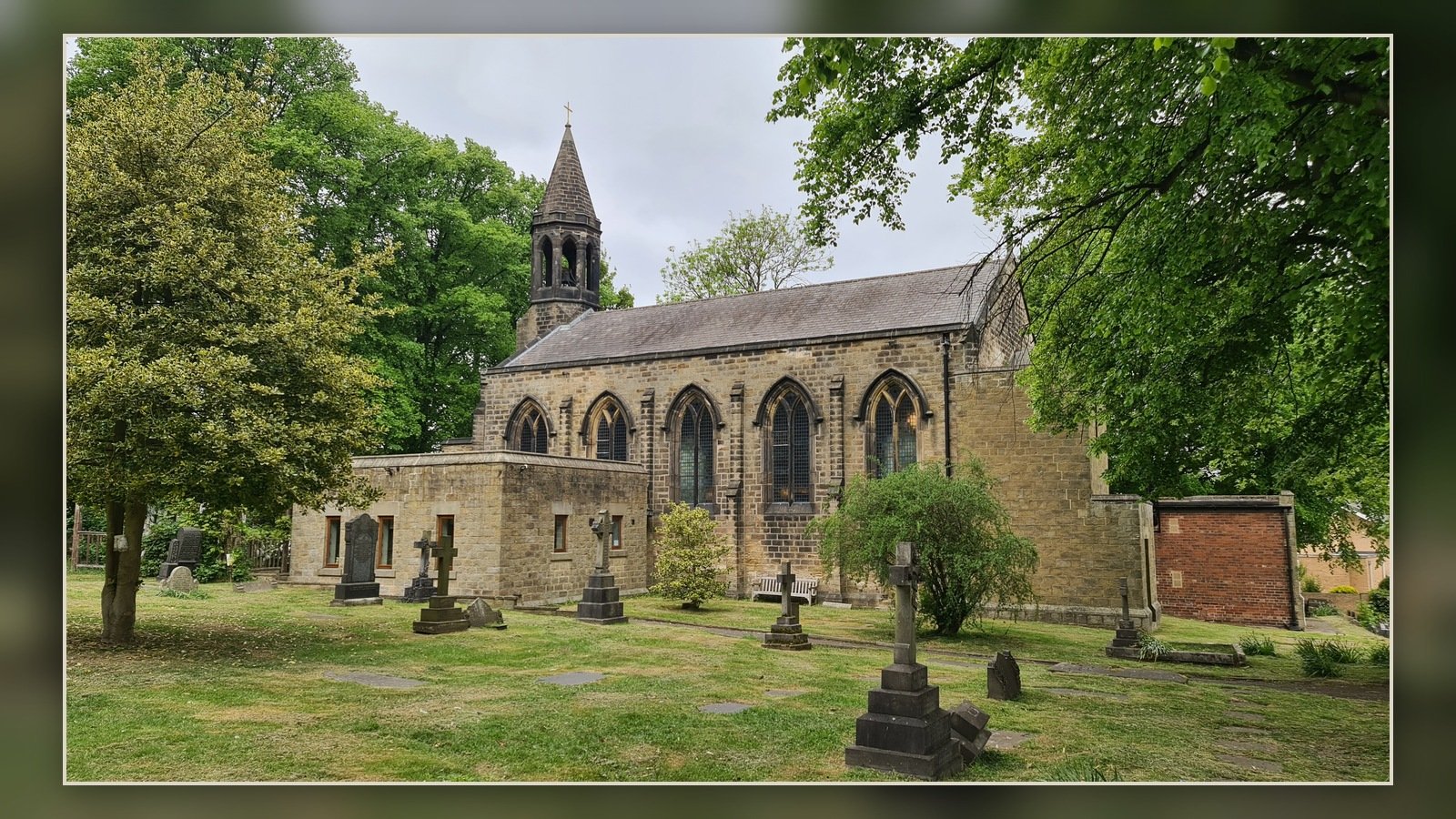
The prayers had continued through the night. Clergy and lay ministers believed they were confronting a destructive spiritual force in Michael Taylor, a husband and father from Ossett whose behaviour had become violent, erratic and saturated with religious fear. By dawn on 6 October 1974, the exhausted group ended the deliverance session. Taylor returned home. Hours later, police entered a scene in which his wife Christine and the family dog had been killed. The crime was real, irreversible and human. Around it gathered claims that demons had been named, that the ritual had been stopped before the danger passed and that warnings had gone unanswered. The case became one of Britain’s darkest modern intersections of possession belief, mental collapse and institutional responsibility.
The World Around the Case
This case unfolded within the charismatic Christian revival currents of 1970s Yorkshire, where informal deliverance ministry could operate alongside established Anglican structures and outside modern clinical safeguards. Its principal foundation is contemporary press reports, Leeds Crown Court proceedings, inquest testimony, National Archives references and later historical work drawing on Wakefield and national newspapers. Those materials do not create perfect certainty, but they make possible a detailed reconstruction of when the reports began, who witnessed them and how interpretation changed as the disturbance entered public knowledge. SatanWorld follows the testimony closely, attributes extraordinary claims to the people and records that preserved them, and keeps the supernatural presence at the centre of the narrative without replacing history with invented scenes.
At the heart of the story is whether the language and ordeal of exorcism intensified a severe psychiatric crisis that participants believed they were treating as spiritual invasion. The case later became a cautionary possession case in which supernatural interpretation cannot be separated from the death of Christine Taylor and the ethical duties owed to a person in crisis. That legacy can obscure the people who endured the original events, so the account returns repeatedly to chronology, room, witness and consequence. The goal is not to produce a courtroom verdict on the unseen. It is to restore the full oppressive shape of an event that contemporaries believed had crossed the boundary between the ordinary world and something acting from beyond it.
A Family in Ossett
Michael and Christine Taylor lived with their children in Ossett, West Yorkshire. Accounts describe growing marital and emotional strain before the final crisis. Michael became involved with a religious group connected to charismatic worship and deliverance. His behaviour reportedly changed: intense religious speech, agitation, jealousy and episodes that frightened those around him. Christine sought help within a world where spiritual language had become the primary way the crisis was understood.
The surviving record gives this stage particular weight because it appears inside contemporary press reports, Leeds Crown Court proceedings, inquest testimony, National Archives references and later historical work drawing on Wakefield and national newspapers. Details were written by people who did not share one theory, yet they converged upon the sense that whether the language and ordeal of exorcism intensified a severe psychiatric crisis that participants believed they were treating as spiritual invasion. The article preserves that convergence without pretending that a witness could see every room, motive or mechanism. The darkness comes from the limits of inspection: those present could describe what the event did, while its identity remained beyond the ordinary categories available to them.
The Charismatic Circle
The group emphasized direct experience of the Holy Spirit, healing and confrontation with demonic influence. Such movements could provide strong community and meaning, but their informal authority also depended heavily on discernment by leaders without clinical training. Michael’s disturbances were interpreted through possession or oppression rather than solely through mental illness. The vocabulary shaped action. If a demon was the cause, prayer and command appeared urgent; if psychiatric collapse was the cause, the same procedures might increase arousal and fear.
Within the charismatic Christian revival currents of 1970s Yorkshire, where informal deliverance ministry could operate alongside established Anglican structures and outside modern clinical safeguards, the events described under “The Charismatic Circle” carried meanings larger than a private disturbance. A noise, voice or bodily reaction could indicate sin, intrusion, restless death, public danger or a failure of institutional protection. That cultural field did not make the witnesses foolish; it supplied the language through which an otherwise shapeless terror became narratable. The same language could also place immense pressure upon the afflicted person, whose every movement was watched for confirmation.
Escalation and Accusation
Tension intensified around a female group leader and Michael’s relationship to her. Christine challenged what she perceived as unhealthy attachment. During a meeting, Michael reportedly became violent or uncontrollable and accused others in extreme religious terms. The episode convinced participants that a deliverance rite was necessary. By then, the crisis had moved beyond private belief. Several adults were making decisions about a man whose capacity for judgment was visibly deteriorating.
This phase also explains why the case endured as a cautionary possession case in which supernatural interpretation cannot be separated from the death of Christine Taylor and the ethical duties owed to a person in crisis. Later summaries often isolate the most spectacular incident, but the original force lay in accumulation: repeated nights, changing witnesses, failed searches and the intrusion of the phenomenon into worship, work or family routine. No single detail must carry the entire story. The authority of the narrative rests upon a sequence in which ordinary explanations were tried, doubted and tried again.
The Night of Deliverance
The rite took place through the night under the direction of clergy and lay participants associated with the Barnsley area. Taylor was restrained while prayers, commands and naming of perceived evil influences continued for hours. Later popular retellings give precise numbers and names of demons, but contemporary documentation is less uniform. What is secure is the duration, intensity and conviction that multiple hostile forces were being expelled. The session ended with everyone exhausted and with Taylor still regarded as dangerous or spiritually unsettled.
Testimony must be read as human evidence rather than as a transparent window. Fear sharpens some perceptions and distorts others; memory selects; institutions preserve the statements that fit their procedures. Yet these limits do not reduce the event to nothing. They reveal how whether the language and ordeal of exorcism intensified a severe psychiatric crisis that participants believed they were treating as spiritual invasion was experienced by people whose decisions had real consequences. The case remains frightening because uncertainty did not suspend action. Families, clergy, doctors, technicians or courts still had to decide what to do next.
Warnings Before Dawn
Evidence reported at the inquest indicated that Reverend Peter Vincent feared violence after the ritual and warned Christine or others that Michael should not be left without care. A telephone attempt to contact medical assistance reportedly failed. The details matter because they place foreseeable danger between the ceremony and the killing. Participants did not simply believe the conflict was over. At least some understood that the man leaving the session remained capable of catastrophic action.
The physical setting matters here. Rooms, roads, chapels, offices and courtrooms organize what witnesses can hear and whom they can observe. In this case, architecture became part of the phenomenon: it concealed sources, directed attention and gave the disturbance a route through which it could seem to approach or withdraw. The resulting atmosphere was not decorative gothic invention. It arose from the practical problem of trying to locate an event that repeatedly escaped the person searching for it.
The Death of Christine Taylor
After returning home, Michael killed Christine and the family dog. The circumstances were profoundly violent, but responsible history does not require repeating every injury as spectacle. Christine was a real woman and mother, not an incidental figure in a demonic legend. Her death is the centre of the case. Any discussion of possession, exorcism or supernatural language must remain subordinate to the fact that she was left in proximity to a person whose condition had been recognized as dangerous.
The occult interpretation gained strength because the incident appeared intentional. Random disorder becomes haunting when it answers, follows, selects or arrives at meaningful moments. Witnesses did not merely report abnormal movement; they reported behaviour. Whether that behaviour originated in an entity, a human action, unconscious process or collective expectation remains the deepest question. What the record establishes is that those present felt addressed by the disturbance rather than merely exposed to it.
Police and Psychiatric Custody
Police arrested Taylor in a state described as naked, bloodied and profoundly disturbed. He was assessed and held for trial. The contrast between the ritual language of the previous night and the legal-medical language that followed was immediate. Demons became symptoms, responsibility, fitness and insanity. Yet the court could not erase the beliefs that shaped the route to the crime. Witnesses had to explain what they thought they were doing and what risks they recognized.
The surviving record gives this stage particular weight because it appears inside contemporary press reports, Leeds Crown Court proceedings, inquest testimony, National Archives references and later historical work drawing on Wakefield and national newspapers. Details were written by people who did not share one theory, yet they converged upon the sense that whether the language and ordeal of exorcism intensified a severe psychiatric crisis that participants believed they were treating as spiritual invasion. The article preserves that convergence without pretending that a witness could see every room, motive or mechanism. The darkness comes from the limits of inspection: those present could describe what the event did, while its identity remained beyond the ordinary categories available to them.
Leeds Crown Court
In March 1975, Taylor was found not guilty of murder by reason of insanity and committed to secure psychiatric care. The verdict did not declare exorcism the cause of the killing, nor did it validate possession. It recognized that his mental condition prevented ordinary criminal responsibility under the law. Public reporting, however, continued to frame the tragedy through the sensational conjunction of demons and murder, often giving greater attention to the rite than to Christine’s life.
Within the charismatic Christian revival currents of 1970s Yorkshire, where informal deliverance ministry could operate alongside established Anglican structures and outside modern clinical safeguards, the events described under “Leeds Crown Court” carried meanings larger than a private disturbance. A noise, voice or bodily reaction could indicate sin, intrusion, restless death, public danger or a failure of institutional protection. That cultural field did not make the witnesses foolish; it supplied the language through which an otherwise shapeless terror became narratable. The same language could also place immense pressure upon the afflicted person, whose every movement was watched for confirmation.
The Reopened Inquest
The inquest was reopened in April 1975 and heard evidence from clergy about the warnings, the deliverance session and attempts to obtain help. Questions emerged about whether religious intervention had replaced or delayed appropriate medical protection. The case exposed the absence of clear boundaries when spiritual care addressed severe disturbance. Faith communities were forced to confront the possibility that certainty about demonic influence could become dangerous when it prevented clinical assessment and safeguarding.
This phase also explains why the case endured as a cautionary possession case in which supernatural interpretation cannot be separated from the death of Christine Taylor and the ethical duties owed to a person in crisis. Later summaries often isolate the most spectacular incident, but the original force lay in accumulation: repeated nights, changing witnesses, failed searches and the intrusion of the phenomenon into worship, work or family routine. No single detail must carry the entire story. The authority of the narrative rests upon a sequence in which ordinary explanations were tried, doubted and tried again.
A further layer concerns the passage from private ordeal to public case. Once strangers arrived, the people involved were no longer only witnesses; they became objects of examination. Their words could be repeated without their control, and every inconsistency acquired importance. Publicity enlarged the archive while changing the conditions under which new events occurred.
The event also carried an ethical burden. Belief in an invading presence could produce vigilance, solidarity and sustained care, but it could also expose vulnerable people to restraint, interrogation and spectacle. A serious occult history must preserve both realities. The witnesses’ supernatural interpretation belongs to the case, and so do the consequences of acting upon it.
Later culture often compresses the subject into a single image or phrase. Returning to the longer record restores duration: waiting, interrupted sleep, repeated consultation and the slow erosion of confidence in familiar surroundings. The most frightening cases are rarely one impossible moment. They are the days during which no one knows whether the moment will return.
A further layer concerns the passage from private ordeal to public case. Once strangers arrived, the people involved were no longer only witnesses; they became objects of examination. Their words could be repeated without their control, and every inconsistency acquired importance. Publicity enlarged the archive while changing the conditions under which new events occurred.
The event also carried an ethical burden. Belief in an invading presence could produce vigilance, solidarity and sustained care, but it could also expose vulnerable people to restraint, interrogation and spectacle. A serious occult history must preserve both realities. The witnesses’ supernatural interpretation belongs to the case, and so do the consequences of acting upon it.
Later culture often compresses the subject into a single image or phrase. Returning to the longer record restores duration: waiting, interrupted sleep, repeated consultation and the slow erosion of confidence in familiar surroundings. The most frightening cases are rarely one impossible moment. They are the days during which no one knows whether the moment will return.
What Remains
This article does not present Christine’s death as proof that demons were present. It presents a documented tragedy in which participants believed they were dealing with demons, and those beliefs materially shaped what happened before the killing.
The case demands a distinction between pastoral support and coercive intervention. Prayer may accompany care; it cannot remove the duty to protect spouses, children and the person in crisis from foreseeable harm.
Later retellings often expand the ritual into lurid mythology. The strongest and darkest account is the restrained one: a dangerous man was exhausted by an all-night rite, recognized as unsafe and nevertheless returned to his home.
What remains is a cautionary possession case in which supernatural interpretation cannot be separated from the death of Christine Taylor and the ethical duties owed to a person in crisis. The names and places survive because the event entered documents before it became entertainment. Those documents preserve voices that are sincere, frightened, partisan, careful and sometimes contradictory. They do not eliminate the darkness. They give it historical weight. The case continues to disturb because whether the language and ordeal of exorcism intensified a severe psychiatric crisis that participants believed they were treating as spiritual invasion, and because the actions taken in response changed lives long after the last reported manifestation.
The final boundary must therefore remain open. A historical archive can show what witnesses heard, what bodies endured, what instruments registered and what courts or churches decided. It cannot command the unseen to identify itself for a later reader. These stories persist in the interval between record and presence—the place where testimony becomes memory, memory becomes legend, and the legend still carries the pressure of something that once entered an ordinary room and refused to behave like anything known.