On 24 January 1566, Nicole Aubrey was brought into Laon after weeks of seizures, blindness and violent resistance. Before the exorcisms ended, the voice identified as Beelzebub would speak against the Huguenots before crowds inside the cathedral.
A Young Woman at Vervins
Nicole was a young married woman from the region of Vervins in northern France, usually described as fifteen or sixteen years old in the possession literature. Her surname appears in several forms: Obry, Aubrey and Aubry.
The crisis began in November 1565. Accounts describe trances, loss of speech, deafness, blindness and extraordinary bodily force. Several men were reportedly required to restrain her.
The family and clergy first understood the disturbance through the dead. Nicole was said to be troubled by the spirit of her grandfather, who demanded Masses. As the rites continued, the identity changed. The presence named itself Beelzebub.
The Road to Laon
Nicole was taken through Vervins, Pierrepont and the pilgrimage centre of Liesse. Priests prayed over her, questioned the voice and exposed her to relics and the Eucharist.
The case grew rapidly in public importance. France was descending into the Wars of Religion. Catholics and Huguenots disputed the Mass, the priesthood, relics and the real presence of Christ in the consecrated host.
A possession that reacted visibly to the Eucharist could become more than a private deliverance. It could be presented as a supernatural judgment upon the religious conflict dividing the kingdom.
The Cathedral Becomes a Theatre
Nicole entered Laon on 24 January 1566. The exorcisms were held in the cathedral and other public settings. Crowds came to witness the confrontation.
Accounts describe Nicole blind, mute and difficult to control until the sacred host was brought near. The exorcist commanded Beelzebub to acknowledge the authority of Christ present in the sacrament.
The voice answered in French and, according to the published Catholic narrative, declared that many devils had fled to Geneva—the symbolic centre of Calvinism. Beelzebub claimed he had entered Nicole in order to bring all people into one religion.
The Host Raised Before Beelzebub
The decisive scenes centred upon the Eucharist. The consecrated host was displayed while prayers and commands were repeated. Nicole’s body convulsed, twisted and resisted.
The exorcists treated each reaction as evidence. When the host approached, the possessing voice was ordered to depart. The rite became a visible contest between infernal defiance and sacramental power.
Thousands were said to attend across the weeks of public exorcism. For Catholic observers, the spectacle demonstrated doctrines denied by the Reformed churches. The body of Nicole became a pulpit from which even the Devil was compelled to affirm the faith of Rome.
The Night of the Huguenot Physician
Protestants in Laon suspected theatre and manipulation. A Huguenot physician was allowed to observe Nicole closely during a night vigil intended to expose fraud.
Catholic accounts later claimed the physician became convinced that the phenomena could not be produced by ordinary artifice. The episode was repeated as a victory over disbelief.
The religious stakes were enormous. If the possession was genuine, the Devil had entered the confessional conflict. If staged, the cathedral itself had become the site of deception. Neither side could treat Nicole as merely ill or private.
The Departure of Beelzebub
The narrative divides the Laon events into phases. On 8 February, Beelzebub was said to leave Nicole under the command of the Eucharist, though further rites and public appearances continued until March.
Nicole’s senses and speech were reported restored. The transformation was announced as the Miracle of Laon. Printed accounts circulated, sermons repeated the events and processions carried the message beyond the city.
Civil authorities eventually ordered Nicole removed because her presence threatened public peace. In a kingdom already wounded by confessional violence, a possessed woman drawing crowds could become a spark.
Before Princes and the King
After leaving Laon, Nicole travelled and appeared before prominent figures. Accounts place her before the Prince of Condé and later connect the story with the royal entry of Charles IX into Laon in August 1566.
The case had become propaganda in motion. Each appearance extended the claim that the Eucharist had triumphed over Beelzebub and that the Devil himself had condemned Protestant error.
Nicole gradually disappeared from the centre of the record. The men who wrote, published and interpreted the case remained more visible than the young woman whose body had carried it.
The Miracle That Preceded Loudun
The possession of Nicole Aubrey occurred almost seventy years before the more famous Loudun possessions. It established a model: public exorcism, named demons, political crowds and possession used to prove Catholic truth.
Jehan Boulaese’s Thresor, published in 1578, preserved a detailed chronology and turned the events into a monumental written victory over Beelzebub. Later historians returned to the case because it revealed how supernatural testimony could enter religious war.
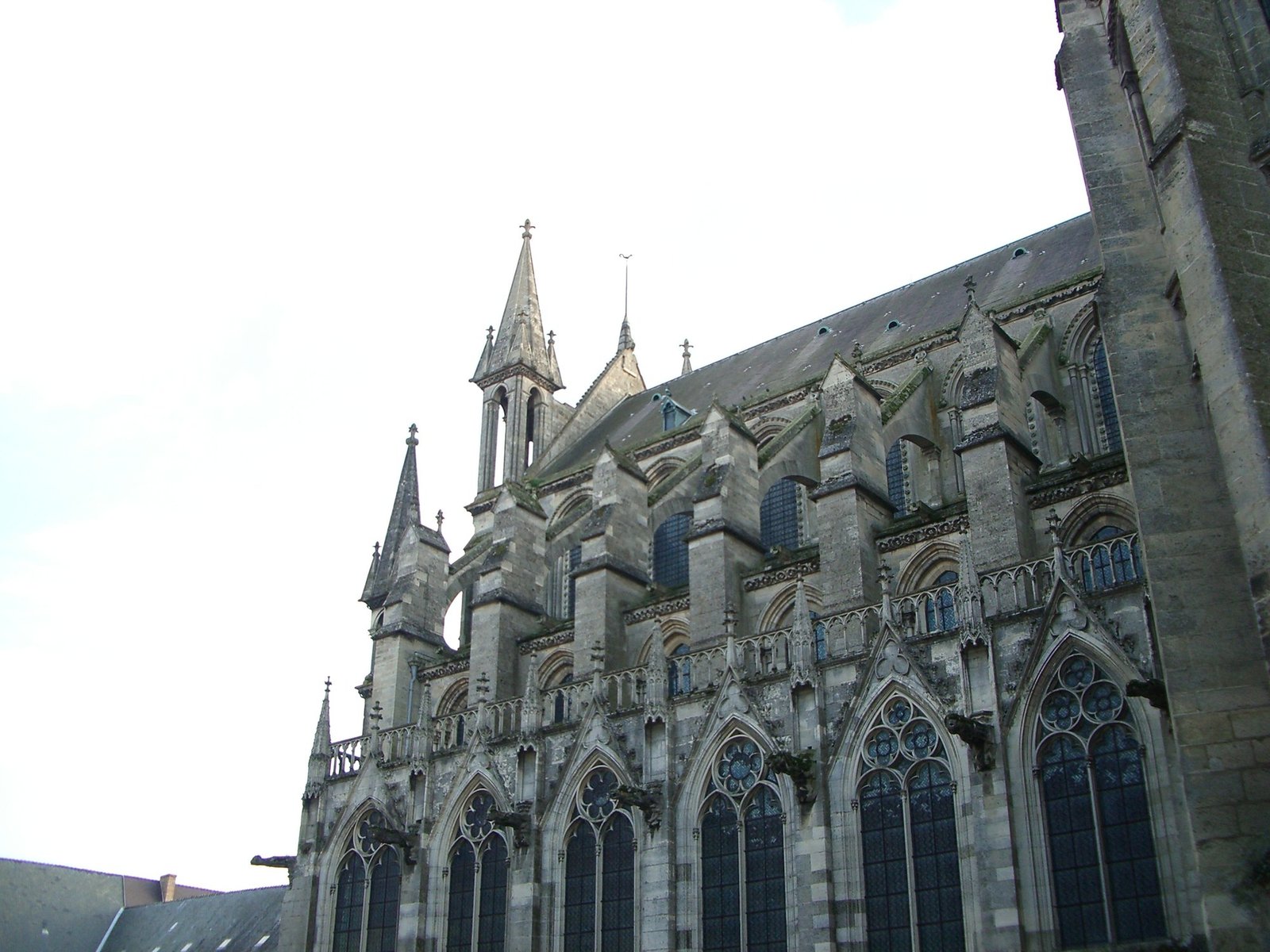
The cathedral still rises above Laon. Its stone towers survived the conflicts that gave Nicole’s exorcism its meaning. The crowds are gone, but the record keeps the decisive image: the host raised before a young woman while a voice from within her declares that the devils have fled toward Geneva.
The Dead Grandfather at Vervins
Nicole Obry was born around 1549 and was the daughter of a butcher at Vervins. She had married a tailor while still very young. On 3 November 1565, according to the chronology later assembled by Jean Boulaese, she went to pray near the grave of her grandfather.
A figure resembling the dead man appeared and complained that he had died without completing necessary religious duties. He asked for Masses and restitution so that his soul might leave Purgatory. Nicole returned terrified. Her senses and body soon began to fail.
She became mute, deaf or blind for periods and entered states of rigidity in which she seemed cold and dead. At other moments she convulsed with enough force that several men struggled to hold her. The dead grandfather was gradually reinterpreted as a demon wearing the likeness of the dead.
The shift was theologically significant. A soul in Purgatory might request prayer; a demon impersonating that soul sought deception. Exorcism was required to force the speaker to abandon the familiar face and reveal its infernal name.
Father de la Motte and the First Conjurations
Local clergy began prayers and examinations at Vervins. A Dominican commonly identified as Father de la Motte was called to continue the rites. He questioned the spirit, used relics and demanded submission to sacred authority.
The voice eventually called itself Beelzebub and claimed that many other demons occupied Nicole. Accounts gave numbers approaching thirty, arranging the possession as a host rather than a solitary invader. Cerberus, Astaroth and Legio appeared among the names in later narratives.
The demon insulted the Eucharist and attacked the Huguenots in ways that turned the case outward. It claimed that devils had led Protestants from the true faith and that the possession would bring people back into one religion. Nicole’s body became a site where the central argument of the French Wars of Religion was spoken by an enemy compelled to reveal truth.
Rites continued at Vervins, Pierrepont and the pilgrimage sanctuary of Notre-Dame de Liesse. Relics were carried near her. Processions formed. Individual spirits were said to depart, yet Beelzebub remained and demanded confrontation with higher episcopal authority.
Jean de Bours and the Journey to Laon
Bishop Jean de Bours of Laon took direct interest. The case reached him while Catholic and Reformed communities were attempting to live under unstable truces after the first wars of religion. Any public miracle could alter the balance of a town.
Nicole was carried to Laon on 24 January 1566. The journey brought her from local possession into an episcopal city whose cathedral dominated the plateau. Crowds gathered along the route and at the doors, expecting to see whether the demons would acknowledge the real presence of Christ in the consecrated host.
At night she was kept under constant watch in the house of Pierre Spifame. During the day she was taken to churches for processions, prayers and conjurations. The movement between guarded house and cathedral prevented the case from returning to privacy.
On 31 January, royal notary Guillaume Gorret began an official record. The presence of a notary gave the miracle administrative form: dates, rites, witnesses and changes in Nicole’s body could be preserved as acts rather than rumour.
The Cathedral Prepared as a Stage
The exorcisms occupied the liturgical heart of Notre-Dame de Laon. Nicole was carried by several men, sometimes in a bed, following relics, the cross and the Blessed Sacrament around the church. After processions she was placed on a mattress near the choir where clergy and spectators could observe.
Her body alternated between violent convulsion and rigid collapse. Accounts say bones cracked under strain, limbs became paralysed and ordinary sensation vanished. Communion or the approach of the host brought temporary restoration, allowing Catholic chroniclers to frame the Eucharist as the force that returned life to the body.
The architecture magnified the event. Stone vaults carried every cry. Clergy in vestments stood before the high altar. Nobles, townspeople, pilgrims and Protestants filled the available space. The possessed woman was visible, but the demon could be heard only through her.
A 1575 engraving later condensed the ceremonies into multiple scenes, showing Nicole carried, restrained, presented before the sacrament and surrounded by clergy. The image demonstrates how quickly the exorcism became a sequence designed for public memory.
The Departure of Cerberus
On 2 February, the feast of the Purification, the spirit named Cerberus was said to depart. The name came from the guardian of the classical underworld, absorbed into Christian demonological language. Its expulsion reduced the host but left Beelzebub in command.
Each departure was linked to bodily change. A paralysed member moved; sight or speech returned; rigidity released. The exorcists did not merely announce victory. They looked for visible restoration that the crowd could recognize.
Beelzebub resisted further adjurations, arguing through Nicole and insulting the opposing confessions. The demon’s refusal increased the final victory’s importance. A weak spirit could flee before a relic; the prince remaining inside her would have to yield directly to episcopal command and the host.
Eight February at Three in the Afternoon
On Thursday, 8 February 1566, the decisive confrontation took place. Boulaese’s chronology places it at about three in the afternoon after fifteen episcopal adjurations. Jean de Bours held or extended the consecrated host toward Nicole and commanded Beelzebub to leave.
The demon was required to confess the authority of Christ present in the sacrament. Nicole’s body convulsed and resisted. Then the voice yielded. Beelzebub departed, and the sign of release was the recovery of Nicole’s left arm, previously paralysed.
Catholic accounts presented the moment as the “sacred victory” of the body of God over the malignant spirit. Beelzebub, enemy of the Church, had been forced to proclaim the doctrine denied by Calvinists. The exorcism therefore did not merely restore a woman. It appeared to settle a theological controversy by infernal testimony.
Nicole’s behaviour did not instantly become ordinary. She still fell into rigid states and seemed restored when brought to church or given communion. Public rites continued until March, allowing the miracle to be repeated, explained and carried into political life.
The Huguenot Challenge
Reformed residents of Laon regarded the ceremonies with suspicion and alarm. The demon’s speeches attacked Geneva and Calvinist belief, while crowds were told that the Eucharist itself defeated possession. What Catholics called miracle, Huguenots experienced as propaganda performed inside the city’s greatest building.
Petitions warned that Nicole’s continued presence threatened public order. A Huguenot physician or observer was allowed to examine her during a guarded night, an episode Catholic writers later claimed ended in reluctant conviction. Competing accounts disputed details, but all recognized that the case had become a test between confessions.
The civil magistracy ordered Nicole removed. An order dated 11 March responded to fears that the gathering crowds and religious accusations would disturb an already fragile peace. She left Laon on 18 March.
The departure reveals the limits of miracle in a divided kingdom. Churchmen wished to prolong and publish the victory; civic officials feared that every new procession could become a riot. Beelzebub had left Nicole, but the political force released by the exorcism remained.
Nicole Before Condé
After Laon, Nicole travelled through other towns. On 6 April she appeared before Louis, Prince of Condé, one of the leading Huguenot nobles. Catholic narratives treated the meeting as another opportunity for the miracle to confront Protestant power.
Accounts differ over what Condé saw and how he responded. The divergence shows each writer shaping Nicole for a confessional audience. To one side, she was living proof placed before an unbelieving prince; to the other, she was evidence of Catholic manipulation.
Her movements continued until 27 August, when Charles IX made his entry into Laon. The king requested an account of the events, prompting the cathedral dean Christophe de Héricourt to compose a careful history completed in November 1566.
Boulaese, Héricourt and the Printed Miracle
Several writers competed to define the case. Guillaume Postel interpreted it through his own prophetic vision of France. Jean Boulaese became the most zealous chronicler, gathering public acts, chronologies and testimonies into Le Thresor et entière histoire de la triomphante victoire du corps de Dieu, printed in 1578.
Héricourt’s account, written at royal request, sought greater restraint while preserving the basic miracle. Boulaese emphasized precision of place and date, dividing the story into three periods: Vervins and surrounding sites from 3 November to 24 January; Laon from 24 January to 18 March; and the journeys elsewhere until 27 August.
The result was an enormous textual monument around a young woman’s body. Notarial acts, sermons, engravings and polemics made Nicole one of the most documented possessed figures of sixteenth-century France. Her own sustained voice, however, is difficult to separate from the demons, priests and male authors who spoke through the record.
The Annual Memory of Victory
The liberation of 8 February was commemorated at Laon for generations. A liturgical observance and procession kept the victory over Beelzebub within cathedral memory until the upheavals of the French Revolution.
The anniversary transformed a temporary possession into sacred history. Each year the city could repeat the claim that the Eucharist had acted visibly and that an infernal prince had acknowledged it. The miracle no longer depended upon Nicole’s continued presence.
Later possession cases at Aix, Loudun and Louviers inherited the model of public exorcism before crowds. Named demons, official records and political interpretation were already present at Laon. Nicole’s case demonstrated that a possessed body could become an arena in which a kingdom argued over truth.
The Voice Beneath the Doctrine
Nicole’s story is remembered as a miracle, a possession and a weapon. Each identity is present in the same surviving texts.
The exorcists heard Beelzebub. Catholic crowds heard confirmation. Huguenots heard accusation. Authorities heard the possibility of disorder. Nicole stood at the centre while every faction interpreted the voice speaking through her.
That is why the case remains dark. The demon was not confined to the private soul. It entered politics, print and the cathedral. At Laon, the invisible world was summoned into public view, and France used its words against itself.