The South Shields Poltergeist entered the house through ordinary objects. Coins moved. Toys changed position. Small disturbances collected around a family who initially hoped that each event would have a separate explanation. Then the activity began to communicate. Words appeared on a child’s drawing board. Threatening messages arrived through telephones. Objects were arranged as if the house had developed a cruel sense of theatre. Knives and heavy items were reported in motion. The investigators who later published the case called the presence an invisible intruder because it did not behave like an accidental force. It appeared to watch the family, study their reactions and choose new ways to enter the technologies and possessions surrounding them.
A Hidden Address
The disturbances were reported in a two-bedroom house in South Shields, in North East England, during 2005 and 2006. The family’s identities and exact address were protected. Published accounts use pseudonyms or general descriptions rather than information that would allow strangers to identify the occupants and their child.
That privacy was ethically understandable. It also created an evidential limitation. Independent researchers could not easily inspect the property, interview neighbours or compare public records. The case became known primarily through the investigators who entered it and later wrote the book *The South Shields Poltergeist: One Family’s Fight Against an Invisible Intruder*.
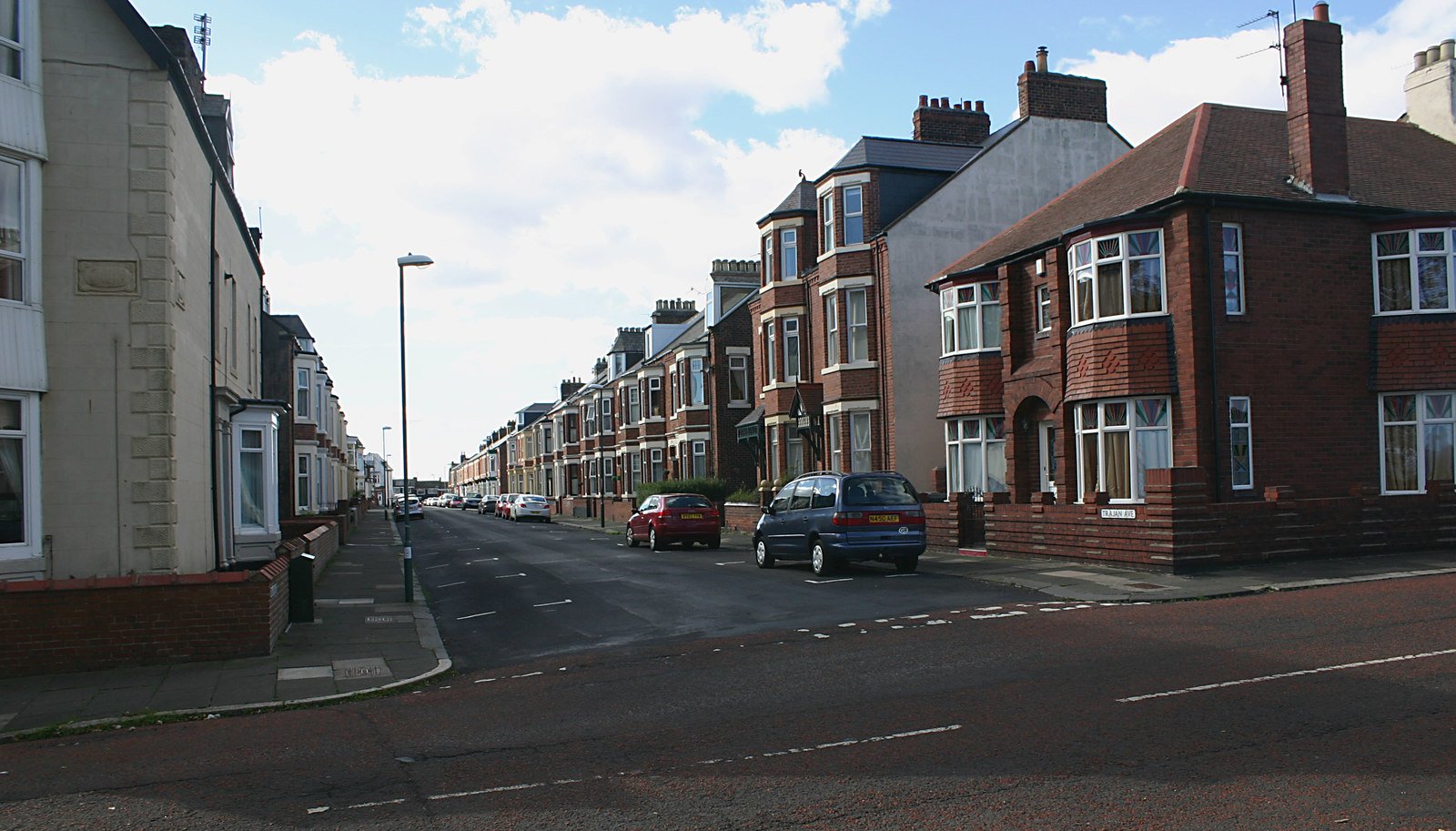
The concealed setting should not be mistaken for the contextual street photograph attached to this article. South Shields contains many similar residential streets, but no reusable public image has been established as the actual house. The anonymity of the building is part of the case.
From Misplaced Objects to Intention
The early events followed a familiar poltergeist progression. Small objects appeared where they had not been left. Doors, taps or furniture behaved unexpectedly. Household members suspected one another because domestic space provides many opportunities for unnoticed movement and practical jokes.
Escalation changed the interpretation. Coins and other objects were said to travel through rooms. Items appeared in patterns. Phenomena clustered around moments of attention. The family came to believe that the activity responded to fear and to attempts at investigation.
A poltergeist is often defined by movement without a visible mover. The South Shields case added a stronger claim: the mover possessed personality. It did not merely knock or throw. It communicated contempt.
The Child’s Toys
Children’s objects became instruments of the haunting. Toys were rearranged, displaced or used to form scenes that adults interpreted as threatening. A harmless figure placed in an unnatural position acquires menace because it belongs to a child’s protected world.
The reports describe a toy or stuffed animal apparently manipulated to face occupants, appear unexpectedly or participate in displays. The entity was also said to use a child’s magnetic drawing board or similar writing surface. Messages appeared that the family denied creating.
Writing is a decisive threshold in paranormal cases. A knock can be plumbing. A moved toy can be forgetfulness. A sentence implies language and therefore intention. It invites the witness to answer, converting a disturbance into a relationship.
The source record does not provide an independently controlled chain of custody for every written message. Investigators saw and photographed material, but the central archive remained within a private household. The strength of the claim depends heavily upon trust in the family and investigators.
Messages from the House
The communications were described as hostile, taunting and aware of private circumstances. The presence appeared to know when investigators were expected or when the family attempted to ignore it. Threats could be brief because the context supplied their force. A few words on a device inside a locked home could suggest that no room remained private.
Some messages reportedly arrived through mobile phones or telephone-related events. This modernized the poltergeist without changing its basic role. Earlier hauntings used walls, slates, bells and raps. A twenty-first-century presence could use text and electronic alerts.
Technology also complicates evidence. Phones store records, but numbers can be spoofed, messages can be sent anonymously and devices can malfunction. Digital appearance feels precise while the origin may remain hidden. An unexplained text is not automatically paranormal; it is an event requiring technical preservation that a frightened family may not know how to perform.
The case became famous precisely because the entity seemed to cross between physical and electronic media. It could throw an object, then write about the fear it caused.
The Violence of Ordinary Objects
Accounts of the most dangerous phase include knives or sharp objects moving without an observed hand. Coins and heavier items were thrown with enough force to suggest attack rather than mischief. Scratches and bodily marks were also reported.
Such claims place the case beyond harmless ghost stories. A family can tolerate knocks longer than airborne metal. The home becomes uninhabitable when every kitchen drawer contains potential weapons.
The investigators treated the physical danger seriously and attempted to document events while reducing risk. Their published narrative describes moments in which activity appeared to occur in front of witnesses. As with many poltergeist reports, the crucial motion often happened rapidly, from peripheral vision or after attention had shifted.
Fraud remains possible whenever objects can be thrown by people present. Unconscious or deliberate actions by an occupant must also be considered. The investigators rejected these explanations based on their observations and the family’s behaviour, but their conclusion cannot substitute for continuous independent surveillance.
Michael Hallowell and Darren W. Ritson
The case is inseparable from Michael J. Hallowell and Darren W. Ritson, the investigators who worked with the family and co-authored the principal book. They presented the events as one of the most intense modern British poltergeist cases and argued that the entity displayed intelligence beyond conventional environmental explanation.
Their role gave the case structure. They collected testimony, attended the house, recorded incidents and interpreted the communications. It also means that the main evidence and the main argument were produced by the same team. Readers do not possess a large body of rival investigations against which to test their conclusions.
This is not unusual in private haunting cases. Families seek help from the people willing to believe them, and those investigators become custodians of the record. The resulting archive may be sincere and detailed while remaining difficult to audit.
The Intruder as Personality
The term “invisible intruder” reflects the case’s emotional centre. A haunting attached to a dead resident may have a story and motive. The South Shields presence was described as invasive without offering a stable identity. It entered relationships through aggression.
Investigators reported that the entity used names, threats and knowledge of the household. It seemed to enjoy humiliation. Toys were not moved randomly; they were positioned to show that the child’s world could be touched. Messages were not philosophical; they were confrontational.
This behaviour encouraged a demonic or malevolent interpretation. Yet a hostile personality can also emerge from human expectation. Once the family reads one message as cruel, ambiguous later events join the same character. The poltergeist becomes a narrative agent whose identity strengthens through every attributed act.
The Family at the Centre
Classical poltergeist research often looks for a focus person—frequently an adolescent or a household member under strain—around whom disturbances cluster. Theories range from deliberate trickery to unconscious psychokinesis and dissociative behaviour.
The South Shields case involved a young child, but the published material does not justify reducing the events to that child. Nor can an outsider reconstruct private family dynamics from a sensational summary. The ethical danger is obvious: a theory intended to explain paranormal claims can become an accusation against a minor.
The family’s fear appears central regardless of cause. They lived with repeated uncertainty about who had moved an object, whether a message came from a person and whether a sharp item might travel through the next room. The case’s human reality lies in that breakdown of trust.
Investigation Inside an Active Home
A controlled laboratory can restrict objects, cameras and participants. An occupied family home cannot. People cook, sleep, argue, use phones and move through blind spots. Investigators must balance documentation with the welfare of residents.
This environment gives poltergeists their power and sceptics their strongest objection. The activity occurs where control is weakest. At the same time, removing the family and sterilizing the site may end the phenomena entirely, making control appear to destroy the object of study.
Hallowell and Ritson believed the recurrence, apparent responsiveness and events witnessed during their presence exceeded ordinary domestic causes. Critics can answer that expectation, incomplete surveillance and the investigators’ investment shaped the record. The available public material does not force one conclusion.
Contagion Beyond the House
Ritson later wrote about possible “contagion,” the idea that activity or related events followed investigators or attached themselves beyond the original location. Such claims appear in other haunting traditions: the researcher returns home and hears the same knocks, dreams of the same figure or experiences equipment failures.
Contagion can be interpreted spiritually as attachment. Psychologically, intense investigation trains attention to detect the same patterns elsewhere. An ordinary sound that would once have been ignored becomes evidence that the presence has followed.
The South Shields case expanded through this possibility. The intruder was no longer confined by property lines. If true, leaving the house offered no secure end. If produced by heightened vigilance, it demonstrated how a haunting can survive inside expectation after physical events stop.
Evidence in the Age of Phones
Modern technology creates the impression that hauntings should now be easy to prove. Every person carries a camera, recorder and message archive. Yet quantity does not guarantee clarity. Images begin after an event, recordings capture ambiguous sounds and screenshots can preserve a message without identifying who sent it.
A strong digital investigation requires original files, metadata, network records, device access and independent technical review. The public South Shields narrative does not release a complete forensic archive of that kind. Its evidence remains largely experiential and curated through the book.
This limitation should not be disguised. It also should not be confused with proof that nothing occurred. Private families rarely maintain evidence to scientific standards while frightened. The gap between experience and proof is where the unseen intruder continues to live.
What the Case Changed
The South Shields story brought the poltergeist into an electronic household. It showed how an old pattern—objects moving around a family—could adapt to phones, toys and contemporary communication. The entity’s strongest weapon was not physical force alone. It was the suggestion that every medium in the home could be occupied.
The case remains controversial because independent confirmation is limited and the main record comes from committed investigators. It remains frightening because the reported behaviour is coherent. The presence learns, mocks and escalates.
No historic ghost was securely identified. No grave supplied a name. The intruder was known only by access: to drawers, walls, devices, toys and private fear. A traditional ghost stands at the end of a corridor. The South Shields presence was described as already inside the object in a person’s hand.
Sources and Further Reading
This article draws chiefly on the published book record and later interviews or writings by investigators Michael J. Hallowell and Darren W. Ritson. Because the family and address were protected, the narrative clearly distinguishes investigator testimony from independently available verification and labels the featured streetscape as contextual rather than the case property.
- https://books.google.com/books/about/The_South_Shields_Poltergeist.html?id=anZCIQAACAAJ
- https://www.federazioneufologicaitaliana.org/poltergeist-intervista-a-darren-w-ritson/17165/
- https://www.spookyisles.com/contagion-south-shields-poltergeist/
- https://commons.wikimedia.org/wiki/File:Trajan_Avenue._South_Shields_-_geograph.org.uk_-_5931041.jpg