On 1 February 1878, a fourteen-year-old girl in Watseka, Illinois, opened her eyes and said she was Mary Roff—a woman who had died twelve years earlier. She asked to go home to Mary’s parents. She recognized their relatives, remembered hidden objects and spoke of events from a life Lurancy Vennum had never lived. For three months and ten days, the Roff family believed their dead daughter had returned in another girl’s body.
The Girl Called Raney
Mary Lurancy Vennum was born on 16 April 1864 near Watseka, Illinois. Her parents, Thomas and Lurinda Vennum, moved several times before settling in the town. The 1878 narrative by E. Winchester Stevens carefully traced those movements to establish how little contact existed between the Vennum and Roff families.
Lurancy, known as Raney, was described as healthy except for an ordinary childhood illness. In July 1877, when she was thirteen, the ordinary life ended. She had already told her family that people entered her room at night, called her name and breathed upon her face.
On 11 July, while helping prepare supper after sewing carpet, she said she felt strange and fell to the floor. Her body became rigid. The first trance lasted approximately five hours. When consciousness returned, she described beings she called spirits or angels.
Visions Beside the Body
The attacks continued. Lurancy lay as if dead yet spoke of seeing deceased relatives, including children of the family who had died when she was very young. She described heaven and those she believed were present around her.
For a time the trances receded. In November, violent abdominal pain began. During the paroxysms her body bent backward until head and feet nearly met, according to Stevens. By December, the pain gave way again to trance.
The episodes multiplied, sometimes occurring several times in one day and lasting for hours. Different personalities or spirits were said to speak through her. Some were gentle; others were coarse, threatening or confused. The family feared insanity and considered institutional care.
The Asylum Waiting
Local physicians attended Lurancy, including Dr. L. N. Pitwood and another doctor identified in the pamphlet’s difficult typography as Dr. Jewett. Friends and relatives believed the girl should be sent to an asylum. The Methodist minister wrote to inquire whether she could be admitted.
In the late nineteenth century, removal to an institution could separate a young patient from family indefinitely. The Vennums hesitated. Their daughter seemed absent during the attacks, but the voices speaking through her claimed spiritual rather than medical origin.
That hesitation opened the case to another interpretation. Watseka had residents familiar with Spiritualism, the movement that taught communication between the living and the dead. Asa B. Roff, whose daughter Mary had died in 1865, learned of Lurancy’s condition and proposed that the family allow a spiritual investigation.
Dr. Stevens Opens the Gate
E. Winchester Stevens examined Lurancy with Asa Roff present. During trance, the girl was asked whether a better spirit might take control and protect her from the disturbing entities. She said a spirit named Mary Roff wished to come.
Asa recognized the name as his dead daughter. He told Lurancy that Mary was good and could be trusted. According to the narrative, the transition was arranged through conversation with the entranced girl. Later, Mary would say that Dr. Stevens had “opened the gate.”
On the morning of Friday, 1 February 1878, Thomas Vennum went to Roff and reported that his daughter now claimed to be Mary. She was homesick for her own parents and wanted to go to the Roff home.
The First Mary Roff
Mary Roff had been born on 8 October 1846. She suffered seizures and periods of unusual mental and physical disturbance from youth. Her family sought relief in different places, including Texas. Her condition later became violent and dangerous; she died in July 1865 at eighteen.
Mary’s life had been intensely observed because of her illness. She had habits, expressions, memories and relationships known to the family but not widely publicized. This made her identity an extraordinary test if it truly appeared through Lurancy.
The Roffs had mourned her for twelve years. When a living girl began asking for them as “pa” and “ma,” the case ceased to be an abstract séance. It became the possible return of a daughter.
The Journey to the Roff House
On 11 February, Lurancy was taken to the Roff home. As the carriage approached, she reportedly recognized the route and the house. She greeted family members with affection and used Mary’s familiar names for them.
The transformation was not presented as fleeting performance. The girl moved into the household and lived there for more than three months. She helped with domestic work, read, wrote, sang and conversed as Mary.
Stevens emphasized that she did not recognize the Vennums as her own family during this period. When they visited, she was introduced to them as acquaintances. The body remained their daughter’s; the personality treated them as strangers.
Objects Remembered After Twelve Years
The Roffs tested the identity through objects. A head-dress once worn by Mary was placed where the girl might encounter it. She recognized it and referred to the period when Mary’s hair had been short. She asked for a box of letters and identified items within it.
She recognized neighbours and friends from Mary’s lifetime, including people connected with the family many years earlier. Stevens claimed that she recalled numerous incidents occurring between the 1850s and Mary’s death in 1865.
The accumulation mattered more than one dramatic recognition. A guessed name could be coincidence. The family believed that daily familiarity—rooms, objects, relationships and habits—revealed a continuous personality.
The Hand That Wrote Two Lives
Letters signed “Mary Roff” were produced through Lurancy’s hand. The pamphlet compared their character with later writing signed by Lurancy and claimed that the styles differed. The body possessed one hand; the signatures appeared to express two minds.
Mary wrote affectionately to family and acquaintances. She spoke of visiting heaven and returning. Her tone in the published extracts is devotional rather than threatening, which is why the original pamphlet called the case an angelic visitation rather than a demonic possession.
Yet the underlying phenomenon remains deeply uncanny. A child wrote as a dead woman, addressed strangers as siblings and inhabited a grief that had begun before she was born.
Life as the Returned Daughter
The girl settled into the Roff household with apparent ease. She participated in chores and family conversation. Visitors came to observe. Some doubted without entering the house; others left convinced that the knowledge displayed required an explanation beyond ordinary learning.
The identity was not limited to memory. It included affection. Mrs. Roff received the girl as Mary, and the relationship became emotionally real. The family did not treat her as an instrument. They treated her as the daughter restored temporarily.
This acceptance distinguishes Watseka from violent possession cases. The incoming presence was welcomed. The borrowed body became a place of reunion rather than exorcism.
Other Spirits at the Threshold
The narrative described moments when other personalities briefly appeared. Lurancy herself returned intermittently. A deceased woman called Mrs. Alter was said to control the body for a short period and demonstrate domestic skills. Another spirit, Emma Stevens, was discussed but not permitted prolonged control.
These transitions made the body seem like a chamber whose occupant could change. The Roffs and Stevens attempted to regulate access, inviting benevolent spirits and resisting those considered harmful.
To Spiritualists, this was a practical science of control. To other readers, it was the most frightening aspect of the case: identity could be displaced, negotiated and returned while the physical person remained alive.
Mary Predicts Her Departure
Mary said that the angels would allow her to stay until May. As the date approached, she warned Mrs. Roff that Lurancy was returning. The announcement filled the household with grief because the restored daughter would be lost again.
Transitions occurred in which Lurancy briefly resumed control, looked around with uncertainty and addressed the Roffs differently. Then Mary returned. The alternating states allowed observers to compare manner, memory and relationship directly.
The final departure was predicted for 21 May. That morning the family gathered under the knowledge that the borrowed time was ending.
The Farewell on 21 May 1878
The original account describes embraces, tears and farewell. Mary spoke to the family she had rejoined for three months and ten days. Around eleven o’clock, the change came.
Lurancy returned to her own identity. She recognized the Vennums as parents again. Her health was reported as restored, and the violent trances that had threatened asylum did not resume in the former pattern.
For the Roffs, the ending repeated bereavement. They had received Mary back in a living form and watched her leave a second time. The narrative compares the scene to the gate of heaven.
Witnesses and Reputation
Asa Roff appended a statement defending the truth of the account. Other citizens testified to his standing in Watseka. Editors and physicians commented on the case. The publishers insisted that the credibility of the families was central.
The pamphlet openly promoted Spiritualism, but it also supplied dates, biographies and names designed to invite verification. Its writers knew readers would suspect collusion. They therefore emphasized the limited prior acquaintance between the families and Lurancy’s knowledge of old details.
The case became a test of testimony: either a remarkable identity had appeared, or a large circle of people had misunderstood or misrepresented months of intimate life.
Watseka in Print
The Watseka Wonder was published in Chicago in September 1878, only months after the events. The title page called it a “well authenticated instance of angelic visitation.” The Religio-Philosophical Publishing House distributed it within a movement eager for evidence of survival after death.
Newspapers repeated the story. Later writers on psychical research, multiple personality and possession returned to it. Each tradition claimed a different vocabulary, but all depended upon Stevens’s original chronology.
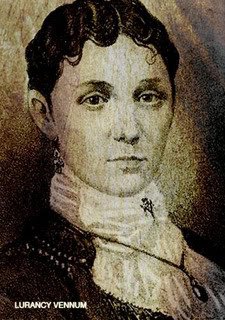
The National Library of Medicine now preserves a digitized copy, allowing the first account to be read page by page. The faces of Lurancy and Mary appeared within the publication, placing the two lives side by side.
Not a Demon, but an Occupation
Watseka belongs in Demonic & Paranormal Stories even though the controlling presence was described as benevolent. The terror lies not in evil intention but in the permeability of identity. A living girl’s name, family and memory vanished while another life appeared through her.
The Roffs welcomed Mary because they loved the person who returned. The Vennums faced the opposite truth: their daughter was physically present but did not know them. The miracle of one family was the disappearance of another’s child.
That emotional contradiction gives the case exceptional depth. No exorcist drove Mary away. Everyone waited for the promised departure, uncertain which identity the body would hold when the morning ended.
The Borrowed Body
The central phrase in Stevens’s narrative is simple and unforgettable: a daughter and sister in a borrowed body. It captures the intimacy and violation of the event at once. Mary appeared healthy, affectionate and useful; the body was not hers.
After 21 May, Lurancy continued her life, married and moved west. Mary remained dead. The period in the Roff household could not be repeated as ordinary family time, yet it was remembered as exactly that by those who accepted it.
Watseka endures because the case asks where a person resides. If memory, recognition, handwriting, affection and habit all change together, what remains of the original self? In 1878, two Illinois families believed they had watched the answer move through a fourteen-year-old girl’s eyes.
Mary’s Earlier Illness
The original narrative did not hide the disturbing history of Mary Roff’s first life. From childhood she suffered episodes that included pain, seizures, trance and periods of violence toward herself. Her family pursued medical help and moved in search of relief. At times she appeared to know when an attack was coming and prepared restraints to prevent injury.
She died in 1865 during a severe episode. The details made her return through Lurancy more complex. Mary was not remembered only as a peaceful dead daughter. She had herself lived near the threshold of altered consciousness, and the Roffs interpreted that history as evidence that she understood how to rescue another afflicted girl.
In the Spiritualist reading, the former sufferer became a guardian. The condition that had isolated Mary in life gave her special knowledge after death. She entered Lurancy not to torment but to drive out the hostile controls and restore the body.
The Test of the Old Neighbours
Visitors from Mary’s lifetime were introduced without explanation. The girl reportedly recognized them, used names associated with earlier years and recalled incidents unknown to the Vennums. Some had changed in appearance during the twelve years since Mary’s death.
The Roffs considered these encounters stronger than recognition of the immediate family. A household could unintentionally provide clues; an old neighbour arriving after years away offered fewer. Stevens accumulated such episodes to show that the personality carried a network of social memory.
She also responded to places. Rooms and routes seemed familiar. Objects awakened specific associations. The identity was therefore spatial as well as verbal: the borrowed body moved through Mary’s former world as if returning rather than discovering it.
The Return of Lurancy in Brief Intervals
Before the final change, Lurancy occasionally appeared for minutes or hours. Her expression altered; her knowledge shifted; the Roff home became unfamiliar. These intervals were treated as the original girl approaching the surface of her own body.
The contrast allowed observers to compare two identities without waiting months. Mary knew the Roffs and treated the Vennums distantly. Lurancy recognized her parents and regarded Mary’s family as acquaintances. The physical voice remained similar, but vocabulary, gesture and emotional attachment changed.
For both families, each transition carried uncertainty. A brief return could become permanent without warning. Mary might disappear before farewell; Lurancy might retreat again. The body became a clock whose next movement nobody controlled.
Lurancy’s Life After Watseka
After the reported restoration, Lurancy remained well enough to resume ordinary life. She later married George Binning and moved to Kansas. Advocates of the case emphasized that the improvement persisted, presenting the episode not merely as identity replacement but as cure.
She did not spend the remainder of her life continuously performing the Watseka Wonder for the public. The most intense record remained confined to ten months of illness and the three-month residence with the Roffs. That limited period helped preserve its shape.
The quiet later life also deepens the mystery. The personality called Mary did not gradually merge into Lurancy or become a permanent public medium. It arrived, lived as a daughter, announced departure and left.
Sources and Further Reading
- E. Winchester Stevens, The Watseka Wonder, 1878.
- Supplementary statement of Asa B. Roff and contemporary testimonials printed with the original narrative.
- National Library of Medicine digitized edition of the 1878 pamphlet.
- Contemporary Illinois newspaper reporting on Lurancy Vennum and the Roff family.
- Later psychical-research and historical discussions of the Watseka case.