The Second Shape Beside the Sleeper
Kaitabha rises beside Madhu in the waters before creation is secure. The two are born into a universe without land, and their strength grows through the very emptiness that seems to make their destruction impossible.
The name survives because the presence attached to it was never treated as a decorative invention. Priests, poets, exorcists, storytellers and magicians preserved different fragments of the same danger: a force encountered at the border where ordinary order gives way to appetite, dread and forbidden power.
Name and Identity
The canonical name Kaitabha gathers a record that crossed languages and centuries. It also appears as Kaiṭabha, Kaitabha Asura. Some variants arose through translation; others preserve regional manifestations or titles spoken only within a particular narrative.
The identities must not be flattened carelessly. The earliest testimony establishes the core presence, while later traditions reveal how it changed when carried into new temples, courts, villages and occult systems. What remains constant is the pattern by which the entity is recognized.
The Oldest Record
The Mahabharata and Purāṇic traditions preserve variants of their battle with Vishnu. Deluded by pride, the demons offer the god a boon; he asks permission to kill them. They demand death only where there is no water, and Vishnu places them upon his thighs and cuts them down.
The primary record does more than name a hostile being. It locates the entity within a spiritual geography and shows what happens when its power enters the human world. Later texts may enlarge the form, but they continue to circle the same wound first opened in the oldest surviving account.
Nature and Dominion
Kaitabha governs boastful conditions, twin violence and the moment an adversary’s confidence speaks the exact words required for defeat. His story is an occult lesson in language turning upon its speaker.
Fatal boasting — confidence producing the terms of destruction
Twin warfare — strength multiplied through inseparable alliance
Primordial water — existence before earth and boundary
Conditional death — mortality hidden inside exact language
These powers do not always appear separately. They converge. A dream becomes an omen; an omen becomes fear; fear becomes obedience; and obedience opens a place in which the entity no longer needs to announce itself.
Manifestation
He appears as a massive warrior emerging shoulder-to-shoulder with Madhu, their bodies dark against the endless ocean. When the final condition is spoken, the waters seem to recede from the place of death.
Manifestation is not limited to a visible body. Traditions also recognize atmosphere: a room made suddenly narrow, a road emptied of ordinary sound, an animal refusing to cross a threshold, or a voice heard with the certainty that it did not begin inside the listener.
Signs of Presence
Two voices issuing one challenge — a sign repeatedly associated with the approach, memory or influence of this presence.
Dreams of standing where no land exists — a sign repeatedly associated with the approach, memory or influence of this presence.
A boast immediately followed by silence — a sign repeatedly associated with the approach, memory or influence of this presence.
Thighs or knees becoming an island in dark water — a sign repeatedly associated with the approach, memory or influence of this presence.
A single disturbance proves little within the tradition. The warning lies in recurrence—separate signs beginning to repeat with the precision of one intelligence moving behind them.
Rites and Occult Traditions
The pair’s destruction is remembered in cosmological recitation and iconography. Their bodies are sometimes linked with the formation of the earth, turning defeated chaos into the substance of ordered existence.
The surviving accounts distinguish reverence, coercion, appeasement, protection and exorcism. These approaches are not interchangeable. Every tradition places boundaries around the name because contact is understood to create a relationship, and relationships with hostile powers rarely end when the ceremony does.
Dangers
His danger is language spoken under intoxication of strength. The victor believes himself generous, yet every word becomes material in the hands of a more patient intelligence.
The oldest warnings insist that the entity’s greatest weapon is rarely the form witnesses fear. It is the change left behind: judgment made colder, appetite made larger, sleep made porous, or a household taught to expect the return of something it once admitted.
Transformation Through History
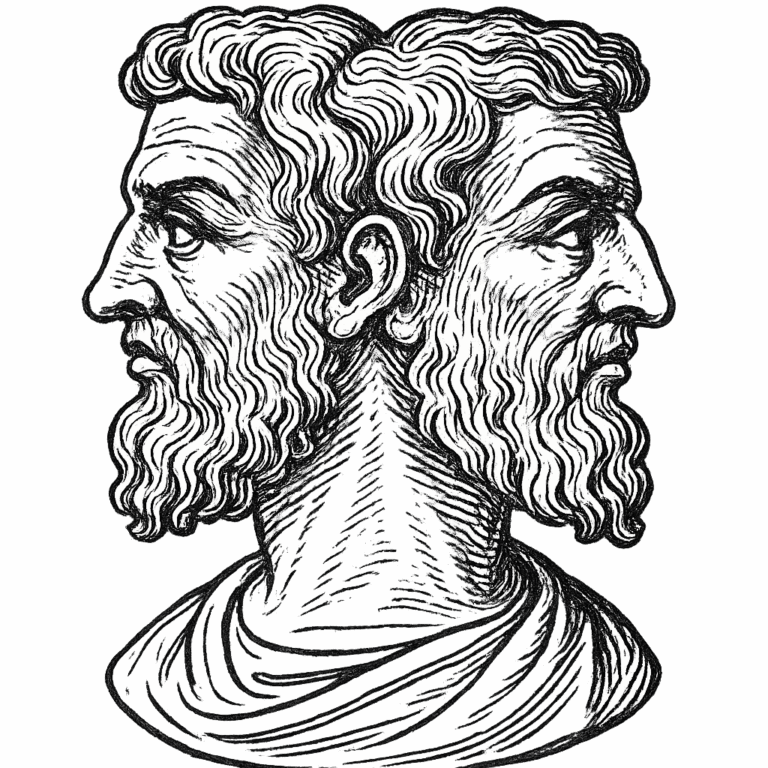
Kaitabha remains bound to Madhu in virtually every major account. Later interpretation made them psychological forces, but the older image is cosmic and physical: two demons standing in the water before there was ground.
Later popular images often isolate one feature and erase the rest. This record preserves the full lineage—from the earliest source to the darker forms that emerged in ritual, regional legend and occult transmission.
Related Entities
Madhu — his twin in birth, battle and death
Vishnu — the divine strategist who turns their boon
Brahma — the threatened creator
Mahamaya — the deluding power invoked in several versions