Add MS 36674 is not one grimoire. It is something more revealing: an archive of papers in which English ceremonial magic, learned occult philosophy, practical charms and witchcraft accusation were gathered under one binding. Its folios move from the Key of Solomon to Simon Forman, from John Dee’s angelic monarchy to legal records surrounding suspected witches. The volume shows forbidden knowledge not as a separate world, but as a network crossing libraries, courts and private notebooks.
A Composite Volume, Not a Single Work
British Library Add MS 36674 contains papers dating mainly from the sixteenth and seventeenth centuries. The pieces were brought together after their original use, probably within the library associated with the jurist and collector John Somers.
Composite manuscripts preserve accidental conversations. Texts created by different people and for different purposes become neighbours, allowing a later owner to define a category through arrangement.
Here the category is broad and unstable: magic, visionary experiment, antiquarian curiosity, legal evidence and dangerous knowledge.
This section matters within the history of Add MS 36674 because it joins a textual claim to a recoverable practice of copying, ownership or institutional control. The archive cannot verify every promised supernatural effect, but it can establish who preserved the words, how the material was arranged and which later traditions inherited its structure.
The surviving evidence must be read at the level of the individual witness. Titles migrate, manuscripts combine unrelated works, and later editors normalize spellings that a copyist left unstable. Shelf mark, folio and date are therefore not decorative citations; they are the controls that keep a famous occult name attached to a real object.
The Key of Knowledge and Solomon’s Name
The volume includes a text described as the Key of Knowledge, related to the Clavicula Salomonis tradition. It preserves the Solomonic concern with tools, circles, prayers and authority over spirits.
Its presence demonstrates that English readers did not receive the Key of Solomon only through modern printed editions. Manuscript versions circulated in private libraries and changed as they were translated and copied.
The folios turn a legendary book into an English archival fact. Solomon’s name sits inside a volume whose later owners can be identified.
This section matters within the history of Add MS 36674 because it joins a textual claim to a recoverable practice of copying, ownership or institutional control. The archive cannot verify every promised supernatural effect, but it can establish who preserved the words, how the material was arranged and which later traditions inherited its structure.
Later occult publishing often produces a clean, continuous text from several damaged or divergent witnesses. That work can make a tradition readable, but it may conceal the decisions of editors. Comparing the edition with a catalogue and image restores omissions, marginalia, layout and the physical sequence in which a historical reader encountered the material.
Agrippa, the Heptameron and Learned Extraction
Other sections contain extracts associated with Heinrich Cornelius Agrippa and the Heptameron tradition. Some papers are connected with the learned physician John Caius and the circulation of continental occult philosophy in England.
Extracting was a form of authorship. A reader copied selected passages, omitting surrounding arguments and creating a practical dossier adapted to local interests.
The archive therefore records not only what books existed, but what English readers chose to remove from them and keep close.
This section matters within the history of Add MS 36674 because it joins a textual claim to a recoverable practice of copying, ownership or institutional control. The archive cannot verify every promised supernatural effect, but it can establish who preserved the words, how the material was arranged and which later traditions inherited its structure.
Claims of great antiquity require special care. A manuscript may preserve old material while being physically much later, and a legendary attribution may express authority rather than authorship. Separating date of object, date of textual layer and mythical origin produces a stronger history than accepting or dismissing the tradition as a whole.
Simon Forman’s Book of Magic
Add MS 36674 contains a magical book associated with Simon Forman, begun according to its record on 22 March 1567. Forman later became famous as an astrologer and physician whose casebooks documented the lives of thousands of clients.
The early magical material reveals a practitioner before the mature professional archive. Astrology, ritual experiment, medicine and personal ambition developed together rather than as separate careers.
Forman’s presence gives the volume a human pulse. The pages belong not only to traditions, but to a known reader who repeatedly tested the boundary between learned service and forbidden art.
This section matters within the history of Add MS 36674 because it joins a textual claim to a recoverable practice of copying, ownership or institutional control. The archive cannot verify every promised supernatural effect, but it can establish who preserved the words, how the material was arranged and which later traditions inherited its structure.
Every act of copying is evidence of valuation. Paper, ink and time were spent because someone considered the material useful, dangerous, prestigious or worthy of preservation. Even where performance cannot be demonstrated, transmission itself is a documented historical action with social and intellectual consequences.
Visions, Charms and Practical Needs
The manuscript includes visionary accounts, charms and shorter operations alongside large ceremonial systems. These pieces address immediate needs: protection, healing, knowledge, recovery and influence.
Short charms are easy to overlook because they lack the grandeur of a spirit catalogue. Yet they may have been used more often, copied onto loose papers and carried close to the body.
The volume refuses a simple division between elite ceremonial magic and popular practice. Both inhabit the same archive.
This section matters within the history of Add MS 36674 because it joins a textual claim to a recoverable practice of copying, ownership or institutional control. The archive cannot verify every promised supernatural effect, but it can establish who preserved the words, how the material was arranged and which later traditions inherited its structure.
Images must also be identified precisely. A related seal, later title page or parallel manuscript can illuminate the subject, but it should not be called the exact folio when it is not. This article distinguishes contextual imagery from direct facsimile so that atmosphere never replaces provenance.
John Dee’s Heptarchia Mystica
At folio 167 begins John Dee’s Compendium Heptarchiae Mysticae, a summary of the angelic kings and ministers revealed during his spiritual actions. The system organizes seven planetary or regal powers under a sacred monarchy.
Dee recorded names, seals, furniture and speeches with exceptional care. His angelic archive claimed Christian purpose, but its methods and ambitions placed it under enduring suspicion.
Bound beside other magical papers, the Heptarchia loses the isolation sometimes created by biography. It becomes part of a wider English ecology of experiment.
This section matters within the history of Add MS 36674 because it joins a textual claim to a recoverable practice of copying, ownership or institutional control. The archive cannot verify every promised supernatural effect, but it can establish who preserved the words, how the material was arranged and which later traditions inherited its structure.
The surviving evidence must be read at the level of the individual witness. Titles migrate, manuscripts combine unrelated works, and later editors normalize spellings that a copyist left unstable. Shelf mark, folio and date are therefore not decorative citations; they are the controls that keep a famous occult name attached to a real object.
The Sigillum Dei and Material Revelation
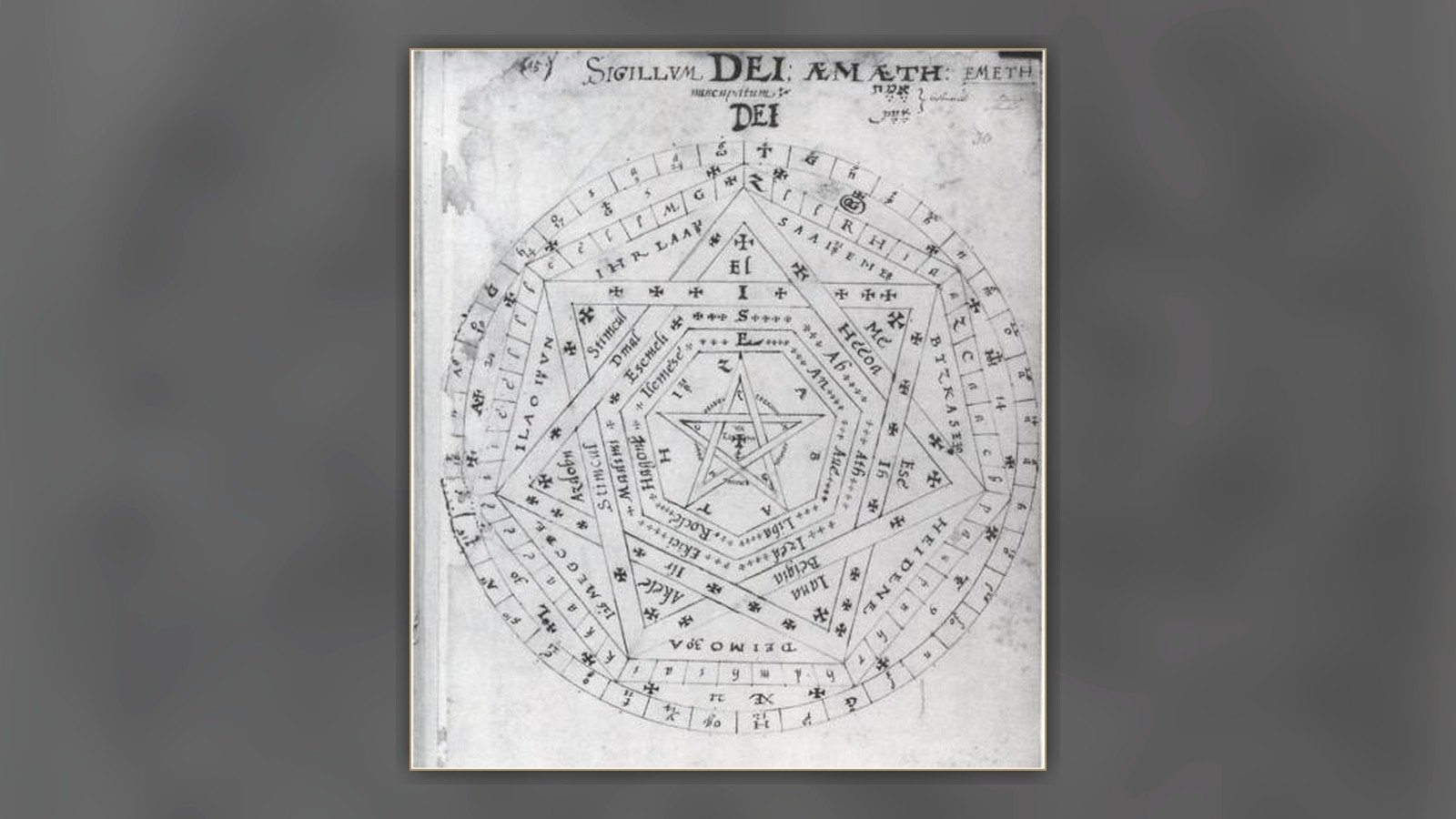
Dee’s system employed the Sigillum Dei Aemeth, a complex wax seal carrying divine and angelic names. Versions survive in manuscripts and physical objects. The seal placed geometry beneath the instruments of communication.
The diagram shown with this article comes from Sloane MS 3188 rather than Add MS 36674 itself; it is used because it represents the same Dee tradition contained in the volume. This distinction is stated to avoid false identification.
Accuracy in image captioning is essential. A related object can illuminate a text without being passed off as the exact folio under discussion.
This section matters within the history of Add MS 36674 because it joins a textual claim to a recoverable practice of copying, ownership or institutional control. The archive cannot verify every promised supernatural effect, but it can establish who preserved the words, how the material was arranged and which later traditions inherited its structure.
Later occult publishing often produces a clean, continuous text from several damaged or divergent witnesses. That work can make a tradition readable, but it may conceal the decisions of editors. Comparing the edition with a catalogue and image restores omissions, marginalia, layout and the physical sequence in which a historical reader encountered the material.
Witchcraft Accusations Enter the Binding
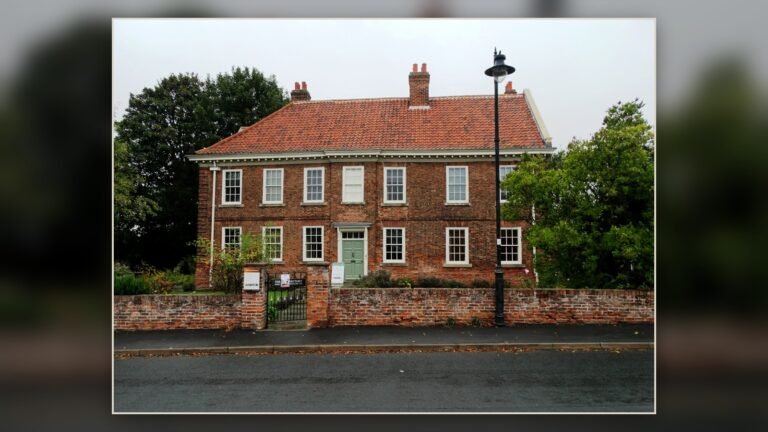
The later papers include material connected with witchcraft allegations, including records associated with northern English cases. Here magic is no longer only a text sought by practitioners; it becomes evidence interpreted by officials.
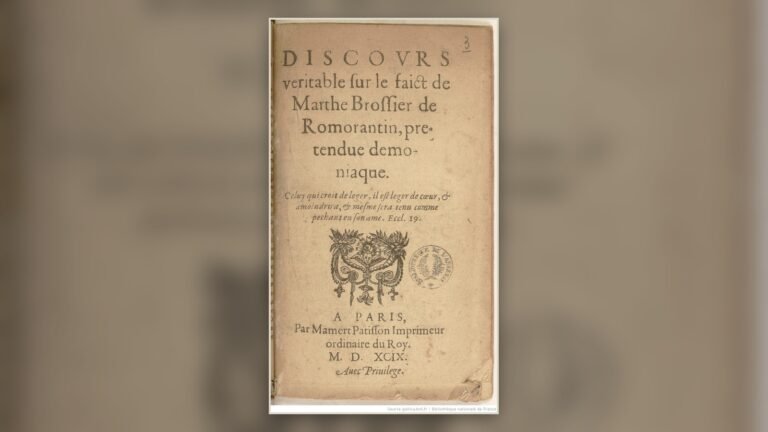
Legal documents transform words and objects by context. A charm copied for protection can be redescribed as proof of malefic intent when placed in a deposition or prosecution file.
The volume therefore binds both sides of forbidden knowledge: the people who sought power and the institutions that named it criminal.
This section matters within the history of Add MS 36674 because it joins a textual claim to a recoverable practice of copying, ownership or institutional control. The archive cannot verify every promised supernatural effect, but it can establish who preserved the words, how the material was arranged and which later traditions inherited its structure.
Claims of great antiquity require special care. A manuscript may preserve old material while being physically much later, and a legendary attribution may express authority rather than authorship. Separating date of object, date of textual layer and mythical origin produces a stronger history than accepting or dismissing the tradition as a whole.
How Collectors Created an Occult Archive
Elias Ashmole and other antiquarian collectors preserved parts of the material before the volume reached a major library. Collection could rescue papers from destruction while stripping them from their original order.
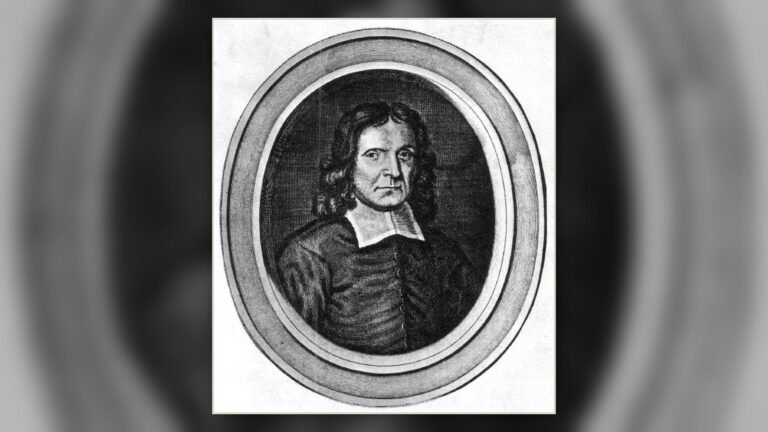
Annotations by readers such as Gabriel Harvey add further layers. A margin can record skepticism, fascination or attempted classification long after the original text was written.
Add MS 36674 is ultimately a history of custody. Its greatest revelation is that forbidden books survive because someone repeatedly decides not to destroy them.
This section matters within the history of Add MS 36674 because it joins a textual claim to a recoverable practice of copying, ownership or institutional control. The archive cannot verify every promised supernatural effect, but it can establish who preserved the words, how the material was arranged and which later traditions inherited its structure.
Every act of copying is evidence of valuation. Paper, ink and time were spent because someone considered the material useful, dangerous, prestigious or worthy of preservation. Even where performance cannot be demonstrated, transmission itself is a documented historical action with social and intellectual consequences.
The Book as Historical Evidence
The enduring power of Add MS 36674 comes from the meeting of claim and object. A legendary author, celestial teacher or infernal hierarchy may dominate the title, but the historical work begins with paper, parchment, handwriting, type, pigment, binding and custody. These features identify when a witness could have been made and how it passed from one set of hands to another.
Provenance also changes meaning. A ritual text in a private notebook, a confiscated bundle in a court file and the same leaves in a national library are not socially identical objects. Each setting imposes a new interpretation: tool, evidence, curiosity, pathology, heritage or research source. Forbidden history is the sequence of those transformations.
The featured image used here is an authentic historical reproduction connected directly to the subject or, where explicitly stated, to the precise manuscript tradition discussed. It has been framed for a modern 16:9 website format without replacing the central archival image. Credit and reuse status are recorded in the package ledger.
What the Archive Refused to Lose
Inside Add MS 36674, England’s Archive of Forbidden Magic ultimately survives because prohibition never operated alone. Copyists, collectors, physicians, clergy, defendants, censors and librarians all participated in transmission, sometimes while condemning the material they preserved. Their motives were different, but the cumulative result is a record that can still be examined rather than merely repeated as legend.
The most responsible occult history does not drain mystery from the source. It replaces vague mystery with exact strangeness: a named shelf mark, an unexpected language, a corrected spirit name, an erased line, a later hand in the margin, a printed prohibition or a diagram copied by someone whose identity has disappeared. These details are darker than invention because they belong to the surviving object.
Reading the Surviving Witnesses
Researchers approaching Add MS 36674 should separate the physical witness from the modern title used to group it. Catalogue descriptions establish dimensions, support, script, foliation and the works bound before and after the relevant text. Those details often reveal whether the item was planned as a coherent book or assembled from papers with independent histories.
Transcription creates another layer. Unfamiliar names can be altered by a single misread letter, especially when Greek, Hebrew, Latin, French, German or invented ritual syllables cross scripts. Variant spelling should therefore be recorded rather than silently corrected, because the history of error is part of the transmission of Add MS 36674.
Digital access has transformed this field by allowing a reader to compare image and edition across institutions. It has not abolished the need for caution. Colour balance, cropped edges, missing blanks and online metadata can affect interpretation, while some composite volumes remain only partially photographed.
The strongest account combines primary witness, institutional catalogue and specialist scholarship. Popular retellings are useful for tracing cultural memory, but they should not be allowed to replace the source that created the story. This hierarchy of evidence gives the narrative depth without turning it into a debunking exercise.
Researchers approaching Add MS 36674 should separate the physical witness from the modern title used to group it. Catalogue descriptions establish dimensions, support, script, foliation and the works bound before and after the relevant text. Those details often reveal whether the item was planned as a coherent book or assembled from papers with independent histories.
Transcription creates another layer. Unfamiliar names can be altered by a single misread letter, especially when Greek, Hebrew, Latin, French, German or invented ritual syllables cross scripts. Variant spelling should therefore be recorded rather than silently corrected, because the history of error is part of the transmission of Add MS 36674.
Digital access has transformed this field by allowing a reader to compare image and edition across institutions. It has not abolished the need for caution. Colour balance, cropped edges, missing blanks and online metadata can affect interpretation, while some composite volumes remain only partially photographed.
The strongest account combines primary witness, institutional catalogue and specialist scholarship. Popular retellings are useful for tracing cultural memory, but they should not be allowed to replace the source that created the story. This hierarchy of evidence gives the narrative depth without turning it into a debunking exercise.
Researchers approaching Add MS 36674 should separate the physical witness from the modern title used to group it. Catalogue descriptions establish dimensions, support, script, foliation and the works bound before and after the relevant text. Those details often reveal whether the item was planned as a coherent book or assembled from papers with independent histories.