Johann Weyer’s great book argued that many accused witches were deceived, ill or powerless before the Devil. Yet inside that campaign against persecution, he printed an infernal catalogue: names, ranks, appearances, powers and legions arranged beneath the ironic title Pseudomonarchia Daemonum, the false monarchy of demons. The contradiction made the list more durable than many manuals written by believers.
Johann Weyer, Physician of the Unseen
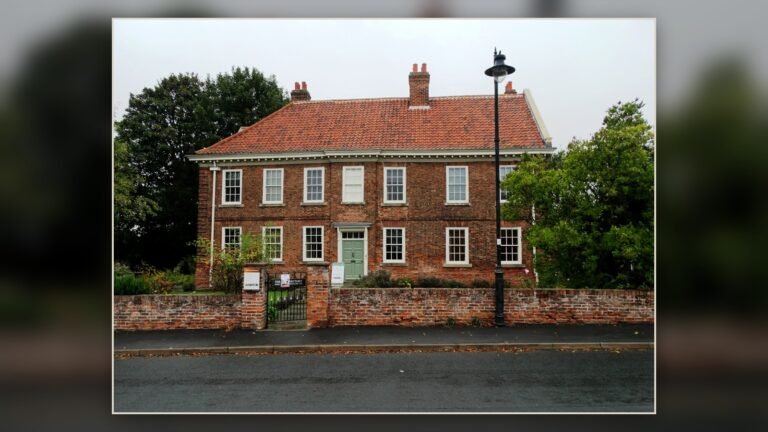
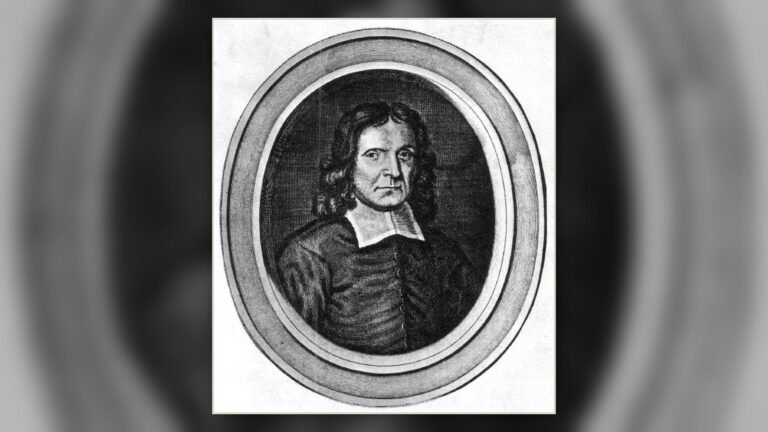
Johann Weyer was born in the early sixteenth century and trained as a physician. He also spent time in the circle of Heinrich Cornelius Agrippa, whose reputation joined learned magic, theology and humanist controversy.
Weyer’s medical experience shaped his response to witchcraft trials. He argued that vulnerable people, especially melancholy women, could be deceived by the Devil without possessing the powers claimed by prosecutors.
His position was not modern secular disbelief. Demons remained real in his worldview, but the legal conclusions drawn from accusations were often false and lethal.
This section matters within the history of Pseudomonarchia Daemonum because it joins a textual claim to a recoverable practice of copying, ownership or institutional control. The archive cannot verify every promised supernatural effect, but it can establish who preserved the words, how the material was arranged and which later traditions inherited its structure.
The surviving evidence must be read at the level of the individual witness. Titles migrate, manuscripts combine unrelated works, and later editors normalize spellings that a copyist left unstable. Shelf mark, folio and date are therefore not decorative citations; they are the controls that keep a famous occult name attached to a real object.
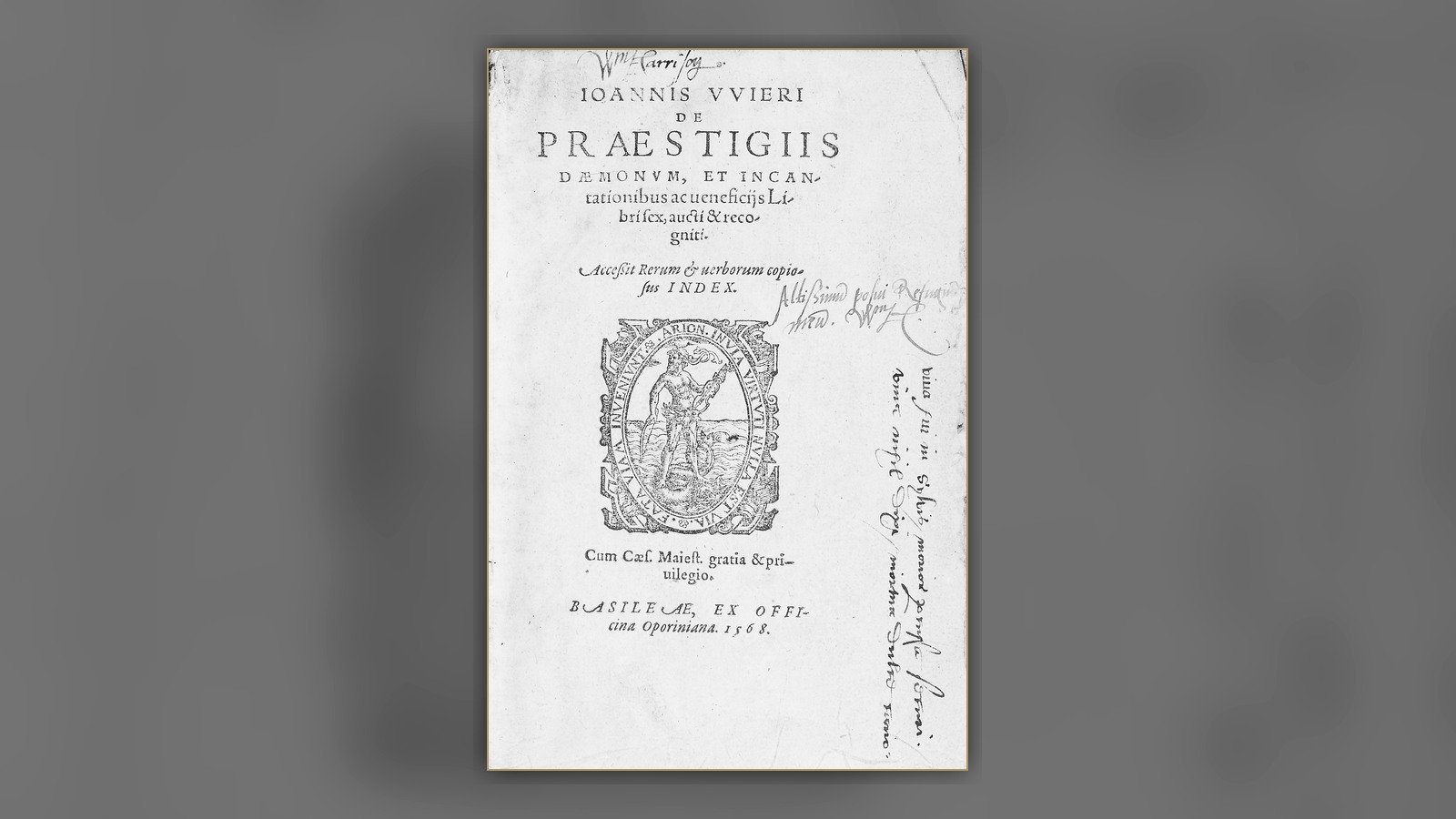
De Praestigiis Daemonum
Weyer published De praestigiis daemonum in 1563 and expanded it through later editions. The work attacked demonological assumptions used to justify torture and execution.
He distinguished between learned magicians, whom he treated harshly, and alleged witches, whom he regarded as deluded or afflicted. The distinction reveals the limits of his compassion but also challenged the machinery of mass prosecution.
The book entered one of Europe’s fiercest debates: whether confession under fear proved an impossible crime.
This section matters within the history of Pseudomonarchia Daemonum because it joins a textual claim to a recoverable practice of copying, ownership or institutional control. The archive cannot verify every promised supernatural effect, but it can establish who preserved the words, how the material was arranged and which later traditions inherited its structure.
Later occult publishing often produces a clean, continuous text from several damaged or divergent witnesses. That work can make a tradition readable, but it may conceal the decisions of editors. Comparing the edition with a catalogue and image restores omissions, marginalia, layout and the physical sequence in which a historical reader encountered the material.
The False Monarchy Appears
Pseudomonarchia Daemonum appeared as an appendix in later editions of Weyer’s work. Its title frames the hierarchy as counterfeit sovereignty beneath divine power.
The catalogue lists sixty-nine spirits in its commonly cited form, not the seventy-two later standardized by the Ars Goetia. Entries give rank, appearance, office and command over legions.
By printing the list, Weyer exposed material associated with ritual magicians even while condemning their practice.
This section matters within the history of Pseudomonarchia Daemonum because it joins a textual claim to a recoverable practice of copying, ownership or institutional control. The archive cannot verify every promised supernatural effect, but it can establish who preserved the words, how the material was arranged and which later traditions inherited its structure.
Claims of great antiquity require special care. A manuscript may preserve old material while being physically much later, and a legendary attribution may express authority rather than authorship. Separating date of object, date of textual layer and mythical origin produces a stronger history than accepting or dismissing the tradition as a whole.
A Manuscript Behind the Printed List
Weyer stated that he had obtained the material from a manuscript associated with the Liber Officiorum Spirituum tradition. The exact source does not survive in a form that resolves every question.
Comparison with the Livre des Esperitz and other catalogues reveals shared names and offices. The evidence points to a family of circulating spirit lists rather than one direct line from a single original.
Print preserved the catalogue while concealing part of its manuscript ancestry.
This section matters within the history of Pseudomonarchia Daemonum because it joins a textual claim to a recoverable practice of copying, ownership or institutional control. The archive cannot verify every promised supernatural effect, but it can establish who preserved the words, how the material was arranged and which later traditions inherited its structure.
Every act of copying is evidence of valuation. Paper, ink and time were spent because someone considered the material useful, dangerous, prestigious or worthy of preservation. Even where performance cannot be demonstrated, transmission itself is a documented historical action with social and intellectual consequences.
Kings, Dukes, Presidents and Legions
The infernal hierarchy mirrors aristocratic and military government. Spirits are kings, dukes, marquises, counts, knights and presidents, each commanding numbered companies.
This organization makes Hell resemble the courts and armies of the readers’ world. The supernatural becomes a distorted monarchy whose powers can be indexed.
The parody is theological and practical at once: the spirits possess offices, but their kingdom is false.
This section matters within the history of Pseudomonarchia Daemonum because it joins a textual claim to a recoverable practice of copying, ownership or institutional control. The archive cannot verify every promised supernatural effect, but it can establish who preserved the words, how the material was arranged and which later traditions inherited its structure.
Images must also be identified precisely. A related seal, later title page or parallel manuscript can illuminate the subject, but it should not be called the exact folio when it is not. This article distinguishes contextual imagery from direct facsimile so that atmosphere never replaces provenance.
Knowledge Promised by Demons
Many entries promise instruction in sciences, languages, philosophy, astronomy, rhetoric or the properties of plants and stones. Others locate treasure, reconcile enemies, alter reputation or produce destruction.
The list maps forbidden desire. Intellectual ambition sits beside greed, love, vengeance and political power, suggesting that demonic service begins with ordinary human wants enlarged beyond lawful means.
The catalogue endures because it gives each desire a name and face.
This section matters within the history of Pseudomonarchia Daemonum because it joins a textual claim to a recoverable practice of copying, ownership or institutional control. The archive cannot verify every promised supernatural effect, but it can establish who preserved the words, how the material was arranged and which later traditions inherited its structure.
The surviving evidence must be read at the level of the individual witness. Titles migrate, manuscripts combine unrelated works, and later editors normalize spellings that a copyist left unstable. Shelf mark, folio and date are therefore not decorative citations; they are the controls that keep a famous occult name attached to a real object.
What Weyer Omitted
The original printed Pseudomonarchia does not provide the full seal system familiar from modern Goetia editions. Later traditions attached or developed graphic identities for spirits whose earlier entries were primarily verbal.
Weyer also omitted some figures that appear in related catalogues and included others under variant spellings. Copying across languages transformed names into new forms.
These differences matter. A modern chart of seventy-two sealed demons should not be projected backward onto Weyer’s text.
This section matters within the history of Pseudomonarchia Daemonum because it joins a textual claim to a recoverable practice of copying, ownership or institutional control. The archive cannot verify every promised supernatural effect, but it can establish who preserved the words, how the material was arranged and which later traditions inherited its structure.
Later occult publishing often produces a clean, continuous text from several damaged or divergent witnesses. That work can make a tradition readable, but it may conceal the decisions of editors. Comparing the edition with a catalogue and image restores omissions, marginalia, layout and the physical sequence in which a historical reader encountered the material.
From Weyer to the Ars Goetia
The seventeenth-century Ars Goetia drew extensively on Weyer’s catalogue while reorganizing it into seventy-two spirits, adding seals and framing the material within a Solomonic ritual manual.
Names, ranks and offices often remain recognizable, but sequence and detail change. The Goetia is a descendant and reconstruction, not a facsimile of Pseudomonarchia.
The transformation shows how a skeptical appendix could become a practitioner’s central book.
This section matters within the history of Pseudomonarchia Daemonum because it joins a textual claim to a recoverable practice of copying, ownership or institutional control. The archive cannot verify every promised supernatural effect, but it can establish who preserved the words, how the material was arranged and which later traditions inherited its structure.
Claims of great antiquity require special care. A manuscript may preserve old material while being physically much later, and a legendary attribution may express authority rather than authorship. Separating date of object, date of textual layer and mythical origin produces a stronger history than accepting or dismissing the tradition as a whole.
The Paradox That Preserved the Demons
Weyer printed the catalogue partly to reveal the absurdity and danger of magical pretension. Readers, however, could detach the appendix from his argument and use it as a sourcebook.
This is one of forbidden history’s sharpest reversals. Exposure intended as criticism can become transmission, and a medical defence of accused witches can preserve the bureaucracy of Hell.
Pseudomonarchia survives because its author did not merely say that demon lists existed. He placed one before the public in durable print.
This section matters within the history of Pseudomonarchia Daemonum because it joins a textual claim to a recoverable practice of copying, ownership or institutional control. The archive cannot verify every promised supernatural effect, but it can establish who preserved the words, how the material was arranged and which later traditions inherited its structure.
Every act of copying is evidence of valuation. Paper, ink and time were spent because someone considered the material useful, dangerous, prestigious or worthy of preservation. Even where performance cannot be demonstrated, transmission itself is a documented historical action with social and intellectual consequences.
The Book as Historical Evidence
The enduring power of Pseudomonarchia Daemonum comes from the meeting of claim and object. A legendary author, celestial teacher or infernal hierarchy may dominate the title, but the historical work begins with paper, parchment, handwriting, type, pigment, binding and custody. These features identify when a witness could have been made and how it passed from one set of hands to another.
Provenance also changes meaning. A ritual text in a private notebook, a confiscated bundle in a court file and the same leaves in a national library are not socially identical objects. Each setting imposes a new interpretation: tool, evidence, curiosity, pathology, heritage or research source. Forbidden history is the sequence of those transformations.
The featured image used here is an authentic historical reproduction connected directly to the subject or, where explicitly stated, to the precise manuscript tradition discussed. It has been framed for a modern 16:9 website format without replacing the central archival image. Credit and reuse status are recorded in the package ledger.
What the Archive Refused to Lose
Pseudomonarchia Daemonum and the Catalogue of Hell ultimately survives because prohibition never operated alone. Copyists, collectors, physicians, clergy, defendants, censors and librarians all participated in transmission, sometimes while condemning the material they preserved. Their motives were different, but the cumulative result is a record that can still be examined rather than merely repeated as legend.
The most responsible occult history does not drain mystery from the source. It replaces vague mystery with exact strangeness: a named shelf mark, an unexpected language, a corrected spirit name, an erased line, a later hand in the margin, a printed prohibition or a diagram copied by someone whose identity has disappeared. These details are darker than invention because they belong to the surviving object.
Reading the Surviving Witnesses
Researchers approaching Pseudomonarchia Daemonum should separate the physical witness from the modern title used to group it. Catalogue descriptions establish dimensions, support, script, foliation and the works bound before and after the relevant text. Those details often reveal whether the item was planned as a coherent book or assembled from papers with independent histories.
Transcription creates another layer. Unfamiliar names can be altered by a single misread letter, especially when Greek, Hebrew, Latin, French, German or invented ritual syllables cross scripts. Variant spelling should therefore be recorded rather than silently corrected, because the history of error is part of the transmission of Pseudomonarchia Daemonum.
Digital access has transformed this field by allowing a reader to compare image and edition across institutions. It has not abolished the need for caution. Colour balance, cropped edges, missing blanks and online metadata can affect interpretation, while some composite volumes remain only partially photographed.
The strongest account combines primary witness, institutional catalogue and specialist scholarship. Popular retellings are useful for tracing cultural memory, but they should not be allowed to replace the source that created the story. This hierarchy of evidence gives the narrative depth without turning it into a debunking exercise.
Researchers approaching Pseudomonarchia Daemonum should separate the physical witness from the modern title used to group it. Catalogue descriptions establish dimensions, support, script, foliation and the works bound before and after the relevant text. Those details often reveal whether the item was planned as a coherent book or assembled from papers with independent histories.
Transcription creates another layer. Unfamiliar names can be altered by a single misread letter, especially when Greek, Hebrew, Latin, French, German or invented ritual syllables cross scripts. Variant spelling should therefore be recorded rather than silently corrected, because the history of error is part of the transmission of Pseudomonarchia Daemonum.
Digital access has transformed this field by allowing a reader to compare image and edition across institutions. It has not abolished the need for caution. Colour balance, cropped edges, missing blanks and online metadata can affect interpretation, while some composite volumes remain only partially photographed.
The strongest account combines primary witness, institutional catalogue and specialist scholarship. Popular retellings are useful for tracing cultural memory, but they should not be allowed to replace the source that created the story. This hierarchy of evidence gives the narrative depth without turning it into a debunking exercise.
Researchers approaching Pseudomonarchia Daemonum should separate the physical witness from the modern title used to group it. Catalogue descriptions establish dimensions, support, script, foliation and the works bound before and after the relevant text. Those details often reveal whether the item was planned as a coherent book or assembled from papers with independent histories.
Transcription creates another layer. Unfamiliar names can be altered by a single misread letter, especially when Greek, Hebrew, Latin, French, German or invented ritual syllables cross scripts. Variant spelling should therefore be recorded rather than silently corrected, because the history of error is part of the transmission of Pseudomonarchia Daemonum.
Digital access has transformed this field by allowing a reader to compare image and edition across institutions. It has not abolished the need for caution. Colour balance, cropped edges, missing blanks and online metadata can affect interpretation, while some composite volumes remain only partially photographed.
The strongest account combines primary witness, institutional catalogue and specialist scholarship. Popular retellings are useful for tracing cultural memory, but they should not be allowed to replace the source that created the story. This hierarchy of evidence gives the narrative depth without turning it into a debunking exercise.