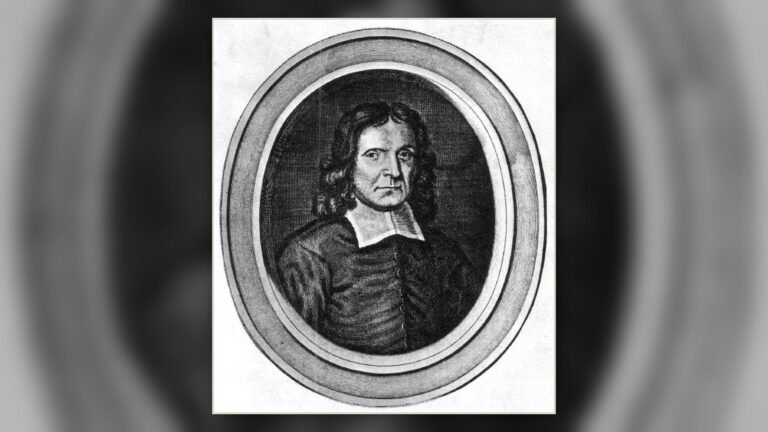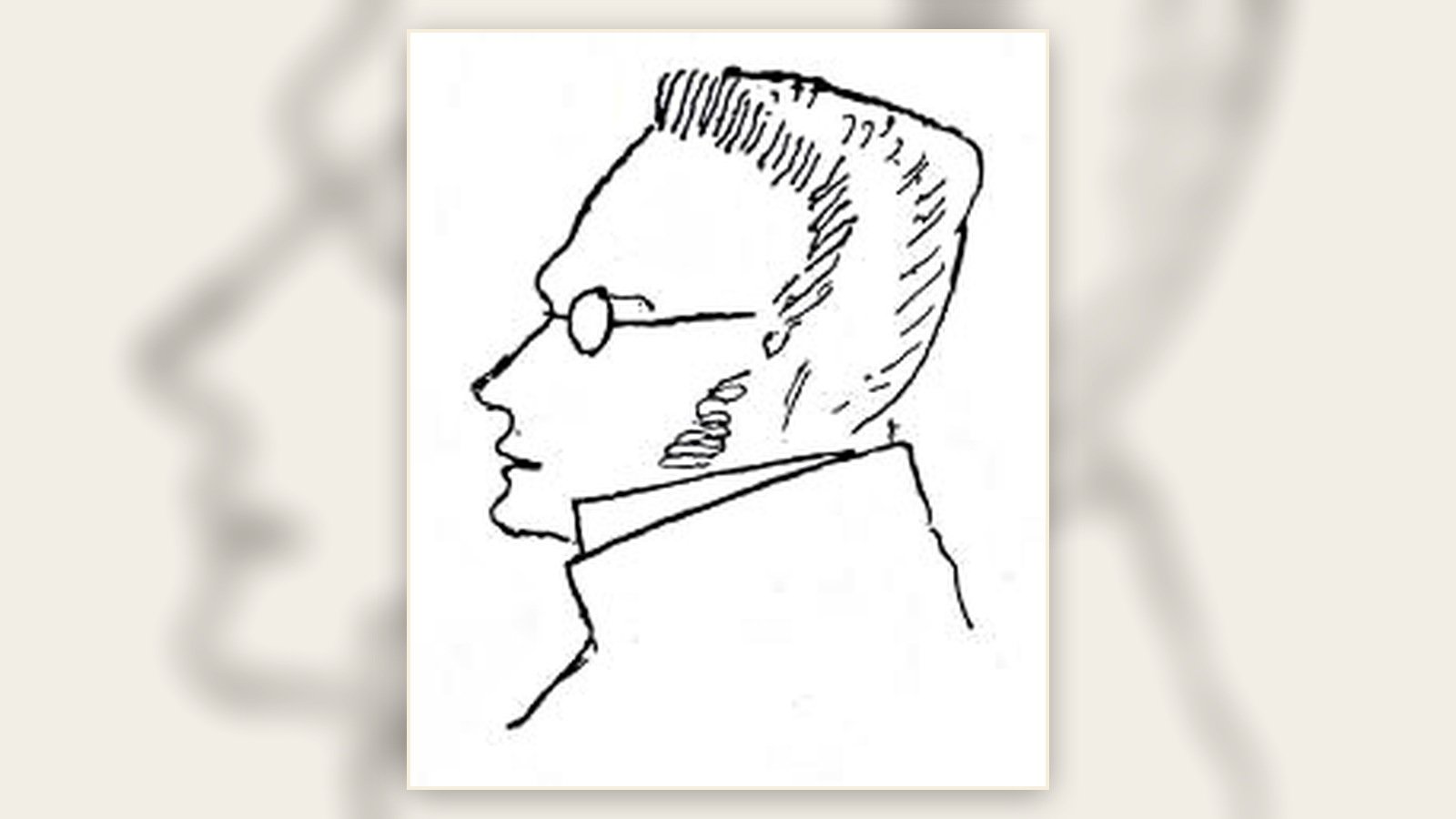
Almost no reliable portrait of Max Stirner survives. The face remembered today comes from a sketch by Friedrich Engels, one member of the radical Berlin circle Stirner unsettled. The absence suits a philosopher who refused every definition that turned the living person into an instance of a higher idea. In The Unique and Its Property, published in 1844 and long known in English as The Ego and Its Own, Stirner attacked God, state, humanity, morality and even fixed identity whenever they became sacred powers standing above the individual. His rebellion is more severe than atheism. It asks why the human being should continue kneeling after the altar has been renamed.
The Historical and Philosophical Problem
Stirner and the Sovereignty of the Self belongs to Young Hegelian Berlin, the collapse of religious authority, early socialism and radical individualist thought. Its central problem is Stirner’s attack on every abstraction that claims authority over the unique individual and his ideal of ownness as self-rule. The article follows historical reconstruction, close reading of Der Einzige, and engagement with modern philosophical scholarship and keeps one contradiction in view: the liberation of the self from sacred causes can expose domination, but it can also dissolve obligations that protect others from domination. The purpose is not to turn a literary or philosophical figure into an object of compulsory belief. It is to show how rebellion, knowledge and authority were argued through real texts and institutions.
The stakes concern whether autonomy can remain meaningful when no promise, moral law or shared human essence is finally binding. That question is larger than the original author or event because later readers inherited the symbol under different conditions. The history must therefore distinguish initial meaning, hostile accusation, sympathetic reception and modern appropriation while allowing them to illuminate one another.
Johann Caspar Schmidt and the Name Stirner
Max Stirner was the pen name of Johann Caspar Schmidt, born in Bayreuth in 1806 and educated in philosophy and theology. In Berlin he associated with Die Freien, a group of Young Hegelians that included Bruno Bauer and attracted Marx and Engels. The nickname Stirner referred to his high forehead. Biographical evidence is thin, and later accounts often romanticized his poverty and isolation. The scarcity matters because the philosophical “unique” cannot safely be reconstructed from anecdotes about the author’s private personality.
The section contributes to the radical egoist who treats ideas as instruments rather than masters. Cultural legacy is not evidence that later users recovered an unchanged secret tradition. It is evidence that an image or argument remained capable of organizing new conflicts. Transmission transforms, and the transformations themselves belong to history.
The Unique and Its Property
Der Einzige und sein Eigenthum appeared in 1844. The German title is difficult: Einzige means the unique one, while Eigentum means property and resonates with Eigenheit, ownness. Stirner’s book is polemical, theatrical and filled with wordplay. It does not proceed like a conventional treatise. Its style performs the refusal it advocates, breaking the authority of solemn philosophical language and forcing the reader to ask whether reason itself has become a sacred tribunal.
The conflict over whether autonomy can remain meaningful when no promise, moral law or shared human essence is finally binding also explains why the subject repeatedly crosses the boundary between literature and religion. A literary figure can become a spiritual emblem; a theological accusation can become a political identity. Accuracy requires following the passage rather than deciding in advance where the “real” meaning must reside.
Spooks and Sacred Abstractions
Stirner calls fixed ideas “spooks” when human creations acquire an independent authority over their creators. God is the obvious example, but secular modernity produces replacements: humanity, nation, society, morality, truth and revolution. A person sacrifices to these concepts as earlier believers sacrificed to divine command. The critique is not that words are unreal. It is that an abstraction becomes oppressive when the living individual must justify existence before it rather than use it for chosen purposes.
A darker implication is that authority often creates the adversary it fears. By forbidding a question, persecuting a book or demanding ritual assent, an institution gives dissent a shared symbol. Yet prohibition alone does not prove the dissenter correct. It proves only that power has entered the argument.
Against Feuerbach and Secular Religion
Ludwig Feuerbach argued that theology projects human qualities onto God and that emancipation returns those qualities to humanity. Stirner replies that “humanity” can become a new deity. The individual is again measured against an essence and condemned for failing to embody it. Secular humanism may therefore preserve the structure of religion after rejecting supernatural belief. Stirner’s adversarial force lies in following critique beyond the comforting point where the critic’s own highest value becomes exempt.
The individual reader is implicated as well. It is easy to admire defiance at a historical distance while avoiding the discipline of self-critique. The adversarial method becomes serious only when it tests cherished rebellion with the same severity used against inherited authority.
Ownness Rather Than a New Moral Law
Stirner’s positive term is ownness: being one’s own rather than being possessed by an external institution or an internalized ideal. Ownness is not a legal right granted by society. It is a practice of taking oneself back from powers that claim allegiance. The egoist may love, create, cooperate and sacrifice, but these acts remain their acts rather than duties owed to a sacred cause. The demand is radical because even voluntarily assumed commitments can become alien powers if treated as permanently binding.
This is why the subject belongs to dark philosophy rather than inspirational mythology. It asks what freedom costs, what knowledge fails to repair, and how a person acts after certainty has been broken. The darkness is not decoration; it is the absence of an innocent position.
Egoism Beyond Self-Interest
Stirnerian egoism is often mistaken for the calculation of material advantage. Yet Stirner mocks the miser enslaved by wealth and the person dragged by appetite. A self ruled by money, desire or ambition is not its own. Egoism in the stronger sense is self-rule, including distance from one’s own obsessions. This makes the doctrine psychologically more complex than crude selfishness, though it does not remove its moral dangers.
The historical value of egoism beyond self-interest is that it exposes Stirner’s attack on every abstraction that claims authority over the unique individual and his ideal of ownness as self-rule. Later summaries often preserve the dramatic conclusion and lose the route by which it was reached. Restoring publication, audience and argument makes the subject more disturbing rather than less: the symbol was produced through real conflicts over whether autonomy can remain meaningful when no promise, moral law or shared human essence is finally binding.
The Union of Egoists
Stirner does not imagine only isolated individuals. He sketches a union of egoists: a fluid association maintained because participants continue to find value in it, not because the union becomes sacred. The model opposes society understood as a fixed body demanding sacrifice. Cooperation is possible, but allegiance is revocable. Critics ask whether trust, care and long-term projects can survive if every promise remains subordinate to present will. Stirner offers provocation more than institutional design.
This stage also sharpens the central tension: the liberation of the self from sacred causes can expose domination, but it can also dissolve obligations that protect others from domination. The opposition cannot be resolved by declaring one side enlightened and the other benighted. The archive shows intelligence, fear, self-interest and sincere conviction operating across the conflict. A serious adversarial reading keeps those mixed motives visible.
Property, Power and the World
Egoistic property is not identical with legal private property. It concerns what a person can appropriate, use or make their own through power. This language deliberately strips ownership of moral sanctity, but it can also appear to justify domination by the strong. Stirner’s point is that legal rights are enforced relations rather than eternal truths. The unresolved question is whether exposing that fact creates space for freer relations or merely removes reasons to restrain exploitation.
The material should be read through historical reconstruction, close reading of Der Einzige, and engagement with modern philosophical scholarship. Primary language establishes what the author actually constructed; reception shows how the work escaped its first context; later movements reveal which elements became usable symbols. None of these layers may silently replace the others.
Marx, Anarchism and the Afterlife of Stirner
Marx and Engels devoted a vast satirical attack to “Saint Max” in The German Ideology, evidence that Stirner disturbed the Young Hegelian field even when later Marxism minimized him. Individualist anarchists, existentialists and anti-authoritarian writers found different uses in his work. Influence is difficult to establish and often exaggerated. Stirner’s clearest legacy is methodological: whenever a movement declares a final sacred cause, the unique one asks who is being sacrificed to it.
The most common distortion is equating Stirnerian egoism with ordinary greed, psychological selfishness or simple nihilism. That simplification removes the ethical pressure from the subject by making judgment automatic. The original work is stronger because it allows attraction and danger to occupy the same scene, forcing the reader to decide without the protection of a slogan.
Deeper Questions
Stirner’s critique resembles Luciferian thought when illumination means refusal to let inherited names command the self. Yet he would likely reject “Luciferianism” the moment it became another identity demanding loyalty. The symbol must remain owned by the individual rather than owning the individual.
The doctrine’s ethical weakness is not accidental. Stirner denies that universal obligation can bind the unique. Admirers sometimes soften this into ordinary autonomy, but the text’s challenge is sharper. It asks whether care can be genuine if it is duty—and whether another person is safe when duty disappears.
A useful reading distinguishes diagnosis from prescription. Stirner’s diagnosis of secular sacredness remains powerful even for readers who reject his conclusions. Nations, parties and moral ideals do acquire lives of their own and demand human offerings while speaking as abstractions.
The “spook” is not simply a false belief. It is a relationship of possession. A true proposition can still dominate if a person treats service to truth as the only permitted form of existence. Stirner’s deepest rebellion concerns authority inside consciousness.
Sovereignty of the self is therefore both promise and abyss. It protects the individual from compulsory identities, but it cannot by itself explain why another unique being should not be reduced to material. Dark philosophy must keep both sides visible.
A further question concerns the material form of the archive. Books, paintings, trials and institutional procedures do not merely carry ideas; they decide who may encounter them and under what conditions. The survival of Max Stirner egoism as a searchable subject depends upon acts of preservation that earlier authorities may have intended as refutation or control.
The language of illumination should not be confused with the possession of final truth. Every figure in this history sees something the official order excludes, but partial sight can still become arrogance. The ethical measure is whether new knowledge enlarges responsibility or merely enlarges the self’s claim to rule.
Reception also changes when a work moves from scandal to canon. Once taught, collected and digitized, a forbidden text can lose the danger of its first appearance. Recovering the original conflict restores the cost paid by writers, publishers and readers without requiring modern audiences to imitate their conclusions.
The political lesson is equally unstable. Institutions need continuity, but continuity can protect error; rebels need disruption, but disruption can destroy the conditions of freedom. The archive offers no formula that removes this tension. It offers cases through which judgment can be trained.
A further question concerns the material form of the archive. Books, paintings, trials and institutional procedures do not merely carry ideas; they decide who may encounter them and under what conditions. The survival of Max Stirner egoism as a searchable subject depends upon acts of preservation that earlier authorities may have intended as refutation or control.
The language of illumination should not be confused with the possession of final truth. Every figure in this history sees something the official order excludes, but partial sight can still become arrogance. The ethical measure is whether new knowledge enlarges responsibility or merely enlarges the self’s claim to rule.
Reception also changes when a work moves from scandal to canon. Once taught, collected and digitized, a forbidden text can lose the danger of its first appearance. Recovering the original conflict restores the cost paid by writers, publishers and readers without requiring modern audiences to imitate their conclusions.
The political lesson is equally unstable. Institutions need continuity, but continuity can protect error; rebels need disruption, but disruption can destroy the conditions of freedom. The archive offers no formula that removes this tension. It offers cases through which judgment can be trained.
A further question concerns the material form of the archive. Books, paintings, trials and institutional procedures do not merely carry ideas; they decide who may encounter them and under what conditions. The survival of Max Stirner egoism as a searchable subject depends upon acts of preservation that earlier authorities may have intended as refutation or control.
The language of illumination should not be confused with the possession of final truth. Every figure in this history sees something the official order excludes, but partial sight can still become arrogance. The ethical measure is whether new knowledge enlarges responsibility or merely enlarges the self’s claim to rule.
Reception also changes when a work moves from scandal to canon. Once taught, collected and digitized, a forbidden text can lose the danger of its first appearance. Recovering the original conflict restores the cost paid by writers, publishers and readers without requiring modern audiences to imitate their conclusions.
The political lesson is equally unstable. Institutions need continuity, but continuity can protect error; rebels need disruption, but disruption can destroy the conditions of freedom. The archive offers no formula that removes this tension. It offers cases through which judgment can be trained.
A further question concerns the material form of the archive. Books, paintings, trials and institutional procedures do not merely carry ideas; they decide who may encounter them and under what conditions. The survival of Max Stirner egoism as a searchable subject depends upon acts of preservation that earlier authorities may have intended as refutation or control.
The language of illumination should not be confused with the possession of final truth. Every figure in this history sees something the official order excludes, but partial sight can still become arrogance. The ethical measure is whether new knowledge enlarges responsibility or merely enlarges the self’s claim to rule.
What Remains
The subject leaves no painless conclusion. It preserves the radical egoist who treats ideas as instruments rather than masters while exposing the possibility that freedom from every obligation becomes freedom to use other people without limit. The inherited authority may be unjust, the rebel’s question may be necessary, and the rebel may still fail. Dark philosophy begins where those statements are allowed to remain true together.
SatanWorld approaches this history as an archive of contested knowledge. The task is to hear the forbidden voice without granting it automatic innocence, and to examine authority without treating opposition as a substitute for evidence. What remains is the responsibility of judgment: freedom after command, knowledge after prohibition, and the difficult refusal to become the power one resisted.