On the first night of December 1716, a servant at Epworth Rectory heard groans outside the dining-room door like the breathing of a person close to death. The family laughed at her fear. Within days, the sound had changed. Three knocks struck the doors, then the ceiling, then the floor beneath occupied rooms. Footsteps crossed empty garrets. Bottles seemed to smash beneath the stairs without breaking. A machine no one was winding began to turn in the dark. By Christmas, the Wesley household no longer asked whether the noise existed. They listened for its signal, watched the children tremble in sleep, and gave their unseen visitor the name by which it entered English supernatural history: Old Jeffrey.
The World Around the Case
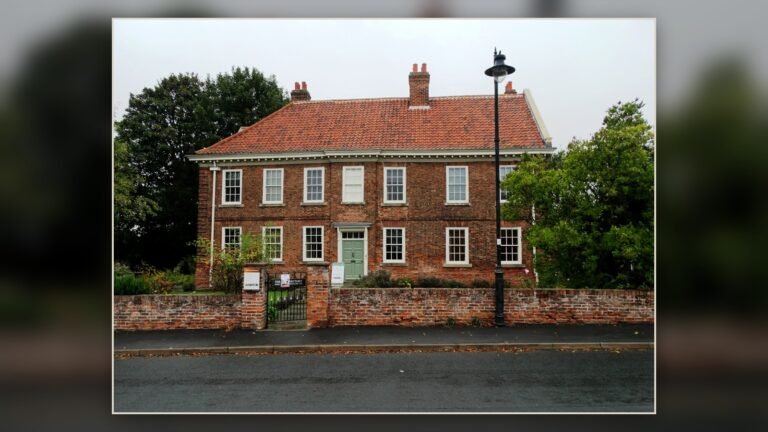
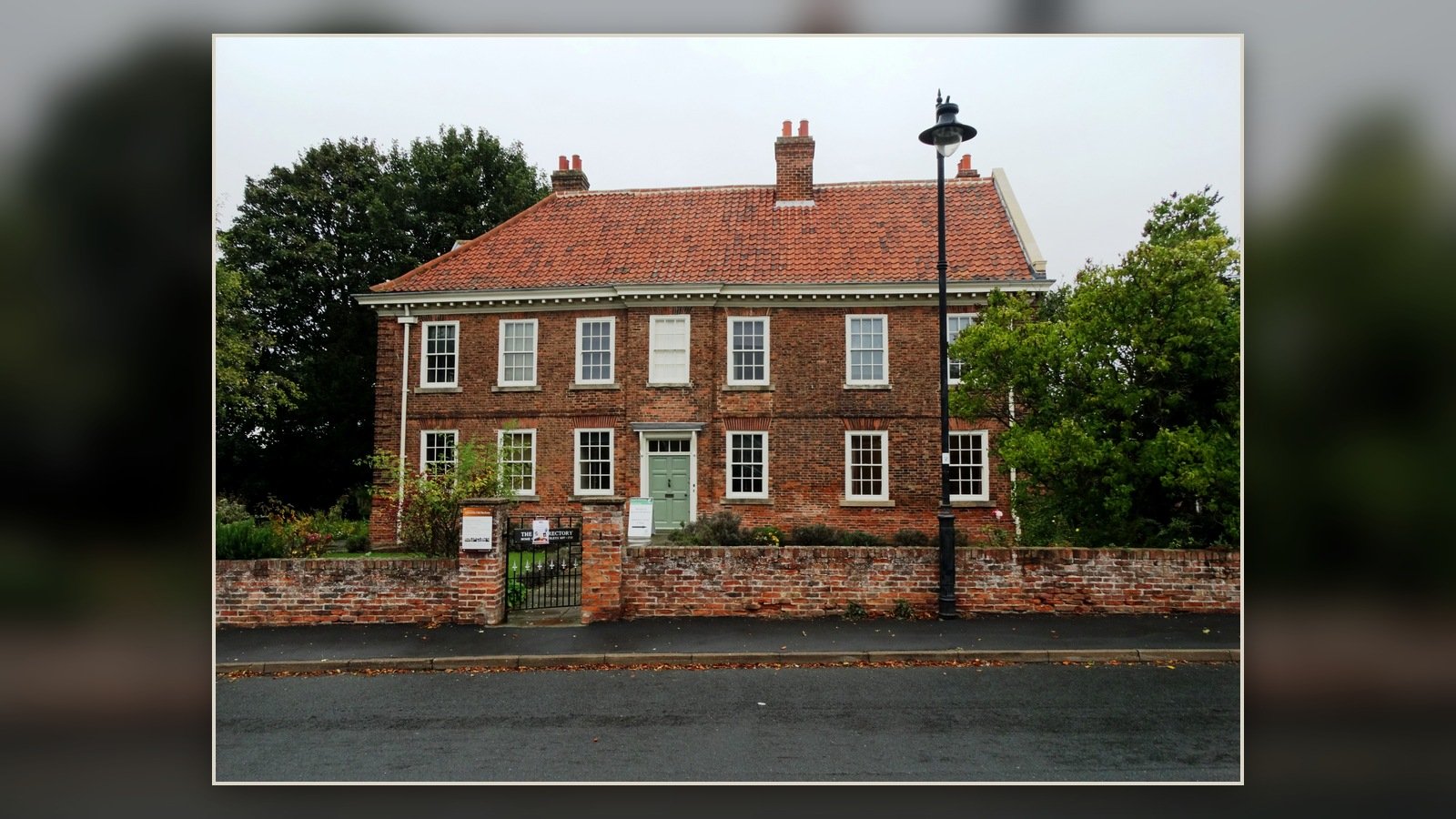
This case unfolded within the brick rectory of Samuel and Susanna Wesley, a crowded clerical household in a Lincolnshire market town where providence, witchcraft and spiritual agency were living explanations rather than decorative folklore. Its principal foundation is letters written by Susanna Wesley and several daughters, Samuel Wesley senior’s diary, and later transcription and inquiry by John Wesley. Those materials do not create perfect certainty, but they make possible a detailed reconstruction of when the reports began, who witnessed them and how interpretation changed as the disturbance entered public knowledge. SatanWorld follows the testimony closely, attributes extraordinary claims to the people and records that preserved them, and keeps the supernatural presence at the centre of the narrative without replacing history with invented scenes.
At the heart of the story is a disturbance that appeared to answer knocks, follow particular members of the family and move faster than those searching the rooms. The case later became one of Britain’s best-attested early poltergeist chronicles, preserved not by a single sensational pamphlet but by a family correspondence written while the sounds were still being heard. That legacy can obscure the people who endured the original events, so the account returns repeatedly to chronology, room, witness and consequence. The goal is not to produce a courtroom verdict on the unseen. It is to restore the full oppressive shape of an event that contemporaries believed had crossed the boundary between the ordinary world and something acting from beyond it.
A Rectory Filled with Witnesses
Epworth Rectory was not an isolated ruin. It was a working family house crowded with children, servants, prayer, study and the practical labour of a clergyman’s household. Samuel Wesley served as rector; Susanna managed a large and disciplined family whose sons would include John and Charles Wesley. The density of the house matters. The disturbances were not reported by one sleepless occupant but by sisters in different rooms, servants in the garret, parents who initially doubted them, and the visiting clergyman Mr Hoole. The case grew inside ordinary routines: locking doors, putting children to bed, winding the clock and gathering for prayers.
The surviving record gives this stage particular weight because it appears inside letters written by Susanna Wesley and several daughters, Samuel Wesley senior’s diary, and later transcription and inquiry by John Wesley. Details were written by people who did not share one theory, yet they converged upon the sense that a disturbance that appeared to answer knocks, follow particular members of the family and move faster than those searching the rooms. The article preserves that convergence without pretending that a witness could see every room, motive or mechanism. The darkness comes from the limits of inspection: those present could describe what the event did, while its identity remained beyond the ordinary categories available to them.
The Groans at the Dining-Room Door
Susanna Wesley dated the beginning to 1 December. The maid heard “dismal groans” at the dining-room door, a sound the family first treated as nervous imagination. Two or three nights later came repeated groups of knocks. They sounded in the garret, nursery and green chamber, stopping and beginning in a pattern that made pursuit difficult. The family delayed telling Samuel Wesley because of a popular belief that an omen directed against a person might remain inaudible to that person. When the noises became impossible to conceal, nine loud knocks sounded beside his bed and ended his skepticism.
Within the brick rectory of Samuel and Susanna Wesley, a crowded clerical household in a Lincolnshire market town where providence, witchcraft and spiritual agency were living explanations rather than decorative folklore, the events described under “The Groans at the Dining-Room Door” carried meanings larger than a private disturbance. A noise, voice or bodily reaction could indicate sin, intrusion, restless death, public danger or a failure of institutional protection. That cultural field did not make the witnesses foolish; it supplied the language through which an otherwise shapeless terror became narratable. The same language could also place immense pressure upon the afflicted person, whose every movement was watched for confirmation.
The House Answers Back
The noises developed an unnerving responsiveness. Susanna stamped and heard answering blows. Samuel struck the kitchen joists with a stick and the sound copied him until he used his distinctive knock at the outer door, a sequence that seemed to puzzle the presence. Family members described three knocks followed by a pause, repeated for hours. When natural explanations such as rats were proposed, the activity reportedly grew louder. The rectory’s dog first barked and later whined, while searches of the rooms repeatedly found doors secure, bottles unbroken and no person where footsteps had passed.
This phase also explains why the case endured as one of Britain’s best-attested early poltergeist chronicles, preserved not by a single sensational pamphlet but by a family correspondence written while the sounds were still being heard. Later summaries often isolate the most spectacular incident, but the original force lay in accumulation: repeated nights, changing witnesses, failed searches and the intrusion of the phenomenon into worship, work or family routine. No single detail must carry the entire story. The authority of the narrative rests upon a sequence in which ordinary explanations were tried, doubted and tried again.
Footsteps, Machinery and the Night-Gown
The reports were not limited to rapping. A noise like the forceful winding of a roasting jack became a familiar announcement of the nightly disturbance. At other times witnesses heard carpentry, the scattering of coins, the shattering of glass and the gobbling of a turkey-cock. Emily Wesley described something descending the stairs behind her sister Hetty like a man in a loose night-gown trailing across the boards. Robert Brown, sleeping in the garret, fled half dressed after hearing movement beside him. These details gave Old Jeffrey the texture of a presence using the sounds of the house without submitting to its walls.
Testimony must be read as human evidence rather than as a transparent window. Fear sharpens some perceptions and distorts others; memory selects; institutions preserve the statements that fit their procedures. Yet these limits do not reduce the event to nothing. They reveal how a disturbance that appeared to answer knocks, follow particular members of the family and move faster than those searching the rooms was experienced by people whose decisions had real consequences. The case remains frightening because uncertainty did not suspend action. Families, clergy, doctors, technicians or courts still had to decide what to do next.
The Nursery and the Trembling Children
The nursery became one of the most active rooms. Blows struck the foot, underside and head of the bedsteads until the beds shook. Children sometimes remained asleep while trembling violently before the noise woke them. Hetty believed the disturbance held a particular spite against her because it followed beneath her feet when she changed position. Samuel sat alone at the foot of the beds and listened while the knocking moved from the kitchen below to the bed itself. The intimacy of these incidents—an unseen force at the child’s bed-head—made the case more frightening than noises heard at a distance.
The physical setting matters here. Rooms, roads, chapels, offices and courtrooms organize what witnesses can hear and whom they can observe. In this case, architecture became part of the phenomenon: it concealed sources, directed attention and gave the disturbance a route through which it could seem to approach or withdraw. The resulting atmosphere was not decorative gothic invention. It arose from the practical problem of trying to locate an event that repeatedly escaped the person searching for it.
Prayer for the King
The family noticed that the disturbance often began during prayers for King George and the royal family. Samuel Wesley, angered by what he interpreted as hostility to the lawful sovereign, threatened to repeat the prayers more forcefully. The political detail belongs to a household divided from Jacobite sympathies and conscious of the recent Hanoverian succession. Whether the timing was deliberate, coincidental or shaped by the family’s attention, it gave the unseen visitor a character: oppositional, mocking and capable of intruding into worship without speaking a word.
The occult interpretation gained strength because the incident appeared intentional. Random disorder becomes haunting when it answers, follows, selects or arrives at meaningful moments. Witnesses did not merely report abnormal movement; they reported behaviour. Whether that behaviour originated in an entity, a human action, unconscious process or collective expectation remains the deepest question. What the record establishes is that those present felt addressed by the disturbance rather than merely exposed to it.
Shapes Seen in the Rooms
Although sound dominated the record, the Wesley letters also mention fleeting forms. Susanna thought something like a headless badger ran from beneath a bed. A servant reportedly saw a white-rabbit-like creature in the kitchen. Another account placed a strange animal near the dining-room fire before it vanished beneath the stairs. The family did not agree on what these shapes meant. Emily leaned toward witchcraft and connected the disturbance with her father’s preaching against local “cunning men.” The apparitions never became clear enough to settle the identity of Old Jeffrey, but they enlarged the haunting beyond noise.
The surviving record gives this stage particular weight because it appears inside letters written by Susanna Wesley and several daughters, Samuel Wesley senior’s diary, and later transcription and inquiry by John Wesley. Details were written by people who did not share one theory, yet they converged upon the sense that a disturbance that appeared to answer knocks, follow particular members of the family and move faster than those searching the rooms. The article preserves that convergence without pretending that a witness could see every room, motive or mechanism. The darkness comes from the limits of inspection: those present could describe what the event did, while its identity remained beyond the ordinary categories available to them.
The Letters That Preserved the Haunting
The case survives because Samuel Wesley junior requested separate accounts and his mother and sisters answered in detail. Their letters contain embarrassment, humour, fear and efforts to test one another’s memories. Samuel senior also kept a diary, later transcribed by John Wesley. These documents preserve different voices instead of a single polished legend. They show family members disagreeing about causes while agreeing that the sounds occurred. The archive is unusually intimate: a supernatural chronicle assembled from private correspondence before Old Jeffrey became a story told to strangers.
Within the brick rectory of Samuel and Susanna Wesley, a crowded clerical household in a Lincolnshire market town where providence, witchcraft and spiritual agency were living explanations rather than decorative folklore, the events described under “The Letters That Preserved the Haunting” carried meanings larger than a private disturbance. A noise, voice or bodily reaction could indicate sin, intrusion, restless death, public danger or a failure of institutional protection. That cultural field did not make the witnesses foolish; it supplied the language through which an otherwise shapeless terror became narratable. The same language could also place immense pressure upon the afflicted person, whose every movement was watched for confirmation.
When the Rectory Fell Quiet
The most violent phase occupied December 1716 and January 1717, though letters in March and April suggest occasional returns: a trencher dancing on a table, a dining-room door opening and closing, and renewed knocking after midnight. No final exorcism expelled the presence. It diminished, leaving the family with no revealed purpose. Samuel Wesley refused to publish a cheap sensational booklet during his lifetime. The absence of a solution became part of the case. Old Jeffrey arrived through sound, resisted interrogation and departed without confession.
This phase also explains why the case endured as one of Britain’s best-attested early poltergeist chronicles, preserved not by a single sensational pamphlet but by a family correspondence written while the sounds were still being heard. Later summaries often isolate the most spectacular incident, but the original force lay in accumulation: repeated nights, changing witnesses, failed searches and the intrusion of the phenomenon into worship, work or family routine. No single detail must carry the entire story. The authority of the narrative rests upon a sequence in which ordinary explanations were tried, doubted and tried again.
A further layer concerns the passage from private ordeal to public case. Once strangers arrived, the people involved were no longer only witnesses; they became objects of examination. Their words could be repeated without their control, and every inconsistency acquired importance. Publicity enlarged the archive while changing the conditions under which new events occurred.
The event also carried an ethical burden. Belief in an invading presence could produce vigilance, solidarity and sustained care, but it could also expose vulnerable people to restraint, interrogation and spectacle. A serious occult history must preserve both realities. The witnesses’ supernatural interpretation belongs to the case, and so do the consequences of acting upon it.
What Remains
The name “Jeffrey” was reportedly coined within the household, an act of domestic control over something that had disrupted every hierarchy of the house. Naming made the presence discussable, even familiar, without making it safe.
The strongest atmosphere in the Wesley record comes from failed inspection. Each search finds the ordinary world intact: the bottles have not shattered, the locked chamber is empty, the children remain in bed. The disturbance occupies the distance between the sound and the undamaged object.
John Wesley later accepted the case as evidence that invisible beings could interact with human life. The experience therefore entered not only ghost folklore but the spiritual imagination surrounding early Methodism.
What remains is one of Britain’s best-attested early poltergeist chronicles, preserved not by a single sensational pamphlet but by a family correspondence written while the sounds were still being heard. The names and places survive because the event entered documents before it became entertainment. Those documents preserve voices that are sincere, frightened, partisan, careful and sometimes contradictory. They do not eliminate the darkness. They give it historical weight. The case continues to disturb because a disturbance that appeared to answer knocks, follow particular members of the family and move faster than those searching the rooms, and because the actions taken in response changed lives long after the last reported manifestation.
The final boundary must therefore remain open. A historical archive can show what witnesses heard, what bodies endured, what instruments registered and what courts or churches decided. It cannot command the unseen to identify itself for a later reader. These stories persist in the interval between record and presence—the place where testimony becomes memory, memory becomes legend, and the legend still carries the pressure of something that once entered an ordinary room and refused to behave like anything known.