The house in San Pedro did not begin with a famous death or an old curse. It began with a young mother hearing movement above the ceiling. Jackie Hernandez lived with her child in a modest California home and was pregnant with her second when the disturbances intensified. Objects seemed to move without touch. A foul chemical smell entered rooms and vanished. Dark shapes appeared at the edge of sight. Then a wet substance began to emerge from walls and cabinets, giving the haunting a physical residue that investigators could photograph, collect and argue over. By the time researchers climbed into the attic in 1989, the case had already developed the most dangerous habit a haunting can acquire: it appeared to follow the living rather than remain attached to one address.
A Domestic Case in a Port District
San Pedro is a harbour community within Los Angeles, shaped by shipping, naval history, steep streets and dense residential neighbourhoods overlooking the Pacific. The Hernandez case unfolded not in an abandoned waterfront warehouse but inside domestic spaces where a mother was caring for a child and preparing for another birth. That context gave the reports an immediate vulnerability. Jackie could not simply investigate at leisure. Every disturbance occurred around sleep, childcare, pregnancy and the need to maintain an ordinary home.
The surviving narrative comes primarily through investigator Barry Conrad, parapsychologist Barry Taff, members of their team, later interviews and documentary programmes. The case became known through photographs, video footage and dramatic testimony rather than through one contemporary official dossier. Some events were witnessed by investigators; others were reported by Jackie before or after the team’s visits. The strongest account must keep those categories distinct.
The First Movements
Jackie later said the activity began in the autumn of 1988. Sounds travelled through the house without an identifiable source. Objects were displaced. A smell resembling iodine, chemicals or decay appeared unexpectedly. The odour became one of the case’s recurring signatures because it seemed too specific to be dismissed as ordinary stale air, yet no permanent source was found.
The disturbances initially resembled a conventional poltergeist outbreak: knocks, movement and the feeling that an invisible agency was provoking attention. Their timing around a young adult under pressure also matched patterns long discussed in psychical research. But the case soon acquired a visual component. Jackie reported seeing forms, including a decayed male figure and a disembodied head. These images suggested not blind force but identity, even though no secure identification was ever established.
Fear increased because the phenomena did not remain confined to one room. The house became a map of possible arrival points. A ceiling could conceal movement. A cabinet could produce liquid. A doorway could hold a figure for the instant before direct vision reached it.
The Call to Investigators
In early August 1989, Jackie contacted Dr Barry Taff, already associated with investigations of reported hauntings and recurrent spontaneous psychokinesis. Taff and a team that included photographer and filmmaker Barry Conrad visited the property on 8 August. They entered with cameras, recording equipment and prior experience of cases in which emotional stress and environmental disturbances appeared linked.
The investigators described an atmosphere that changed by room. Sounds were heard near the attic. The chemical odour appeared. Team members searched for leaks, animals, structural causes and possible manipulation. The attic drew particular attention because footsteps or impacts seemed to come from above occupied rooms.
No investigation of this kind begins without expectation. Jackie had described apparitions and movement. The team knew where the fear was concentrated. Every creak therefore existed inside a charged interpretive field. What made the case unusual was the claim that events continued under close observation and, on at least one occasion, appeared to threaten an investigator physically.
The Liquid from the Walls
A dark or amber fluid was reported seeping from surfaces in the house. Photographs and later footage show staining and droplets in locations investigators considered difficult to explain. Samples were reportedly collected. In some retellings, laboratory analysis identified the material as biological plasma. That conclusion has been repeated widely, but the chain of custody, complete laboratory documentation and precise chemical findings are not readily available in the public record.
The liquid nevertheless became the material heart of the case. A knock disappears as soon as it is heard. A shadow leaves no specimen. Fluid can be touched, bottled and photographed. It promises that the haunting has crossed from experience into evidence.
That promise is also dangerous. Houses contain pipes, adhesives, insulation, rust, pests, condensation and substances introduced deliberately or accidentally. Without a complete analytical report and controlled collection, the fluid cannot prove a paranormal origin. Its importance lies in what it did to the investigation: it made the entity appear capable of leaving part of itself behind.
The Figure in the House
Jackie described a male apparition in a state of decay. Later summaries speak of a corpse-like man, sometimes accompanied by a floating head. The image is unusually intimate. It is not a distant silhouette crossing a landing. It is the dead body brought visually into a family home, stripped of the dignity of burial.
Investigators considered whether the apparition might correspond to a real death connected with San Pedro. A historical newspaper story about a man whose body was recovered from the harbour entered the discussion. No evidence establishes that the deceased person was the figure Jackie believed she saw. The identification belongs to the speculative phase of the case, when researchers searched local history for a face that could give the haunting a name.
This search is understandable. An unknown apparition is difficult to question. A dead man with a biography can be assigned motive, location and unfinished business. Yet an attractive historical match can become false certainty. The San Pedro entity remains unidentified.
The Attack in the Attic
The most famous and frightening episode involved investigator Jeff Wheatcraft. During a later visit, Wheatcraft entered or approached the attic space while equipment recorded the scene. According to the team’s account, a cord or cable tightened around his neck and lifted or pinned him, leaving him struggling for breath. Conrad and others intervened. Marks were reportedly visible afterward.
The incident transformed the case. Before it, the entity appeared to frighten, display and stain. In the attic, it seemed to use an existing object as a weapon. The narrow space, darkness and exposed beams amplified the danger. A person can become entangled in an attic without paranormal intervention; panic can turn seconds into a narrative of assault. The footage and witness testimony convinced the investigators that the event was not a simple accident.
What matters in the record is the claim of agency. The cord did not merely catch. It was experienced as tightening with intent. The team left the attic believing that the phenomenon had crossed a boundary from demonstration to attempted harm.
Barry Conrad’s Record
Barry Conrad became one of the principal custodians of the case through film, photographs, lectures and his later book. His documentary work preserved images and witness recollections that would otherwise have remained private. It also shaped the story into a coherent encounter with an unknown entity.
A filmed investigation can seem more objective than memory, but editing creates its own structure. Cameras do not cover every room continuously. Viewers see selected sequences and explanations. Events outside the frame are reconstructed through testimony. The existence of footage therefore strengthens some parts of the case without converting the entire narrative into controlled evidence.
Conrad remained convinced that something extraordinary occurred. Taff discussed the case within his broader interest in recurrent spontaneous psychokinesis, a model in which intense human states may correlate with physical anomalies. These interpretations are not identical. One emphasizes an external presence; the other leaves open a human-centred mechanism.
The Phenomenon Follows
Jackie eventually left the original house. Reports state that disturbances continued at another residence, including incidents witnessed by investigators. This alleged portability is crucial. A site haunting can be explained through architecture, wiring, plumbing, local history or suggestion attached to an address. A phenomenon that follows a person shifts the centre of explanation.
If the reports are accurate, either an entity had attached itself to Jackie, or the force originated through her circumstances rather than the building. In poltergeist literature, the person around whom events cluster is sometimes called an agent or focus. That term does not accuse the person of fraud. It identifies a correlation between human presence and reported disturbance.
For Jackie, the distinction offered little comfort. Whether the force came from outside or through an unknown part of her own life, moving did not guarantee escape.
Pregnancy, Stress and the Human Centre
Jackie’s pregnancy is frequently mentioned because physical and emotional strain has been associated, speculatively, with poltergeist outbreaks. The theory proposes that unconscious psychokinetic effects may occur around individuals under pressure. No accepted scientific mechanism demonstrates such a process. It remains a parapsychological hypothesis rather than an established explanation.
More conventional factors must also be considered: sleep disruption, anxiety, family stress, suggestion, misperception and deliberate or unconscious manipulation. Pregnancy can intensify vulnerability without creating paranormal events. Reducing the case to Jackie’s emotional condition would repeat an old pattern in which a woman’s testimony is explained away by her body.
The responsible position is narrower. Jackie was the consistent human centre of the reports. The reasons for that concentration remain unknown.
What the Evidence Can and Cannot Show
The San Pedro case contains more media than many domestic hauntings. There are photographs, video, recorded interviews and testimony from experienced investigators. The alleged cord incident provides a dramatic event involving someone other than the principal witness. The fluid offered a physical sample.
None of these elements has produced universal agreement. Image quality, incomplete documentation, uncontrolled access to the property and the lack of a publicly available scientific chain of custody leave alternative explanations open. The case cannot establish that a dead man inhabited the house. It cannot establish that the fluid was produced by an entity. It cannot eliminate the possibility of accident or deception in every incident.
The evidence does establish that investigators entered expecting to document a haunting and left describing experiences they considered dangerous and unexplained. It shows how quickly a private disturbance can become a collaborative reality shared by cameras, witnesses and later audiences.
The Later Life of the Haunting
Television programmes revisited the story, sometimes dramatizing scenes more vividly than the original documentation allowed. The decayed apparition, the floating head, the bleeding walls and the attic strangulation formed a ready sequence for paranormal media. Each adaptation brought new viewers while increasing the risk that reenactment would replace record.
The case also entered the mythology of Los Angeles hauntings, standing apart from glamorous hotel ghosts and historic theatre legends. Its setting was a rented or modest family home. Its central witness was not famous. Its horror arose from invasion: the idea that a domestic interior can develop a second, hostile life around the people who depend upon it.
What Remains
The San Pedro Poltergeist remains one of the most visually documented late twentieth-century American haunting cases, yet its images do not settle its meaning. The fluid exists in photographs but not as a universally accepted paranormal specimen. The attic attack exists in testimony and footage but remains open to competing interpretations. The apparition has a face but no verified name.
The final terror is the case’s refusal to stay in one place. Jackie left the house, but the story says the presence did not remain behind. A haunted building can be avoided. A force attached to a person turns every future room into a possible continuation.
Sources and Further Reading
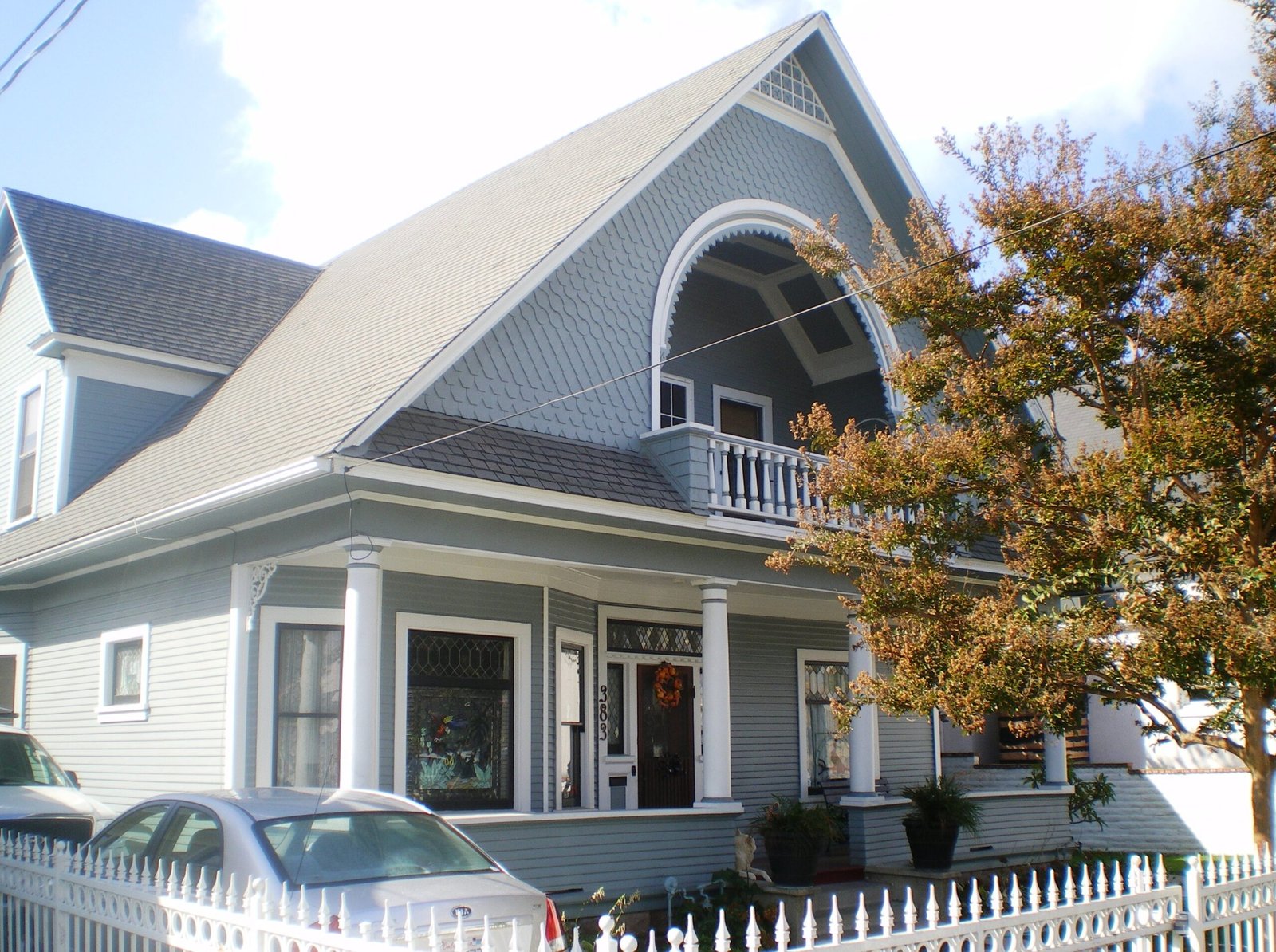
This article uses the investigation summaries associated with Barry Conrad and Barry Taff, the sourced reconstruction published by Think Anomalous, later interviews, contemporary Los Angeles reporting and historical newspaper material consulted during efforts to identify the apparition. Claims about biological plasma, strangulation and a dead seaman are attributed to investigators or treated as speculation where full independent documentation is unavailable. The featured photograph is an authentic San Pedro residence used only to establish the district’s domestic setting; it is not the Hernandez house.