The Janara does not need a ruined castle. She requires only a door that does not close perfectly, a stable left quiet after midnight, or a sleeper who wakes unable to move. In the countryside around Benevento, the oldest fear was not always of a witch seen crossing the moon. It was of a woman who could become almost nothing—air, oil, a thread of presence—and pass through the smallest opening into an occupied house. By dawn the victim might remember pressure upon the chest, tangled hair, exhausted animals or the sensation that someone had stood beside the bed without breathing. The room would look unchanged. That was part of the terror. The Janara was believed to enter domestic life without leaving the evidence expected from an intruder.
The Witch Who Crosses the Threshold
The word Janara has attracted several explanations. One popular derivation connects it with ianua, the Latin word for door, because the spirit-witch was said to enter through thresholds and cracks. Other interpretations connect the name with Diana, with older female night divinities, or with regional speech. None of these theories is secure enough to be treated as a final origin. What survives more clearly is the being’s role: she is a nocturnal woman of power whose presence is recognized inside the intimate boundaries of the household.
This distinguishes the Janara from the grand image of the sabbath witch. Around the legendary walnut tree of Benevento, witches arrive in crowds, dance, feast and gather beneath infernal authority. The Janara who visits a farmhouse is solitary. She knows the sleeping arrangements, the animals and the weak points of the door. The sabbath belongs to spectacle. The household Janara belongs to proximity.
Oral accounts describe her as a living woman capable of leaving home at night, a witch-like practitioner, a spirit-double or a presence no longer fully human. Those categories overlap because folklore does not always demand the rigid identities later demonologists imposed. A neighbour might be suspected of being a Janara without anyone claiming to have seen her change shape. A dead woman might be remembered through the same signs. The name identifies a pattern of feared power more than one anatomical species.
Benevento and the Walnut of the Witches
Benevento’s reputation as the Italian city of witches grew from a larger historical legend. Medieval and early modern writers placed nocturnal assemblies near a walnut tree beside the River Sabato. The site was linked retrospectively with Lombard rites, with the conversion stories surrounding Saint Barbatus, and with accusations that older religious customs had continued beneath Christian rule. In later retellings, the walnut became an axis of forbidden travel: a place reached through ointment, incantation and flight.
One of the earliest famous legal references comes not from a trial held in Benevento but from the 1428 proceedings against Matteuccia di Francesco in Todi. Her confession, produced in the coercive world of witch prosecution, includes the formula asking an ointment to carry her to the walnut of Benevento over water, wind and bad weather. Once such language entered inquisitorial expectation, Benevento became a destination that accused women could be pressured to name. To say that one had gone to the walnut was to place oneself inside an already recognizable map of witchcraft.
This history requires care. The trial record proves that authorities and defendants spoke of Benevento as a gathering place. It does not prove that an organized cult assembled beneath one identifiable tree. The testimony emerged under prosecution, and later writers copied, expanded and systematized it. Yet the image proved indestructible. A tree could be cut down; the road toward it remained in cultural memory.
By the seventeenth century, Pietro Piperno’s treatise on the magical walnut gave the legend a learned local framework. Nineteenth-century histories of Benevento continued to discuss the tree, the witches and the rites attributed to them. Each retelling added authority through repetition. The Janara moved within this larger inheritance, but she was never only a woman flying to a distant sabbath. She was the power that returned from the gathering and came home through the keyhole.
The Weight Upon the Sleeper
The most frightening Janara stories begin in bed. The victim wakes with consciousness intact but the body unresponsive. Breath becomes difficult. A pressure settles upon the chest. A figure may be sensed rather than seen, sometimes as a woman crouched above the sleeper, sometimes as darkness given intention. The event resembles what modern medicine calls sleep paralysis, but the traditional interpretation gives it a relationship and a will. The paralysis is not an error of waking. It is a visitation.
In local language, the experience could be understood as being ridden or oppressed by the Janara. The body becomes the equivalent of the horse in the stable: mounted, exhausted and temporarily deprived of its own command. The victim may attempt to pray, call a sacred name or remember a protective object while the presence remains near the face. When movement returns, the room offers no explanation for the certainty that another being occupied it.
The explanatory language of sleep paralysis does not make the tradition meaningless. It helps identify one bodily state around which the legend formed, but folklore preserves more than physiology. It records how communities interpreted vulnerability, especially the terror of waking while unable to defend oneself. The Janara gave that terror a local face, a motive and a route of entry.
Horses Braided Before Dawn
Stables supplied another body of evidence. Horses were found sweating, fatigued or with their manes woven into tight braids. The Janara was said to ride them through the night, returning them before the household woke. A horse that resisted might be injured; one favoured by the witch might be groomed with unnerving care.
Braided manes occur in many European fairy and witch traditions. Wind, rubbing, neglected grooming and human hands can all create knots. The Benevento interpretation, however, transformed the braid into a signature. It implied not random disorder but work performed during a hidden journey. The animal had gone somewhere the owner could not follow.
The stable was a threshold space: attached to the home but occupied at night by creatures unable to describe what happened. Nocturnal noises, distressed animals and unexpected tangles could be read as the aftermath of contact. In a farming household, harm to a horse was not a decorative haunting. It threatened labour, travel and survival.
Brooms, Salt and the Compulsion to Count
Traditional defences often exploited the Janara’s supposed compulsion to count. A broom left across or beside the entrance presented hundreds of bristles. A container of salt, grain or sand could be scattered where the visitor would have to stop and enumerate each piece before entering. Dawn would arrive before the task was completed, forcing the night presence to withdraw.
Similar counting traps appear in vampire, witch and fairy lore across Europe. Their logic is elegant. The household does not overpower the intruder; it captures her attention. The dangerous intelligence becomes imprisoned by order. Each grain creates one more delay between the threshold and the sleeping family.
Other customs included closing openings carefully, placing protective objects near beds or doors, bringing washing indoors before nightfall and guarding hair or bodily traces that might be used in harmful magic. Such practices turned architecture into ritual behaviour. A door was not secure merely because it was locked. It had to be defended against a being for whom solidity was negotiable.
Naming the Woman Next Door
Belief in the Janara could protect a community from shapeless fear, but it could also direct fear toward actual women. Healers, midwives, herb gatherers, widows and socially isolated neighbours might be suspected because they possessed knowledge others needed but did not control. Illness, failed crops, infant distress or an exhausted animal could become evidence after the fact.
The most dangerous question was not whether Janare existed but which woman was one. Once suspicion settled, ordinary behaviour could be reinterpreted. A woman awake late had been travelling. A private remedy became a spell. Anger became a curse. Unusual independence became proof of secret power. The supernatural figure gave language to real social anxieties about female knowledge and autonomy.
Benevento’s historical identity therefore contains two shadows. One is the night witch feared in bedrooms. The other is the human woman placed under accusation because the community required a body for misfortune. The legend must preserve both without reducing one to the other.
No Trial Archive from Benevento
Modern scholarship notes a paradox: Benevento became one of Europe’s best-known alleged witch meeting places, yet surviving records do not present a great local sequence of witch trials corresponding to that fame. Some archival material was lost, particularly through wartime destruction, but the reputation was often constructed elsewhere—in trials, treatises and sermons that used Benevento as a distant geography of transgression.
Distance strengthened the legend. A remote assembly could not be easily inspected. It existed in confession, rumor and learned citation. For an inquisitor in another city, Benevento functioned as a place where the impossible had already been accepted. For residents, the accusation could be reshaped into local identity, humour, caution and eventually cultural pride.
The Janara survived because she did not depend upon a court record. She lived in rules repeated at home: do not leave the washing out, do not dismiss the braided mane, cover the threshold, do not speak too freely about the woman who knows the old formulas.
The City That Kept Its Witches
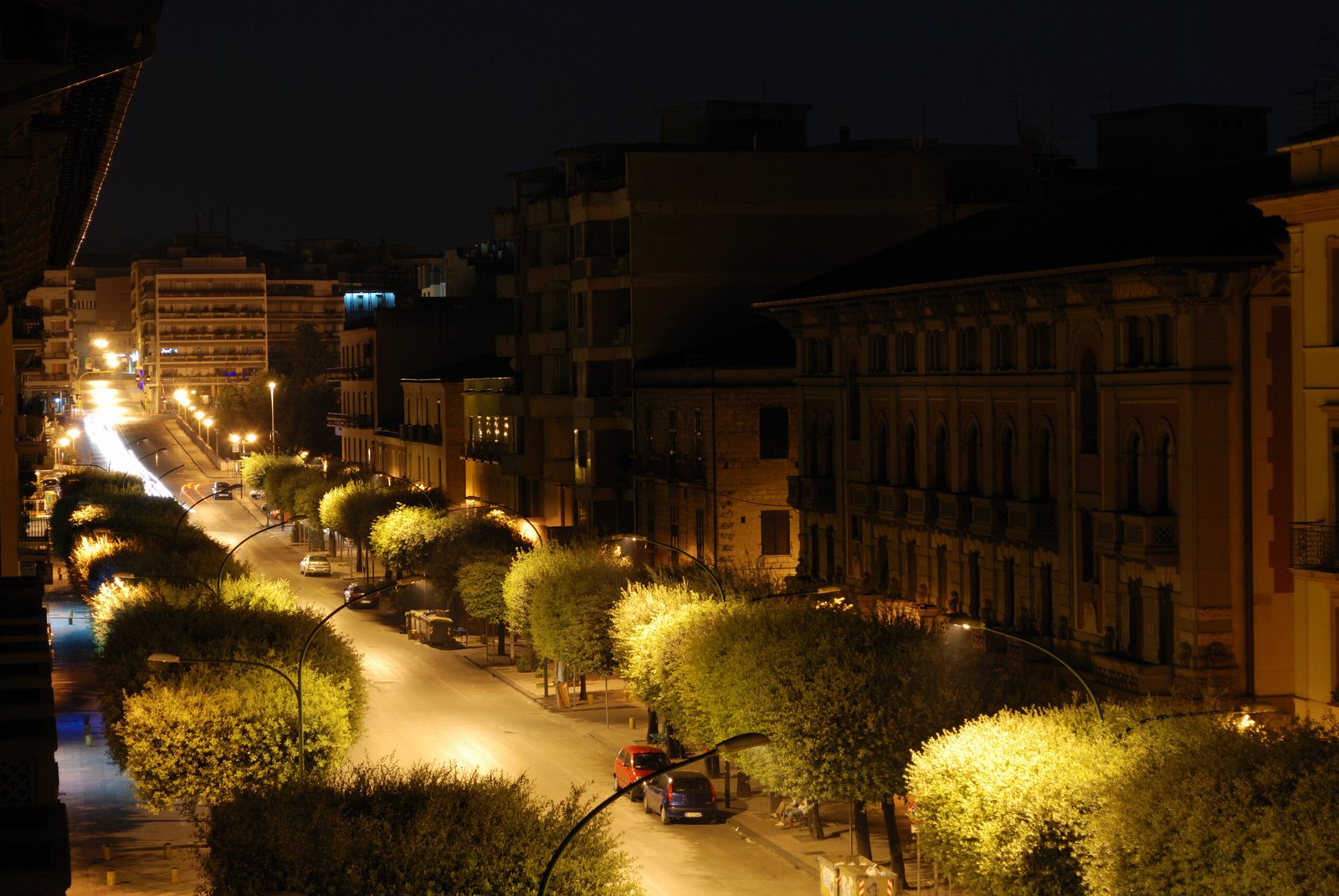
Modern Benevento no longer treats the witch solely as an emblem of shame. Museums, festivals, performances and commercial imagery preserve the Janara and the walnut sabbath as part of the city’s identity. The famous Strega liqueur turned the dancing witches into an internationally recognized image. Contemporary cultural events stage the legend in streets once governed by quieter prohibitions.
Preservation changes the presence. A figure once whispered about becomes a costume, a dance and a tourist route. Yet anthropological interviews show that some older beliefs remain guarded. Residents may still hesitate before repeating a formula, naming a suspected practitioner or dismissing the night customs of their grandparents. Public celebration and private caution can exist together.
The Janara has therefore crossed several boundaries: from feared neighbour to spirit, from prosecution language to folklore, from domestic protection to festival performance. None has completely erased the others.
What Comes Through the Door
The Janara endures because her legend is built around an unavoidable human weakness. Sleep requires surrender. A home cannot be sealed against every sound, dream or paralysis. Animals cannot testify. The smallest gap in a door becomes immense at three in the morning when the body will not move.
Historical study can trace the walnut, the trials and the authors who shaped Benevento’s reputation. Medicine can describe the state in which a waking mind remains trapped inside a sleeping body. Social history can show how accusations gathered around women with knowledge. These explanations illuminate the legend, but the old story keeps one final territory: the moment of experience before explanation arrives.
In that moment, the sleeper does not encounter a historical process. The sleeper encounters weight. The horse returns wet with sweat. The broom has fallen across the threshold. And somewhere in the room, unseen but intimately near, the Janara has already entered.
Sources and Further Reading
This article draws on historical material concerning the 1428 trial of Matteuccia di Francesco, the learned tradition surrounding the walnut of Benevento, nineteenth-century local history, modern anthropological reporting and Benevento’s cultural preservation of the Janara. Household signs and protections are presented as regional folklore rather than universal facts, while later etymologies are identified as interpretations rather than certain origins.
- https://www.smithsonianmag.com/travel/how-this-italian-town-came-to-be-known-as-the-city-of-witches-180987599/
- https://it.wikisource.org/wiki/Istoria_della_citt%C3%A0_di_Benevento_dalla_sua_origine_fino_al_1894/Parte_II/Capitolo_IV
- https://sigea-aps.it/pubblicazione/fenomeni-geologici-endogeni-e-societa-il-caso-delle-janare-di-benevento-un-esempio-di-geomitologia/
- https://web.comune.benevento.it/zf/index.php/atti-amministrativi/delibere/dettaglio/atto/GTlRRMEU9Zz0-H
- https://commons.wikimedia.org/wiki/File:Benevento_viale_Principe_di_Napoli_notturna.jpg