The Sallie House is presented as the home of a dead child, but the entity described by its most famous occupants did not behave like one. It scratched an adult man, produced fires, moved objects and seemed to react with hostility whenever attention shifted toward the young family living inside. The name “Sallie” gave the haunting a face that cameras, television and tourism could preserve: a little girl believed to have died under a doctor’s care. Yet the historical child remains uncertain. The violence is documented mainly through later witness testimony. The house became terrifying not because its ghost was clearly identified, but because the most comforting explanation—a frightened girl—never fully matched what the witnesses said attacked them.
A Victorian House in Atchison
The property stands in Atchison, Kansas, a Missouri River town with a strong public identity built around haunted history. The house dates to the nineteenth century and has been associated with a physician’s residence and office. This medical connection became the foundation for the child-surgery legend.
Victorian houses naturally collect layers of occupation. Rooms change purpose, families leave, records scatter and architectural alterations erase evidence of how a space was used. A former office can become a bedroom; a private entrance can be forgotten; a story told about one doctor can migrate to another address.
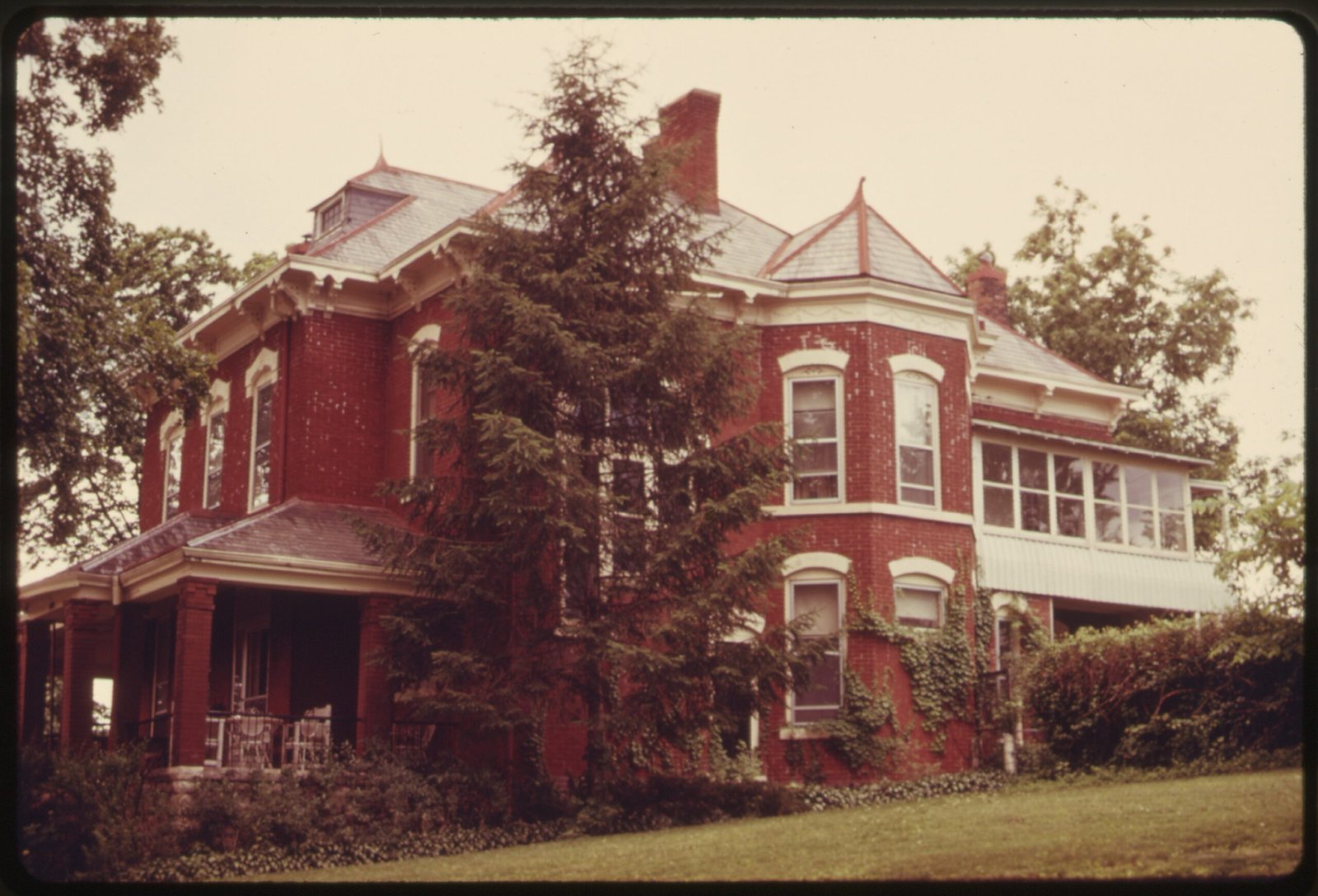
The image provided with this article shows representative Victorian architecture in Atchison, not the Sallie House itself. That distinction is necessary because paranormal publishing often attaches any old house to a legend until readers can no longer tell evidence from atmosphere.
The Arrival of the Pickman Family
The modern haunting became famous through a young couple, commonly identified as Tony and Debra Pickman, who moved into the house in the early 1990s with their infant son. At first, the incidents could be interpreted as the adjustments of a new home: unexplained sounds, objects not where expected, electrical irregularities and the sense of another presence.
Their dog reportedly reacted to areas of the house as though tracking someone unseen. Animals frequently become early witnesses in haunting narratives because their behaviour appears independent of adult expectation. A dog staring into an empty doorway gives fear a direction.
The disturbances grew more personal. Objects moved, pictures or household items changed position and nursery-related events suggested that the presence was interested in the child. The family began to treat the house not as defective but occupied.
The Child Called Sallie
The name emerged through psychic interpretation and later investigation. The presence was described as a little girl named Sallie who had once been brought to the resident doctor suffering from appendicitis. According to the familiar story, the doctor began surgery before anaesthesia had fully taken effect. The terrified child died on the operating table and remained in the house.
The narrative is emotionally complete. It explains a child’s presence, fear of men and attachment to the nursery. It also contains details that are difficult to verify through surviving public documentation. Researchers have not produced a universally accepted death certificate, patient file and continuous property record proving that one girl named Sallie died there in the exact manner repeated by tours and television.
This does not prove no child ever suffered in the house. Nineteenth-century medicine involved real pain, limited records and dangerous surgery. It means that the named biography should be identified as the haunting’s interpretation rather than treated as settled historical fact.
Why the Attacks Focused on Tony
The most violent reports centred upon the husband. He described scratches appearing on his body, sometimes after sensations of burning or contact. The marks became iconic because they converted an invisible event into visible injury.
The child-spirit theory explained the focus by suggesting that Sallie feared adult men because a male doctor had caused her death. The attacks could therefore be read as defensive rather than demonic. The entity was not evil; it was reliving terror.
That explanation became harder to sustain as the violence escalated. Scratches, blows, threats and sudden rage seemed disproportionate to a shy child. Some investigators proposed that “Sallie” was a mask used by another presence to gain sympathy and access. The innocent ghost became a lure.
The demonic interpretation solved one mismatch but created another. No independent evidence established a demon either. The house accumulated identities according to the behaviour observers feared most.
Scratches as Communication
A scratch is a primitive message. It does not explain motive, but it proves contact to the person who feels it. Photographs of marks can document injury while leaving the cause unknown.
In the Sallie House tradition, scratches appeared quickly and were associated with moments of tension or investigation. They reinforced the idea that the entity distinguished among occupants. The husband was targeted; the wife and infant were approached differently.
Natural explanations include accidental contact, unnoticed self-scratching, skin conditions and heightened awareness under stress. Deliberate fabrication is also possible in any public paranormal case. The Pickmans’ continued testimony convinced many viewers that the injuries were sincere, but sincerity cannot identify the source of a mark.
The importance of the scratches lies in their effect on the household. Once skin becomes evidence, every room contains the possibility of assault. A person cannot avoid the haunting by refusing to look toward a shadow.
Fire and Heat
Reports connected the house with small fires, heat, electrical disturbance and objects affected without an obvious cause. Fire transforms a haunting into immediate danger because it can destroy the building and kill regardless of supernatural origin.
The medical legend gave heat additional symbolism. A child who died during surgery returns through burning sensations and sudden flame. Later demonic interpretations also treated fire as a sign of malevolent force.
Practical investigation should begin with wiring, appliances, combustible materials and human access. Public narratives do not provide a complete fire-investigation archive for every incident. The events survive through witness reporting and television reconstruction.
The Nursery and the Protected Child
The family’s infant created a second centre of fear. Toys moving, sounds near the nursery or a presence perceived around the child could be interpreted as affection from Sallie or as predatory attention from something else.
This ambiguity made the legend especially powerful. A child ghost approaching a baby can appear comforting. The same scene becomes terrifying if the ghost’s identity is false. The parents had no reliable method to distinguish a companion from an intruder.
Haunting narratives often become most intense around nurseries because parental vigilance is already heightened. Ordinary sounds carry greater consequence. A moved toy is not merely displaced; it suggests access to the most protected person in the house.
Television and the Transformation of Evidence
The Sallie House gained national and international recognition through paranormal television, documentaries and investigator visits. Cameras entered rooms already defined by the Pickman story. New teams used electronic instruments, trigger objects, séances and overnight observation.
Media preserved the house but also changed it. Investigators arrived expecting a girl, a doctor and an attacking presence. Ambiguous readings were interpreted within those identities. Each broadcast added details that later visitors treated as older history.
Television requires narrative compression. Complex uncertainty becomes a confrontation before the final commercial break. The child’s tragic death offers a beginning; the scratches offer proof; the possible demon offers escalation. The resulting structure is emotionally convincing even when the archival basis for the first event remains incomplete.
A House Open to Investigation
The property became available for tours and overnight stays. Official Atchison tourism material presents it as one of the city’s central haunted sites. Visitors enter not as tenants but as investigators seeking activity.
This creates a new phase distinct from the original family case. Groups bring equipment, talk to the reported spirits and remain awake through the night. Their expectations can increase false positives: building sounds, radio fragments, shadows and equipment fluctuations acquire names before they are understood.
At the same time, repeated access allows more observation than many private hauntings receive. Visitors report knocks, voices, movement, scratches, emotional changes and equipment responses. The volume of testimony grows while control varies from group to group.
The house is now both a historical property and an instrument designed to produce experiences. People pay for the possibility that the legend will answer.
Atchison’s Haunted Identity
Atchison openly preserves ghost history through tours and public storytelling. The Sallie House belongs to a larger landscape of haunted locations, river history, old residences and local tradition. The city does not hide the legend; it organizes access to it.
Cultural acceptance can help protect a building that might otherwise be altered or demolished. It can also create financial incentives for stories to become more dramatic. These facts do not prove fraud. They require readers to distinguish the original reports from the commercial life that followed.
The house’s fame has outgrown the private suffering of the family who made it known. Modern visitors may encounter the property first as entertainment, while the Pickmans described a home in which they felt physically unsafe.
Did Sallie Exist?
The question is narrower than whether the house is haunted. A presence could exist without the child biography being correct. A real child could have been misnamed. Several historical fragments could have merged. A psychic impression could have supplied a compelling fiction around unexplained events.
Responsible storytelling must resist the temptation to invent certainty. The famous surgery scene should be presented as legend. Until documentation securely identifies the patient, doctor, date and location, the little girl remains an interpretive figure.
Paradoxically, uncertainty makes the case darker. If Sallie never existed in the form described, what answered to her name? If investigators received childlike responses, were they communicating with a different dead child, projecting expectation or being deliberately deceived?
The reassuring ghost story depends upon identity. Without it, the house contains behaviour without a trustworthy face.
Child Spirit or Mask
The two principal interpretations reveal different fears. The child-spirit theory imagines trauma surviving death. Sallie remains trapped, reacts against adult men and seeks the safety denied to her. Compassion becomes the proper response.
The mask theory imagines an intelligent hostile presence exploiting compassion. It chooses a child’s name because people will invite a child closer, offer toys and weaken boundaries. Every attempt to comfort the girl strengthens the real intruder.
Neither interpretation is proven. Both shape investigation. A team that believes in the child will speak gently and interpret small sounds as shy responses. A team expecting a demon will treat the same sounds as manipulation. The house reflects the method brought into it.
What the Walls Still Hold
The Sallie House remains one of America’s best-known private haunting sites because it joins physical injury, family testimony, a child-ghost legend and continuing public access. It offers visitors a specific room, a specific name and the possibility of an overnight encounter.
Its evidential weaknesses are equally important. The child’s biography is not securely documented. The most famous events depend upon witness testimony and media presentation. Later experiences occur in a site saturated with expectation.
None of this makes the house harmless. Natural fire, panic and misinterpretation can endanger visitors even without a spirit. If the witnesses encountered something external, the uncertainty surrounding its identity makes engagement more dangerous, not less.
The little girl is the story people know. The scratches are the evidence they remember. Between them stands a question no investigation has settled: whether “Sallie” was the lost child of the house, a name created to contain fear, or the first disguise worn by something that understood human sympathy better than the humans who entered its rooms.
Sources and Further Reading
This article draws on official Atchison tourism material, the Kansas travel listing for the property, the established Pickman-era narrative and public investigation history. It distinguishes reported activity from independently verified evidence and treats the appendicitis-surgery story as an influential but incompletely documented identity tradition. The featured photograph is clearly labelled as contextual Atchison architecture rather than the Sallie House.
- https://www.visitatchison.com/haunted-tours
- https://visitatchison.com/haunted-atchison/haunted-history/
- https://www.travelks.com/listing/sallie-house/47924/
- https://commons.wikimedia.org/wiki/File:RESTORATION_OF_A_LATE_19TH_CENTURY_EXAMPLE_OF_VICTORIAN_ARCHITECTURE_IN_ATCHISON,_KANSAS._IT_IS_AN_ELABORATE…_-_NARA_-_557071.jpg